Draw two overlapping circles, not opposing teams
One group contains pants with cargo-style storage on the legs. Another contains pants designed or marketed for hiking. Some garments sit in both groups, some in only one. Once that is clear, the original question becomes more useful: does this particular cargo pant have the construction you want for this particular outing?
The hiking label itself is not a formal recipe. It does not specify one fiber, one minimum stretch percentage or one mandatory pocket count. Cargo is similarly broad: the pocket may be flat, expandable, open, zipped or covered by a flap. You cannot determine the amount of fabric, the way it moves or the contents it retains from the category name alone.
This is especially useful while shopping online. A result titled hiking cargo pants may be relevant, but the combined words do not verify the claims in the rest of the listing. Inspect the exact item and selected variant. A product photographed with a large side pocket has demonstrated its appearance, not a drying rate, waterproof construction or reliable fit across all sizes.
Read three different cargo designs as examples
Columbia Silver Ridge Utility is an example of a trail-oriented cargo arrangement with a recycled polyester fabric, regular fit, partial elastic waist and removable belt. The manufacturer lists a zipped security pocket and hook-and-loop cargo or rear pocket closures. These details give you a concrete way to assess whether a relatively conventional trail pant covers your needs.
MIER's Women's Quick Dry Cargo Pants take another route, with a listed 88% nylon and 12% spandex fabric, semi-elastic waist and six zippered pockets. The composition and closures differ from the Columbia example even though both can be called cargo hiking pants. Do not interpret the larger pocket count or elastane percentage as an automatic advantage; the locations, dimensions and fit still have to work for the person wearing them.
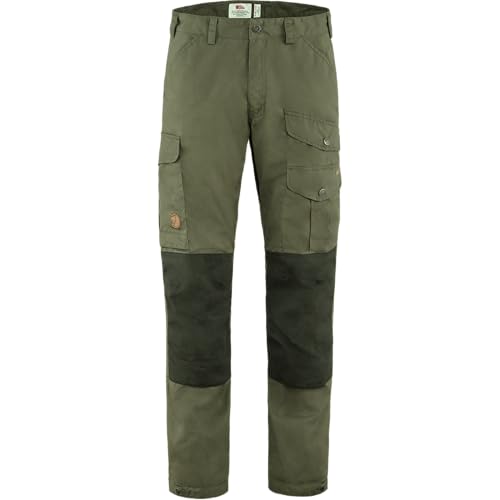
Fjallraven Vidda Pro adds a more substantial G-1000 construction with reinforced knees and rear areas, shaped knees and multiple pockets. It belongs in the premium comparison when those structural features are wanted. It is not simply a higher-grade version of every lightweight cargo, because the garments pursue different combinations of material, movement and features.
A casual cargo already in your wardrobe may offer a fourth useful example. Read its own label instead of assuming cotton, then compare its lining, cut and pocket attachments with the other candidates. The purpose is to understand what would change if you bought something else. If the change is only the word hiking in the title, you have not yet identified a functional upgrade.
Understand what an expandable pocket adds when empty and full
An expandable pocket has extra material that can fold flat or make room for contents. That can be useful for a soft object or something awkwardly shaped. It also means the pocket's profile changes as you load it. A pant that looks tidy with empty pockets may create a much larger shape around the leg once it holds a phone, gloves or other essentials.
Check how the pocket attaches to the main garment. Does it sit flat when empty? Does its opening close without forcing the contents into the flap or zipper? Does a rigid object extend across a seam? These are practical construction questions you can answer without pretending to know a universal cargo-pocket capacity. Dimensions and usable shape matter more than the outside outline.
Consider the empty-pocket experience too. Extra flaps or folds may be irrelevant to you, or they may be a detail you repeatedly catch with your hand while walking. A flat pocket might suit a small everyday load better than an expandable one. Neither style is inherently more outdoorsy; the better choice depends on whether you value spare capacity or a simpler garment surface.
Avoid solving every packing problem through trouser storage. A soft glove and a hard rectangular device create different contact even if they occupy similar space. A pocket can close successfully while its contents remain uncomfortable. The pocket-layout guide explores location and access in depth; the cargo decision is whether the additional storage structure is worth having at all.
Fabric and lining decide more than the cargo silhouette
If you compare casual cargos with trail cargos, write down what is actually different. One pair might be unlined and another lined. One may use a substantial woven cloth and another a thinner fabric. The fiber label can help, but the amount and arrangement of material are part of the garment too. A broad statement about all cotton cargos or all synthetic hiking pants hides those distinctions.
The current Silver Ridge Utility uses 100% recycled polyester with mechanical comfort stretch. That does not mean every Silver Ridge generation uses the same fabric. Likewise, the MIER example has its own nylon-spandex blend, while Vidda Pro combines recycled polyester and organic cotton in its G-1000 fabric. Those compositions belong to the named versions; another Silver Ridge or Vidda Pro model can require a different material comparison.
Think about care before treating a finish as a benefit. A water-repellent treatment has its own maintenance considerations and does not establish waterproof construction. A wax-compatible fabric area may need a different approach from a stretch panel. If the garment mixes materials, follow the instructions for that exact model rather than using a generic method for every cargo pant.
For a deeper fiber comparison, use nylon versus polyester hiking pants and the separate cotton guide. Keep this purchase decision focused: side pockets do not tell you how the cloth behaves, and changing pocket style does not necessarily change material behavior.
A cargo cut can be roomy in the wrong place
Wide legs can create an impression of freedom, but the waist, seat and upper thigh can still restrict movement. Conversely, a fairly trim garment may allow a comfortable high step if the pattern and fabric suit you. Assess each zone instead of treating the overall silhouette as a fit verdict.
Try raising one knee while keeping the other leg comfortably planted. Then sit and lean forward. If the waist shifts, look at the rise and seat before assuming you need a larger leg. If the thigh pocket becomes the restriction only when loaded, take the object out and repeat. This separates a garment-fit issue from a pocket-content issue and helps avoid buying an unnecessarily large size.
Compare the leg opening with the footwear you normally use. A full cargo leg can gather or drape differently from a narrower trail cut. That may be entirely comfortable, but the hem should not require constant attention. The hiking-pants fit guide provides a more complete movement check once you have chosen the kind of storage and cut you prefer.
Do not use another shopper's body or one product photo as your measurement system. Check the chosen size and inseam, especially when the same model is offered in multiple fits. A regular and a relaxed version can share a name while changing the experience at the thigh and seat. The cargo pocket remains visible in both, which can make this difference easy to overlook online.
Choose cargo because you use it, not because the trip has a label
A useful purchase note could read: I want one closed thigh pocket for an object that does not sit comfortably in my front pocket. That creates a clear shortlist and a clear test. A less useful note is: hiking requires cargos. The latter can lead you to buy several storage features without deciding what any of them will hold.
Silver Ridge Utility is the overall example when a familiar trail cargo arrangement and regular fit are the starting point. ATG by Wrangler Synthetic Utility is a budget-positioned listing to compare for utility styling and a simpler spending decision. Vidda Pro is the premium candidate when its reinforced G-1000 construction is specifically relevant. None makes side pockets a requirement for every walker.
If your interest extends to specialized equipment organization and interactions with substantial belts, move to hiking versus tactical pants. That is a different decision from whether a cargo pocket is useful. Here, the strongest outcome is a garment whose cloth, fit and storage all suit the route, whether the product title contains cargo, hiking, both or neither.
Questions about hiking pants versus cargo pants: pocket style is not a performance category
Can cargo hiking pants count as ordinary hiking pants?
Yes. The terms overlap because one describes storage style and the other intended use. A cargo layout does not put a garment outside the hiking category. It also does not prove that every garment with leg pockets has appropriate fabric or fit for your route.
Is an expandable thigh pocket always better than a flat one?
Only if you need the extra capacity and find the loaded shape comfortable. A flatter pocket can be enough for a small object and simpler when empty. Compare what you plan to carry, how the closure works and where the contents sit while moving.
Are casual cargo pants necessarily made from cotton?
No. Read the exact fiber label and lining details. Casual styling can appear in several fabrics, just as trail-oriented clothing can contain cotton. Making the comparison from assumed compositions can lead you to buy a replacement that does not change the feature you wanted to improve.
Do I need cargo pockets if I already carry a backpack?
Not automatically. They are useful when they improve access or separate an item you want on your body. If the pack already handles your essentials comfortably, a simpler pant may be adequate. Additional capacity should have a purpose rather than become a reason to carry more.
Final Verdict
A cargo pocket is a useful design choice when it has something useful to do. Judge the rest of the garment independently: fabric, lining, rise, leg shape and closures still decide whether you want to walk in it. There is no need to choose a side between cargo and hiking because many products are both. Buy the construction that fits your route and your small-item routine, and leave unnecessary storage out of the decision when it adds nothing to the way you walk.
Sources and further reading