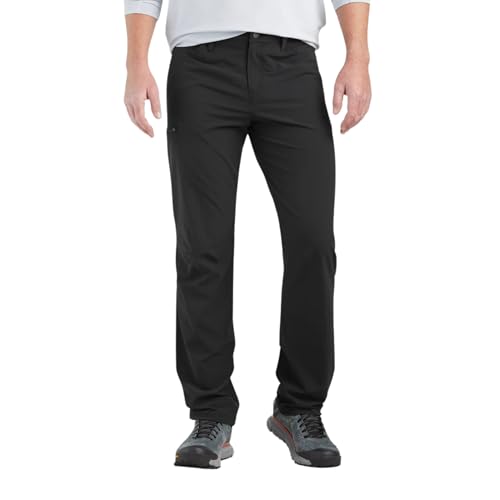
Outdoor Research Men's Ferrosi Pants
A well-documented nylon/spandex example for comparing elastic movement.
Consider: Fiber does not guarantee your preferred fit or a drying-time advantage.
Check on Amazonmaterials
The fabric label is useful, but it is not a complete review. A nylon pant can be light and supple or substantial and structured. A polyester pant can be a simple woven design or an elastic blend with a close fit. When shoppers ask which fiber is better for hiking, the useful answer is to compare complete garments and use the fiber information to explain differences—not to make the decision before trying them on.
Three places to start
As an Amazon Associate I earn from qualifying purchases. Purchases take place on Amazon.
A well-documented nylon/spandex example for comparing elastic movement.
Consider: Fiber does not guarantee your preferred fit or a drying-time advantage.
Check on Amazon
A lower-priced polyester example with conventional hiking features.
Consider: Do not substitute older nylon Silver Ridge details.
Check on Amazon
A mixed-fiber double-weave alternative showing a different construction class.
Consider: More technical bulk; not an equivalent lightweight summer pant.
Check on AmazonEditorial selections from the products considered for this guide; not hands-on test awards. Budget and premium describe positioning, not a guaranteed current price.
Columbia's Men's Silver Ridge Utility Pants are specified as recycled polyester, with a gusset and a partial elastic waist. Outdoor Research's Men's Ferrosi Pants use a nylon blend that includes spandex. These are useful examples because the difference is larger than the words nylon and polyester: their patterns, waist details and stretch arrangements also differ.
If you compare only the principal fiber, you lose the information most likely to explain the fitting-room experience. The Ferrosi's elastic blend and the Utility's construction choices are part of the same decision as their base materials. A pant can allow movement through pattern shaping or mechanical flexibility without relying on the same elastic-fiber percentage as another.
Write the full composition for the exact model, not the brand's usual fabric. A product family can contain several generations. Columbia Silver Ridge Utility should not inherit the older Silver Ridge nylon composition, and prAna Stretch Zion Standard should not inherit the current Relaxed version's composition merely because both say Zion.
A clean comparison begins with identities: complete name, model or style code, intended fit and the fabric statement for that version. Only then does comparing the fiber help rather than confuse the purchase.
Fiber is the material used to make yarn. The way the yarn is assembled creates the textile, and the way that textile is cut and sewn creates the pants. Each stage matters. Two pants with the same percentage label can differ because one uses a different weave, another has reinforced panels, or one is fitted more closely through the thighs.
Fabric mass, when available, describes the textile rather than automatically giving the whole garment weight. A specification in grams per square metre cannot be compared directly with another brand's finished-pant weight in grams. Pockets, zippers, waistband components and the size used for measurement affect the complete garment.
A denier number describes yarn characteristics, not a universal durability score. Similarly, ripstop describes a reinforcement pattern in the fabric rather than a particular fiber. You can encounter ripstop constructions made with different materials. The ripstop guide explains that distinction without treating the visible grid as a tearproof guarantee.
This layered view prevents a common mistake: crediting every pleasant feature of a favorite pair to its main fiber. You may actually prefer the cut, softer waistband or lower pocket bulk. If those are the features that matter, another pant in the same fiber may not reproduce the experience at all.
Elasticity is easy to notice when pulling fabric between your hands, but hiking comfort involves more than that demonstration. A blend with elastane or spandex can accommodate movement while a gusset and shaped knees reduce the amount of pulling required in the first place. The two approaches can be used together.
Check whether stretch exists where you need it. A stretchy leg with a structured waistband can still feel restrictive at the waist. Columbia's Women's Leslie Falls Pants II illustrate this distinction: the manufacturer lists a nylon/elastane fabric but describes a structured waist. Do not assume that a stretch fabric means every part of the garment stretches equally.
Try a high step and sit with a phone in the intended pocket. If the fabric becomes taut across the thigh, consider another cut rather than expecting more spandex to fix everything. A very close fit may make the pant move with you while still leaving less space for air or another layer underneath.
There is no single ideal elastic percentage for all hikers. Compare what the full design does on your body. A lower percentage paired with useful shaping can work better for one person than a higher percentage in a restrictive pattern. The label is evidence about composition, not a numerical comfort score.
Many shoppers choose synthetics because they want clothing that is practical around sweat, washing and occasional dampness. That is a reasonable category-level interest, but it does not justify assigning fixed drying times to untested pants. The amount of water present, surrounding humidity, airflow and all the doubled areas of fabric change the result.
Inspect the waistband and pocket bags. A pair with a light leg fabric can still have a thick waist lining or several overlapping pockets that remain damp longer than the single-layer areas. If you plan to wash pants overnight while traveling, those details may be more useful than the principal fiber alone.
Water-repellent finishes further complicate a simple comparison. They affect how water first interacts with the surface, whereas drying concerns moisture that is already present. Moisture-wicking claims describe another part of the process. Our guide to those three claims keeps their meanings separate.
Instead of asking which fiber always dries fastest, ask which complete garment is likely to fit your laundering and use pattern. A simpler construction with accessible pockets and no lining may be easier to manage on a trip, even when another model has a more impressive technical fabric name.
A hiker who repeatedly brushes rough vegetation places different demands on trousers than someone walking open paths with a heavy pack. One needs to think about snagging and exposed leg panels; the other may notice concentrated wear around the waist or pocket edges. A general statement that one fiber is tougher cannot describe every location and mechanism.
REI's hiking-pants guidance describes nylon as valued for abrasion resistance and tear strength, but that broad material context is not a controlled comparison of two finished products. Yarn choice, textile construction, seams and reinforcement placement can change the outcome. We do not convert the general description into a claim that every nylon pant lasts longer than every polyester pant.
Examine the parts that match your use: seat, knees, cuffs, pocket openings and the area touched by your pack belt. Extra material can be useful where it receives repeated contact, while adding reinforcement everywhere may make the garment heavier than your route requires.
Also consider repairability and how much useful life remains in pants you already own. Replacing a comfortable intact polyester pair merely to obtain nylon may produce no meaningful improvement. Identify a specific limitation first, then look for a design that addresses it.
| Record for each candidate | Why it helps | What it cannot prove |
|---|---|---|
| Exact fiber percentages | Distinguishes blends and model revisions | Overall comfort or lifespan |
| Intended cut and waist design | Explains movement room and adjustment | Your fit without measurements or trying it |
| Fabric mass or garment weight, clearly labeled | Clarifies bulk within compatible measurements | A fair comparison when methods or sizes differ |
| Finish and UPF claims | Shows documented additional properties | Waterproofness or ratings not explicitly stated |
| Care instructions | Reveals whether maintenance fits your routine | Identical behavior across all garments of that fiber |
Use the card for two or three actual options. Silver Ridge Utility offers a polyester starting point, Ferrosi a nylon/spandex example, and Cirque III a mixed-fiber double-weave softshell comparison. Cirque III is especially useful for showing why a mixed label is not a simple compromise halfway between two lighter pants: the whole construction serves a different design brief.
The comparison may reveal that both fibers can meet your needs. In that case, choose by fit, pocket usefulness and the conditions you expect. You do not need to invent a material winner in order to make a confident purchase.
Read the label before choosing a wash or drying routine. Elastic fibers, water-repellent finishes, bonded layers and trims can introduce requirements that are not explained by nylon or polyester alone. One pant may permit a drying method that another forbids. The exact manufacturer's guidance should settle that question.
If you routinely use shared laundry facilities while traveling, consider whether you can follow the instructions reliably. A garment that needs an awkward routine for your circumstances may be less useful than another with similar trail features. Likewise, a finish that requires specific maintenance is a commitment, not a permanent property to assume indefinitely.
Avoid using heat to force a synthetic pair into the size you wanted. A fit problem is better resolved through a different size or cut than an uncontrolled shrinking attempt. For everyday selection, the goal is a fabric and construction you can maintain while preserving the fit that worked in the first place.
No. Polyester appears in purpose-designed hiking pants, including the researched Silver Ridge Utility model. Compare the garment’s construction and fit instead of excluding it solely by fiber. A broad material tendency does not settle the performance of every finished pair.
Recycled content describes material sourcing, not the garment pattern. A brand may change both material and fit during a revision, but one does not prove the other. Check the exact model’s sizing and construction information separately.
Not directly. Grams per square metre describes fabric mass per area, while a finished garment weight includes all components and depends on size. Compare like measurements and keep missing information visible.
Use nylon and polyester labels to understand a shortlist, not to replace one. Identify the exact versions, compare stretch and pattern, inspect the doubled areas and check the care routine. Silver Ridge Utility, Ferrosi and a mixed-fiber softshell demonstrate how different the finished garments can be beyond their main ingredient. If both fibers meet the trip's needs, let fit and useful construction decide. The strongest purchase explanation names the specific problem the pants solve rather than declaring a universal winner between two broad material categories.