
The North Face Men's Paramount Pants
A documented FlashDry-XD example to compare as a complete garment.
Consider: Plain Paramount only; no comparative drying test.
Check on Amazonmaterials
A product can promise quick drying, moisture wicking and breathability in the same sentence, leaving the impression that all three mean dry and comfortable. They describe different parts of the moisture problem. One concerns how moisture moves, another how it leaves the garment, and another how the clothing exchanges air or moisture vapor. Understanding the sequence makes the claims easier to compare and reveals why a pant can perform one job without solving the others.
Three places to start
As an Amazon Associate I earn from qualifying purchases. Purchases take place on Amazon.
A documented FlashDry-XD example to compare as a complete garment.
Consider: Plain Paramount only; no comparative drying test.
Check on Amazon
Lower-priced polyester option with a manufacturer wicking claim.
Consider: No fixed drying-time guarantee and no older-model specification transfer.
Check on Amazon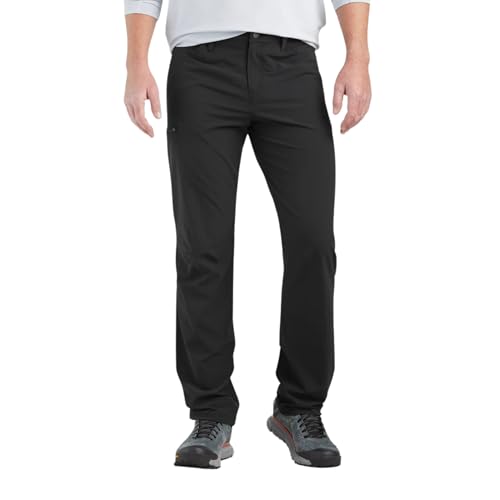
Stretch-oriented alternative when fit and movement are the main comparison.
Consider: Not proved fastest-drying; pocket and waist construction still matter.
Check on AmazonEditorial selections from the products considered for this guide; not hands-on test awards. Budget and premium describe positioning, not a guaranteed current price.
Think first about moisture that starts near your skin. A wicking claim concerns how the textile manages and moves that liquid. Spreading moisture can expose it across a different area of fabric, but movement alone is not the same as removing it from the whole clothing system. The surrounding conditions still influence what happens next.
Drying concerns the loss of moisture from the garment. A pair can be advertised as quick-drying without a clear statement of what it was compared with, how wet it was or the conditions used. The phrase may be useful as an intended-performance description, but it is not a reliable promise that you can wash the pants late at night and always wear them dry in the morning.
Breathability is often used broadly. On a light woven pant, shoppers may be thinking about airflow. On a waterproof shell, the discussion may concern moisture-vapor transfer through a barrier. Those are related comfort concerns but not identical measurements. A number from one test method should not be casually compared with a different method or a vague adjective.
The outcome you want—comfortable clothing during the walk—depends on all of these mechanisms plus the garment and conditions. That is why no single word in the title can settle the decision.
| Claim | Main question it addresses | Question still unanswered |
|---|---|---|
| Moisture wicking | How does liquid moisture move in the textile? | How quickly will the complete garment become dry? |
| Quick dry | How readily does moisture leave after wetting? | Will the waistband and pocket bags dry with the legs? |
| Breathable | What air or vapor transfer is intended? | How comfortable is the exact fit during your effort? |
| Water repellent | How does the outside initially shed droplets? | Is the finished garment waterproof? |
The last row is included because water repellency is often mixed into the same sales sentence. It concerns incoming water on the outer surface, whereas wicking may concern liquid moving from the inside. A garment can combine those features, but their coexistence does not mean it is simultaneously waterproof and as airy as any uncoated fabric.
Read the wording as a collection of individual claims. If one is missing, leave it missing. A known DWR treatment does not establish a wicking result, and a quick-dry title does not supply a breathability test that was never published.
Lay the pants flat and inspect where material is doubled or gathered. Waistbands, pocket bags, belt loops, reinforced seats and rolled hems can contain more textile than the main leg. If you are planning travel laundry, those areas can determine whether the garment is ready to wear again even when the thin sections feel dry.
A phone pocket with several layers may be very useful for storage and still introduce another drying consideration. A soft tricot waistband may improve the feel against skin while behaving differently from the surrounding woven fabric. These are tradeoffs, not defects. The task is to notice them before expecting the garment to behave like a single flat fabric sample.
Check whether the product weight refers to the whole pants or only the fabric's mass per area. Light fabric does not automatically produce the lightest complete garment once closures and pockets are added. Equally, a heavier garment can contain features you genuinely need. Numbers only help when they describe comparable things.
If fast reuse is central to the trip, simpler construction may deserve priority. That does not require declaring every cargo pant slow-drying. It means you should inspect the actual pocket and waistband arrangement rather than letting a single feature word obscure it.
The same pair may feel different on a dry breezy day and in a humid sheltered forest. Drying depends on the surroundings as well as the textile. A product description that omits those conditions cannot promise the same result everywhere.
This matters when washing pants during travel. An airy drying area and a still, crowded bathroom are different situations. Plan enough flexibility that an unexpectedly damp waistband does not become a problem for the next day's itinerary. If you need to pack the garment before it is dry, keep that moisture from transferring to items that must remain dry and attend to it when you can.
During hiking, your effort adds another variable. A pair can be appropriate for a gentle walk and feel clammy during a sustained climb. The answer may involve fit, ventilation, pace or another layer rather than replacing the pants with a product that repeats the same three adjectives more prominently.
For choosing a whole outfit around heat, the hot-weather article combines these issues with coverage and route conditions. This guide instead helps you interpret the mechanisms before using them in that broader decision.
A textile may be designed to manage moisture, but that is not a reason to buy woven trousers that pull sharply across the thighs. Fit affects the space around the body, the position of seams and the way pockets behave. A comfortable intended cut is a better starting point than deliberately compressing the garment to maximize contact.
Try the pants with the underclothing you normally use. Raise a knee and sit. Notice whether the waistband stays in place or whether you tighten it enough to create a band of gathered fabric. Check if the pocket contents pull the material against the leg. Those practical observations often explain discomfort more clearly than a missing technical term.
Stretch percentage is not a wicking or breathability score. A nylon/spandex blend and a polyester woven can create different sensations through both their construction and fit. Neither should receive a universal ranking based only on the principal fiber. The fiber comparison explains how to keep those layers of information separate.
If the pants will sit beneath a shell, test that arrangement too. A breathable main fabric cannot make the overlayer disappear. The complete clothing system determines what moisture can do next.
Columbia's Men's Silver Ridge Utility Pants provide a documented Omni-Wick example. The manufacturer also identifies their recycled-polyester construction. That supports describing the intended wicking function of the exact Utility model; it does not supply an independently measured drying-time advantage over a Ferrosi or another pant.
The North Face Men's Paramount Pants, style NF0A7WZE, are listed with FlashDry-XD and a specified polyester/elastane fabric. Again, the named technology should remain attached to the exact model and wording. Paramount Active, Pro and Convertible variants can differ in cut, composition and details, so the family name is not enough.
Outdoor Research's Men's Ferrosi Pants offer a nylon/spandex comparison with a manufacturer-described resistance profile. They are useful for assessing a stretch-focused garment rather than for declaring a winner in a drying test we did not conduct. The waistband and pocket design remain part of the practical comparison.
These models show different ways brands describe moisture management. Do not translate their separate technology names into a common numerical scale without comparable test evidence. Choose based on the available specifications and the garment's fit, while acknowledging that some performance questions remain unmeasured.
If you already own more than one pair, you can make practical observations without pretending to run a laboratory. After washing according to each care label, note which parts remain damp and whether the garment is convenient to hang. Keep track of the surrounding conditions and avoid turning one experience into an absolute claim about the fiber.
Do not deliberately soak garments in a way that conflicts with their instructions or use excessive heat to accelerate the result. The purpose is to learn how the pants fit your routine, not to force a dramatic performance demonstration. A small note about a slow-drying waistband can be more useful than a stopwatch result with uncontrolled starting conditions.
For a new purchase, ask what evidence would change the decision. If you need overnight laundering, construction and care may be decisive. If you dislike clamminess on uphill walks, fit and ventilation deserve attention. If rain coverage is essential, read the waterproof-layer guide instead of expecting quick drying to answer it.
A careful comparison can end with uncertainty. You may know that two models have suitable fabrics and features without knowing which would dry first in a particular campsite. That is a normal limit of the available information, and it should not be hidden behind a confident but unsupported award.
Yes. Moving liquid within or across the textile does not guarantee that it immediately leaves the clothing system. Exertion, humidity, other layers and the amount of material can all affect the result.
Not as a universal promise. The starting moisture, ventilation, humidity and doubled parts of the garment matter. Read care instructions and allow flexibility in your packing plan rather than relying on an unspecified label as a deadline.
Only if the test method, units and conditions are compatible. Many listings provide no comparable test information at all. In that situation, compare documented construction and fit without inventing a precise ranking.
Treat the three claims as different questions in one clothing system. Ask how moisture moves, how the whole garment dries and what the fabric or vents allow to pass through. Then inspect the waistband, pockets and fit that turn a textile into usable pants. Silver Ridge Utility, Paramount and Ferrosi provide concrete starting points with different descriptions, but no unsupported drying race is needed to choose between them. Match the available evidence to your actual problem and keep enough flexibility for conditions that a product title cannot predict.