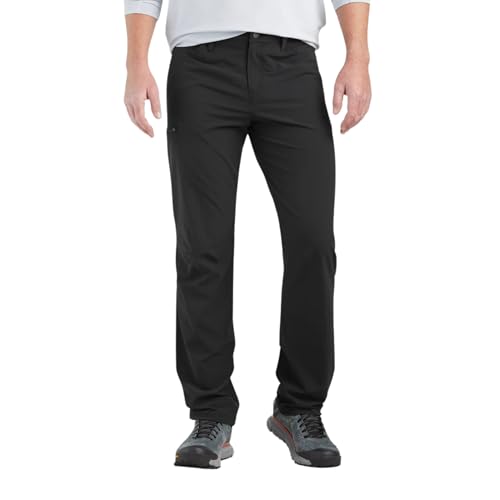
Outdoor Research Men's Ferrosi Pants
A stretch-focused starting point for a moving summer hiker.
Consider: Water resistant, not a rain shell; evaluate waistband warmth.
Check on Amazonweather
The pants that feel pleasantly light in an air-conditioned room can become clingy halfway up a summer climb. Fabric weight is only part of that change. Your pace, the humidity, the shape of the legs and even the pocket bags affect how much warm, damp material surrounds you. A useful hot-weather choice starts with those details rather than a promise that one fabric will keep every hiker cool.
Three places to start
As an Amazon Associate I earn from qualifying purchases. Purchases take place on Amazon.
A stretch-focused starting point for a moving summer hiker.
Consider: Water resistant, not a rain shell; evaluate waistband warmth.
Check on Amazon
Conventional unlined hiking design with manufacturer sun and wicking claims.
Consider: Polyester Utility specification must match the exact version.
Check on Amazon
Pay for adjustable leg coverage when the day genuinely calls for shorts and pants.
Consider: Check conversion zipper fit; do not transfer plain Ferrosi specifications.
Check on AmazonEditorial selections from the products considered for this guide; not hands-on test awards. Budget and premium describe positioning, not a guaranteed current price.
A dry, exposed walk and a humid forest climb can have the same forecast temperature while presenting quite different clothing problems. On the exposed walk, leg coverage and the way the pants sit away from the skin may be priorities. In the humid forest, damp fabric, wet vegetation and limited opportunities to dry clothing can matter just as much. Neither situation is captured by a product title that simply says summer.
Write down where the warmest part of the day will occur. A short approach followed by a long climb calls for different adjustment options than a mostly level route with frequent shaded breaks. Think about the return journey too. Pants selected only for the hottest uphill hour still have to work when you stop moving or encounter a cooler stretch.
For dry conditions, start by comparing an open-feeling cut and manageable fabric bulk. For humid conditions, examine areas likely to remain damp: the waistband, doubled seat, cargo-pocket bags and rolled cuffs. These details can make two superficially similar pairs behave differently in use. We have not measured drying times for the models discussed here, so none is assigned a minute-by-minute performance promise.
The difference between quick-drying, wicking and breathability helps explain why a single marketing term cannot answer this whole decision.
A loose leg does not require a slipping waistband. The useful combination is enough room through the seat and thighs to take long steps, with a waist that stays in position without being cinched painfully. Buying a much larger size to create airflow can leave extra folds under a pack belt and put pockets lower than intended.
Try the pants with the underwear you expect to wear on the trip. Sit, step onto a stair and bend one knee fully. Watch whether the thigh fabric pulls taut across a broad area or whether a cargo pocket becomes trapped against your leg. Stretch can make a close cut easier to move in, but it does not create the same air space as a roomier pattern.
Consider the lower leg as well. A straight opening may be comfortable over a trail shoe, while a narrow elastic cuff can gather fabric around the ankle. An adjustable cuff gives another option, provided you can release it without leaving a long cord to catch on things. The right opening should also let you see your feet clearly on uneven ground.
A light lining or large brushed waistband may feel attractive in the fitting room. For a warm trip, check whether that feature is serving a purpose you need. You cannot remove a permanently attached lining halfway up a climb. Fit and layer selection should be settled before comparing color choices or pocket counts.
Full-length, roll-up and convertible pants solve different problems. Ordinary full-length pants are the simplest: no conversion zipper, no detached legs to store and no rolled bundle below the knee. Their limitation is that changing coverage usually means changing garments. A model with ventilation can offer adjustment without exposing the lower legs.
Roll-up tabs shorten the leg without creating separate pieces. This can be convenient for brief warm stretches, but the roll gathers material into a band. Check where it lands on your calf and whether the tab holds it without repeated attention. A thick roll may be less pleasant when the fabric is already damp.
Zip-off pants provide a more complete conversion to shorts. Columbia's Men's Silver Ridge Utility Convertible Pants are specified by Columbia with a nine-inch shorts inseam, a gusset and articulated knees. Those details belong to the Utility model; they should not be assumed for every older Silver Ridge listing. The circular leg zipper deserves its own seated and high-step fitting check.
Before choosing convertible pants, decide where you will put the removed legs. A wet, dirty pair needs somewhere other than the pocket holding your phone. Also confirm whether the leg opening clears your footwear. A zipper around the knee does not automatically mean you can remove the lower section without taking off a shoe.
| Trip detail | Feature worth inspecting | Compromise to notice |
|---|---|---|
| Long exposed walking | Verified UPF claim and continuous coverage | Vents and rolled cuffs reduce the covered area |
| Humid climbing | Unlined construction and limited doubled fabric | Very minimal pockets may not hold your essentials |
| Cool start, warm afternoon | Usable vents, roll tabs or zip-off legs | Extra hardware adds fitting and storage decisions |
| Rough trail edges | Appropriate fabric placement and controlled cuffs | The lightest garment may not suit repeated rubbing |
Use the table to identify two priorities rather than demand every possible feature. A pair with a heavy reinforcement package, many cargo pockets, a warm waistband and maximum water repellency may include individually useful features without being the best match for a hot walk. More specification lines do not necessarily produce a better summer garment.
Pocket placement deserves special attention if your phone is large. Place it in the intended pocket and climb a few steps. A pocket that swings or presses into the thigh may encourage you to tighten the pants excessively. Sometimes moving the phone to a secure pack pocket is a better solution than selecting heavier trousers solely to support it.
Columbia's Men's Silver Ridge Utility Pants provide a polyester example: Columbia lists recycled polyester, a partial elastic waist, a gusset and a UPF 50 claim. This makes them useful to compare when you want conventional hiking features without a heavily elastic fiber blend. The specification does not establish that they will feel cooler than every nylon competitor.
Outdoor Research's Men's Ferrosi Pants offer a different direction. The manufacturer's listed blend includes nylon and spandex, with a drawcord and a lined waistband. They are described as water- and wind-resistant rather than waterproof. Assess whether the stretch and waist design suit your movement, and inspect the lining rather than assuming the entire garment feels identical against the skin.
A more expensive convertible option, Outdoor Research's Ferrosi Convert Pants, is worth comparing if your route genuinely benefits from changing to shorts. Verify the exact model's details separately: the plain Ferrosi fabric and pocket specification should not be copied across merely because both products use the family name.
These choices are examples of distinct approaches, not results from a side-by-side heat test. The lower-priced option can be the better purchase when its cut and simpler feature set already meet your needs. Conversely, paying for conversion hardware is reasonable if you will use it repeatedly, rather than simply liking the idea of versatility.
A pale pair may appeal for an exposed summer route, but color is not a substitute for a garment's stated sun-protection specification. Two colors can look equally substantial while using different fabrics or treatments. Check the exact description and label for the option you are ordering. Our UPF label guide explains the distinction between a measured rating and general coverage language.
Think about openings and posture, too. A full-length pair can expose the ankle when you step up, and a low waistband may pull down when you bend. Try the pants with the shirt, socks and footwear that will complete the outfit. This is a coverage check, not a guarantee of a health outcome or a reason to ignore the rest of your sun precautions.
Finally, avoid treating a water-repellent title as permission to omit rain planning. Summer weather can change, and a soaked ordinary hiking pant is not equivalent to a waterproof shell. If rain is part of the route decision, use the separate rain-pants guide to work out what an additional layer must do.
After a short local outing, note exactly what felt uncomfortable: a damp waistband, tight knees, swinging pockets or an inconvenient cuff. Those observations are more actionable for the next purchase than deciding that all nylon, all polyester or all full-length pants are too hot.
Only after you change their configuration, and the comfort tradeoff still depends on the fabric and fit. With the legs attached, the conversion zipper adds another band of material to assess. Choose them because changing coverage is useful on your route, not because the zipper guarantees better airflow.
Do not force a woven hiking pant into a skin-tight fit to chase a wicking claim. Check movement room and the manufacturer’s intended cut. A fabric claim does not eliminate the importance of air space, comfortable seams or a stable waistband.
Possibly, but evaluate them against both situations. Exposed dry routes emphasize coverage and airflow; humid routes make damp pockets and slow drying harder to ignore. A versatile pair should meet your main needs in both places without relying on a promised drying time.
Choose summer pants by the discomfort you are trying to avoid. Start with a stable waist, unrestricted steps and an unlined construction, then decide whether the route needs uninterrupted coverage or adjustable legs. Silver Ridge Utility, Ferrosi and a verified convertible alternative give useful starting points with different design priorities. Let the exact fit settle the shortlist. A summer label, a low garment weight or an impressive list of treatments cannot compensate for pants that bind when you climb or stay awkwardly bunched around your calves.