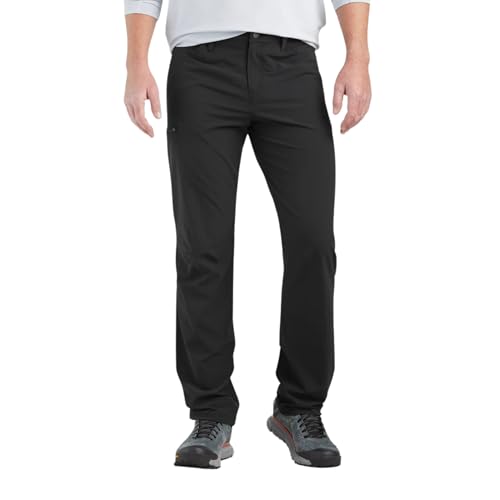
Outdoor Research Men's Ferrosi Pants
A straightforward main pair when separate carried layers manage the changes.
Consider: No removable legs; exact comfort depends on fit and activity.
Check on Amazonweather
At the trailhead you want full-length coverage. On the climb you want less fabric around your legs. By the time you stop for lunch, the breeze makes the morning choice seem sensible again. These transitions are more useful to plan around than the vague promise of all-season pants. The best single pair for a mixed day is one whose adjustments you can use without turning every change in conditions into a prolonged stop.
Three places to start
As an Amazon Associate I earn from qualifying purchases. Purchases take place on Amazon.
A straightforward main pair when separate carried layers manage the changes.
Consider: No removable legs; exact comfort depends on fit and activity.
Check on Amazon
Full-length and shorts configurations for days with substantial coverage changes.
Consider: Rehearse zipper fit and storage of detached legs.
Check on Amazon
Dedicated ventilation when you prefer to retain coverage while adjusting.
Consider: Generation-specific panels and vents; additional complexity and cost.
Check on AmazonEditorial selections from the products considered for this guide; not hands-on test awards. Budget and premium describe positioning, not a guaranteed current price.
Split your planned outing into four moments: getting started, the main climb, the most exposed section and the return. Beside each, write whether you expect to be moving hard, walking easily or standing still. Add any obvious change in shelter or elevation. You now have a more useful description of the clothing problem than spring, autumn or three-season.
Look for the longest part of the day rather than selecting solely for the first ten minutes. If most of the outing involves active walking, a pant that feels slightly cool while you organize your pack may offer a more workable starting point than an insulated pair that becomes excessive immediately uphill. This is a personal comfort assessment, not a rule to deliberately underdress.
Next mark the moments when you can reasonably stop to adjust clothing. A convenient junction before an exposed section may be a better place to add a layer than an awkward position farther along. The garment should support the route plan, including how you will carry any removed pieces.
Finally, separate likely changes from contingencies. You may know you will warm up on the climb while only considering rain as a possibility. Leg conversion could address the first issue; it cannot provide the waterproof coverage needed for the second. Giving each change a name prevents one versatile-looking product from being assigned jobs it cannot perform.
Roll-up pants are attractive for a short period of reduced coverage. The lower leg stays attached, so there are no separate pieces to misplace. However, the rolled material still exists and sits around the calf or below the knee. Check the thickness of that roll, especially with damp fabric, and whether the retaining tab is easy to fasten.
Convertible pants remove more material and produce a true shorts configuration. This is useful when a substantial portion of the day suits that format. It requires somewhere to carry the detached legs and a practical way to remove them over your footwear. The circular zip also changes the fitting task around the knee.
Vented trousers preserve more coverage while providing a dedicated opening. Depending on location and construction, the vent may be useful under a pack or awkward to reach. Look for explicit manufacturer ventilation features; an ordinary cargo-pocket zipper is not automatically a vent.
A plain pair with a separate overlayer is another legitimate arrangement. It can be easier to understand and may suit someone who values uninterrupted fabric and simple care. The disadvantage is carrying and managing another garment. None of these approaches is universally superior. Pick the change you expect to use often enough that its hardware, bulk or extra item earns its place.
Set up the pants as you would at the beginning of the day, then perform the planned adjustment. If you chose convertibles, detach and refit both legs. Check whether the opening passes over the footwear and whether identifying the correct side is straightforward. A pair that converts easily in socks may behave differently over a bulky shoe.
For roll-up designs, walk up stairs after securing the roll. It should stay where intended without repeatedly falling down or squeezing a particular spot on the calf. If you need to loosen a cuff cord first, include that step in the rehearsal. A feature is only convenient when the full sequence is manageable.
For vents, put on the loaded pack and reach the zipper. Make sure you are not opening a pocket holding something important by mistake. Check that the surrounding fabric stays clear of the zip path. Gloves, cold fingers and wet fabric can all make tiny controls more awkward than they look on a product page.
End the rehearsal by returning everything to the original configuration. Reattaching damp lower legs or finding the correct tab matters as much as the initial change. If you dislike the process in a comfortable room, a simpler garment may be the more useful purchase even if its feature list looks shorter.
A built-in lining is always present. That can be convenient when your whole outing calls for similar warmth, but it limits adjustment on a day of warm climbs and cool pauses. Removing the trousers also removes their outer face, pockets and coverage. You cannot unzip the fleece from most ordinary lined hiking pants.
A separate layer allows you to distribute warmth differently, although changing a next-to-skin layer during a walk is not always convenient either. The useful question is when you will need to change, not merely whether two layers are theoretically more versatile than one. Some combinations are best selected before the outing and left in place; others can be adjusted on the move.
The lined-versus-unlined comparison addresses that purchase in detail. Here, use it as a warning against buying permanent warmth just because the trailhead will be chilly. Consider the main activity period and your planned stopping configuration together.
Likewise, a heavier softshell is not automatically a three-season solution. Its reinforced panels and ankle hardware may be useful, but they remain part of the garment in mild conditions. Decide which features make a real difference to your usual routes and which mainly make the pants look more technical.
Columbia's Men's Silver Ridge Utility Convertible Pants provide the straightforward zip-off approach. The manufacturer specifies a nine-inch shorts inseam, articulated knees and a gusset for that model. They are worth comparing if you expect extended periods in both full-length and shorts configurations. Avoid assuming an older Silver Ridge or a differently named women's model uses identical dimensions.
Outdoor Research's Men's Ferrosi Pants show the case for an ordinary stretch-focused pair. The manufacturer lists nylon and spandex, a drawcord and wind/water resistance. This option keeps the main-pant decision simple; changes of coverage or additional weather protection need to come from other clothing rather than removable legs.
Fjallraven's current Keb Trousers M offer mixed fabrics and dedicated ventilation zips. That approach may suit someone who wants to retain leg coverage while adjusting the garment. The manufacturer distinguishes G-1000 panels from stretch panels, so both care and feature interpretation depend on the exact version.
These are not three price levels of the same solution. The lower-priced convertible may do the job you need more directly than an expensive vented trouser. The premium option earns consideration only if its adjustment method fits your habits and route. Use the budget, overall and premium labels as entry points to different decisions, not instructions to upgrade automatically.
If you convert pants to shorts, reserve a place for the lower legs before leaving. A small separate bag can keep dirt away from other items, but wet fabric should not be forgotten there after the outing. Check your storage method against the space in the pack rather than assuming both legs will fit comfortably into cargo pockets.
A carried overlayer should remain reachable when it is most likely to be needed. That may mean changing its location after a weather update or when you begin the exposed part of the route. Repeatedly unpacking everything can discourage you from making an adjustment that was sensible in theory.
Think about drying and reusing the main pair on the following day. A design with lots of doubled fabric, deep pocket bags or thick rolled cuffs can retain dampness differently from a simpler pair. There is no reliable universal drying time to promise, but you can inspect where the material accumulates and choose a laundering arrangement that suits your trip.
After a local walk, write one sentence about each adjustment you made or wished you could make. Examples might include: the leg zipper pressed while sitting; the roll tabs worked but created a bulky calf band; the plain pair stayed comfortable until a windy stop; or the thigh vents were easy to reach beneath the pack. These observations point toward specific changes.
Avoid replacing a generally successful garment because it was imperfect for one brief segment. A small change to a carried layer or pocket arrangement may be enough. Equally, do not persist with a complicated conversion system simply because it was expensive. The most versatile pants are the ones you can and will adapt when necessary.
If rain becomes the main concern, move to rain-layer planning. If sustained winter conditions dominate, use the winter system guide. A changeable-day plan should remain focused on transitions rather than quietly expanding into a claim that one pair covers every environment.
A versatile pair can cover many ordinary outings, but no format eliminates separate decisions about sustained rain, cold or specialized conditions. Look for the adjustments your usual days require and recognize where another garment must take over.
They may be, provided the rolled fabric stays comfortable and secure. Rehearse the roll with your footwear and walk uphill or up stairs. If the bundle binds around the calf, a vented or simpler lightweight pair may be more convenient.
Not automatically. The useful additional item may be a shell or another layer rather than a complete replacement for the main pants. Decide which specific condition the spare item addresses and whether you can change into it practically.
Plan a sequence of comfortable configurations rather than search for an all-season promise. Start with the part of the route where you will spend the most time moving, then select the adjustment that solves the next likely change. Silver Ridge Utility Convertible, plain Ferrosi and current Keb trousers represent removable legs, a simple main layer and dedicated venting. Choose between those approaches by rehearsing them with your shoes and pack. A feature that works quickly and predictably for you is worth more than several adjustments you are reluctant to use.