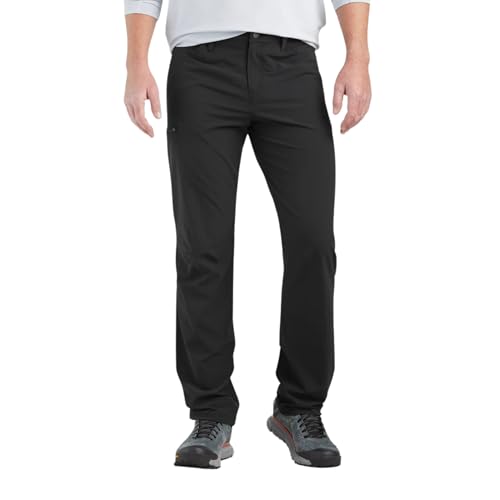
Outdoor Research Men's Ferrosi Pants
An unlined main-pant approach for reuse with separately chosen layers.
Consider: Localized waistband lining is not full-leg insulation.
Check on Amazonmaterials
The appeal of a lined pant is immediate: one garment, a soft interior and less to assemble before leaving. The drawback arrives later, when you want the outer pants but no longer want everything attached inside them. Choosing lined versus unlined is therefore less about declaring one warmer and more about deciding how much of your clothing arrangement should be permanent, and how often your needs change during the same outing.
Three places to start
As an Amazon Associate I earn from qualifying purchases. Purchases take place on Amazon.
An unlined main-pant approach for reuse with separately chosen layers.
Consider: Localized waistband lining is not full-leg insulation.
Check on Amazon
A lower-priced named lined option for a simpler cool-weather routine.
Consider: No invented lining weight or warmth rating; verify exact option.
Check on Amazon
Technical softshell alternative when outer construction matters more than built-in fleece.
Consider: Not presented as a fleece-lined equivalent to Rainier.
Check on AmazonEditorial selections from the products considered for this guide; not hands-on test awards. Budget and premium describe positioning, not a guaranteed current price.
A listing may say fleece lined, brushed interior, mesh lined or insulated. These descriptions are not interchangeable. A thin brushed back can feel different from a separate fleece layer, while a mesh lining may serve another purpose entirely. Before comparing warmth, establish what is actually inside the garment.
Check whether the lining covers the whole leg or only certain areas. A lined waistband does not make the entire pant fleece lined. Similarly, a soft pocket bag is not evidence of an insulated construction. Product photographs can help show the arrangement, but an explicit description or care label is stronger evidence than assuming the interior from the garment's winter styling.
The outer face remains a separate question. It may be a softshell, a cotton blend or another woven textile. Lining does not automatically make that face waterproof. When a title combines thermal, snow and waterproof, look for the supporting construction details rather than accepting the combined phrase as a complete specification.
If the exact lining information is absent, state the uncertainty. It is more useful to know that a pair is described as lined but its interior construction is unspecified than to fill the gap with a guessed fabric percentage or warmth estimate.
A lined pair can make sense when you expect relatively consistent conditions and prefer a simple arrangement. Getting dressed is straightforward, and you do not have to manage the interaction of two separate garments at the waist and knees. For some people, that simplicity is the main reason to choose it.
The compromise appears when a walk contains a sustained climb, a warmer sheltered stretch or a long indoor transfer. The lining remains attached even if you would prefer less material. Opening a vent or loosening a cuff may help with adjustment, but it cannot remove the interior layer.
An unlined pair lets you choose another layer before the outing, or use the trousers alone when appropriate. That can make the same outer garment useful across more of your calendar. However, changing a base layer halfway through a hike is not always convenient, so theoretical flexibility should not be confused with effortless on-trail adjustment.
Think about the choices you can realistically make. If you normally dress for one short, consistently cool walk, a lined format may suit your routine. If the pants must also serve travel days, mild-weather outings and active climbs, an unlined format can be easier to reuse. The changeable-weather guide helps plan those transitions.
A lining occupies space inside the garment. Even when the outside looks similar to an unlined model, the interior fit can feel different. Do not assume your size in an ordinary Rainier or another familiar family automatically gives the same room in the lined version.
Sit and bend the knees while wearing the underwear you intend to use. Notice whether the layers inside catch or pull against one another. A soft interior can be pleasant while standing and still create resistance during a deep step if the cut is too close. The seat and rise deserve the same attention as the waist.
For unlined pants worn over a separate layer, try the exact combination. The inner garment should not bunch behind the knee or create an uncomfortable stack of waistbands. If a shell is also planned, test all three together. The trousers must provide usable room, not simply enough circumference to close the button.
Choose another cut before resorting to an excessively large waist. More overall size can move the crotch and pockets lower, producing new problems. Useful layering space should be located where the clothing needs to bend and slide.
With a lined garment, the outer and inner components are washed and dried as one item. The lining, waistband and pocket areas can become the parts you need to check before packing or wearing it again. No fixed drying interval can be promised without knowing the textile, starting moisture and conditions.
Separate layers allow you to wash one component without necessarily washing the other, when its condition and care requirements permit. That can be convenient on a trip or when one part of the outfit is used more frequently. It also means keeping track of more items and following more than one care label.
Read the drying instructions before purchase if you depend on shared laundry facilities. A garment that needs a routine you cannot reasonably follow may be less practical than its feature list suggests. Do not assume that fleece lining means a hot dryer is appropriate or that every synthetic outer tolerates the same treatment.
The useful comparison is your actual routine: how often you wear the pants, where they will dry and whether you need them again quickly. A comfortable lined pair used once a week at home can be a sensible purchase even if it would be inconvenient for repeated overnight washing during travel.
The warmth-oriented interior and the rain-resistant exterior perform different jobs. Water-resistant lined pants can still take on moisture, and a warm-feeling garment can still need a waterproof shell for the planned conditions. Do not interpret snow pants language as complete evidence of rain protection.
Adding a shell over a lined pair also requires enough space. Check the knees, seat and pockets because the extra bulk may change the shell size or cut you need. An outer layer that fits over your unlined summer pants may not accommodate the lined option equally well.
If the lining becomes damp, the issue is not solved merely because the exterior resumes beading water. The full garment still needs an appropriate drying and care process. This is another reason to keep insulation, surface finish and waterproof construction separate in your notes.
The rain guide explains shell selection, while winter layering places the lined-versus-unlined choice inside a whole cold-weather arrangement. This article stays with the purchase tradeoff of permanent versus separable interior material.
Eddie Bauer Men's Rainier Lined Pants provide a named lined option in the Amazon selection. The listing supports discussing the format, but it should not be treated as a source for an unverified lining weight, temperature range or waterproof membrane. Confirm the exact option's interior description and dimensions before purchase.
Outdoor Research Men's Ferrosi Pants represent the unlined, stretch-oriented alternative in this comparison. Their manufacturer's tricot-lined waistband is a localized feature, not a full-leg fleece lining. That distinction illustrates why a single use of lined in a specification needs to be read in context.
Outdoor Research Men's Cirque III Pants offer a more technical softshell construction to compare with the simpler unlined approach. The presence of substantial double-weave material and ankle features does not justify calling the garment fleece lined without an explicit source. It may serve a different outer-layer preference rather than duplicate the Rainier format.
The tier labels here describe shopping starting points. The budget lined option is not a lesser version of the premium softshell; it solves the simplicity question differently. If built-in lining is what you want, a higher-priced unlined model is not automatically an upgrade. Select the construction first, then compare the exact cost and fit within it.
Imagine someone who wants pants for a regularly scheduled cool morning walk, changes at home afterward and rarely needs the same pair for warm days. A lined option can reduce the number of garments to organize. Their most useful checks are interior feel, knee movement, waistband comfort and the care routine.
Now imagine someone packing for a trip with town walking, hikes of varying effort and limited luggage space. An unlined main pair may cover more of the itinerary, with another layer selected when needed. Their priority is not merely lighter weight; it is avoiding a permanently warm garment that works for only one portion of the trip.
Neither example tells you what to buy without trying the fit. They show how the same product can be convenient in one routine and awkward in another. Describe your own use in similarly concrete terms before deciding that lined must mean better for winter or unlined must mean inadequate.
Finally, consider whether an existing pair already fills one role. Adding a complementary option can be useful; buying two near-identical garments because their marketing uses different warmth adjectives may add little. A clear account of when each pair will be worn keeps the purchase focused.
No. A waistband lining affects one area. Fleece-lined pants normally describe an interior layer extending through more of the garment, but you should confirm its actual coverage and material in the exact product information.
Do not assume so. Most pants sold with a built-in lining are designed to be worn as one garment unless removable insulation is explicitly specified. Cutting out a lining can affect seams and fit and is not a sensible default adjustment.
Possibly, but the lining and pattern can change usable interior room. Compare the exact size information and try the intended clothing combination. A shared family name does not guarantee identical dimensions or feel.
Choose lining according to how stable your clothing needs remain during the outing. A named lined Rainier option can simplify a consistently cool routine; an unlined Ferrosi or a more technical softshell can provide another basis for separate-layer use. Inspect the interior description rather than inferring it from thermal wording, and account for washing, drying and shell fit. The best purchase is the format that works repeatedly in your real schedule. Permanent warmth is useful when you want it consistently and inconvenient when the rest of the day requires something different.