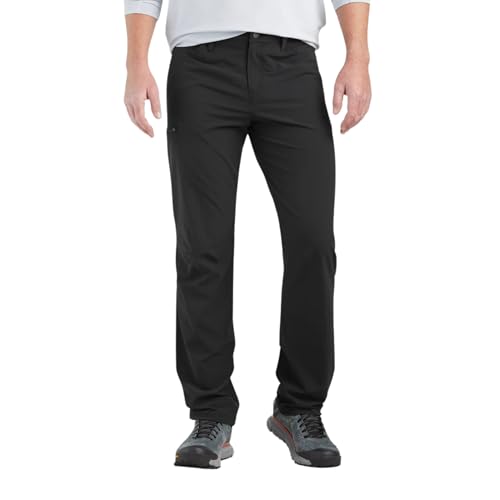
Outdoor Research Men's Ferrosi Pants
A flexible main walking pant to compare within a separate-layer winter arrangement.
Consider: No built-in insulation or waterproof guarantee.
Check on Amazonweather
Winter pants can feel perfect beside the car and excessive twenty minutes into an uphill walk. Later, the same pair may feel inadequate while you wait at a windy junction. That changing workload is why winter legwear is better treated as a small adjustable system. The aim is to match your walking, pauses and expected conditions without making every adjustment require a complete clothing change.
Three places to start
As an Amazon Associate I earn from qualifying purchases. Purchases take place on Amazon.
A flexible main walking pant to compare within a separate-layer winter arrangement.
Consider: No built-in insulation or waterproof guarantee.
Check on Amazon
Built-in lining provides a lower-priced way to compare a simple cold-weather format.
Consider: Listing-only lining detail; exact warmth and waterproof construction not established.
Check on Amazon
More technical ankle and articulation features for demanding layer/footwear interfaces.
Consider: Not a waterproof shell; do not transfer Cirque II specifications.
Check on AmazonEditorial selections from the products considered for this guide; not hands-on test awards. Budget and premium describe positioning, not a guaranteed current price.
Begin with three questions: what sits against your skin, what you expect to walk in most of the time, and what you will add when conditions change. One garment may serve more than one role, but naming the roles exposes gaps. A fleece-lined trouser can provide both an outer face and some insulation; that does not establish waterproof construction. A rain shell may keep precipitation out while contributing little useful insulation on its own.
Your everyday walking layer should be comfortable at the effort you expect to sustain. Choosing it entirely for the coldest moment while standing still can leave you with more warmth than you want on the climb. Conversely, selecting only for a hard ascent overlooks slower sections, navigation pauses and the return journey.
This is not a temperature-rating system. Garment listings rarely provide a controlled rating that accounts for your pace, wind, dampness and other clothing. Treat precise claims that a pair is suitable down to a particular temperature cautiously unless their test conditions are available and relevant. A real plan describes the conditions and changes of activity rather than assigning all responsibility to a number.
Detailed next-to-skin fabric and underwear choices belong in the site's separate underlayer guidance. Here, the important question is whether the complete arrangement remains usable after you put everything on together.
Lay out the pants and any base layer you already own. If the pants are unlined and reasonably comfortable, test that combination before assuming a dedicated insulated pair is necessary. Room around the hips, knees and seat matters more than being able to close the waist button while standing still.
An unlined softshell can be a useful middle ground for active walking when its fabric and cut suit the outing. Softshell is a broad category, however. Some pairs are light stretch wovens; others have more substantial construction and reinforced cuffs. Our softshell comparison explains why the word alone does not reveal warmth.
Built-in fleece deserves consideration when you prefer a simple, ready-to-wear arrangement and expect the same general clothing needs for most of the walk. Its limitation becomes obvious when conditions warm: you cannot remove the fleece and retain the outer trousers. That matters on routes with sustained climbs or big differences between shaded and exposed sections.
Do not buy extra room indiscriminately. A much larger waist can create folds under a pack belt, while a lower-hanging crotch may impede a high step. The better solution may be another cut rather than another numerical size. Layering room must be distributed where your body and clothing need it.
Put on your intended underlayer, then the main pants, then footwear. Take a high step, squat gently, sit and walk up several stairs. The knee should bend without the lower layer dragging tightly across it. Check the back waistband while bending: a gap or a descending waist often becomes more noticeable with a pack on.
Next add the outer shell, if you plan to carry one. Repeat the movements rather than judging its fit over thin indoor clothing. A shell that fits over ordinary trousers may bind over fleece-lined pants. Pay attention to three stacked waistbands, pocket access and whether the main pant's cargo pockets create bulges under the shell.
Check the cuffs with the actual boots. Winter footwear and gaiters may require more opening than summer trail shoes. An ankle zip or adjustable hem can help, but only if it clears the particular equipment you own. A model's inclusion of a boot hook does not mean every gaiter arrangement will be convenient.
Finally put on the loaded pack you expect to use. If a belt buckle or thick seam is uncomfortable after a short indoor check, adding distance will not fix the design conflict. Make notes on the specific contact point instead of merely labeling the trousers too small.
Dry cold and wet snow are different clothing problems. A water-resistant outer face can shed some moisture without qualifying as a waterproof barrier. Kneeling or sitting in damp snow exposes the material differently from walking through a few flakes. The garment name winter, snow or thermal does not establish sealed seams or a waterproof membrane.
If a waterproof layer is part of your plan, make it accessible before conditions require it. A shell buried beneath the rest of your pack is harder to add promptly. Check whether it can go over your footwear and whether the zip is long enough to be useful while dressed. Practice the change at home on a clean floor, without trying to balance on an uneven trail.
Use the rain-layer decision guide for the distinction between DWR and waterproof construction. It also explains why feeling damp inside a shell does not automatically identify a leak: exertion and limited ventilation can produce another source of moisture.
A suitable clothing choice is only one part of a winter outing. Pants do not determine whether a route is appropriate for the forecast or your experience. Keep their job specific: workable movement, manageable warmth and the coverage their verified construction can actually provide.
The Amazon-listed Eddie Bauer Men's Rainier Lined Pants offer a straightforward example for someone considering built-in lining. The listing establishes that named format; it does not supply a universal warmth rating. Before choosing them, confirm the lining and measurements for your exact option and consider whether you can comfortably use the pair on the warmer portions of your walk.
Outdoor Research's Men's Ferrosi Pants illustrate an unlined, stretch-oriented approach. The manufacturer describes water and wind resistance and lists a nylon/spandex construction. That makes them a candidate for comparing a flexible pants-plus-layer arrangement, rather than an insulated equivalent to every winter model.
Outdoor Research's Men's Cirque III Pants provide a more substantial technical comparison. The manufacturer lists a double-weave softshell, adjustable belt, articulated knees and ankle adjustment features. These can be relevant when cuff control and movement around winter footwear matter. They do not make the pants waterproof, and a beacon-pocket feature does not itself establish any level of avalanche preparedness.
The Cirque III specification must remain separate from Cirque II or Cirque Lite listings. Likewise, the name Rainier appears on multiple Eddie Bauer pants. The useful comparison is between three exact garments, not a collection of family names with features borrowed across generations.
Imagine a route that begins cold, climbs steadily and includes a longer break. Before leaving home, decide what you will adjust during the climb and what you will change for the break. The answer might involve opening vents, altering your pace or adding a carried layer. If the only possible adjustment is removing your main pants, reconsider whether the system is practical.
Keep controls within reach. A drawcord tucked beneath several waistbands may be difficult to adjust with cold hands. A belt that works well with one layer may sit awkwardly with two. Zips and snaps should be manageable without pulling fabric into their path, and any loose cords should be secured as intended by the manufacturer.
When you return from a short trial, inspect the inside of the clothing and describe the experience precisely. Was the waistband damp while the legs felt comfortable? Did the outer shell restrict stepping? Did the lining remain too warm once the climb began? Different answers call for different changes. Buying thicker pants addresses only one of those problems.
For a trip with more moderate changes rather than sustained winter conditions, the changeable-weather guide focuses on simpler adjustments to a single main pair. The point of either approach is to know your options before the day becomes inconvenient.
Yes, if the full clothing combination suits the conditions and activity. Check room for the intended base layer and any shell, especially through the knees and seat. Unlined does not mean unsuitable for every cold outing, just as lined does not establish adequate coverage for every winter day.
No. Look for the actual waterproof construction claim, seam information and exact model details. Water-resistant fabric and a warm lining answer different needs. If those specifications are missing, do not infer them from a photograph of the pants being worn in snow.
There is no reliable universal rule. Try the exact layers together and compare the appropriate body-size chart. A different cut may create useful thigh and seat room without leaving an oversized waist. Check the complete system while stepping and sitting, not just while standing.
A useful winter purchase is the pair that works inside your whole clothing arrangement. Establish the configuration you can walk in comfortably, then check what happens when you add a base layer, shell, gaiters and pack. Lined Rainier, stretch-oriented Ferrosi and more technical Cirque III pants represent different approaches, not interchangeable warmth ratings. Choose the simplest system that gives you the adjustments your route actually needs. If the cuffs, waist or knees become awkward once the layers are combined, solve that conflict before committing to the outing.