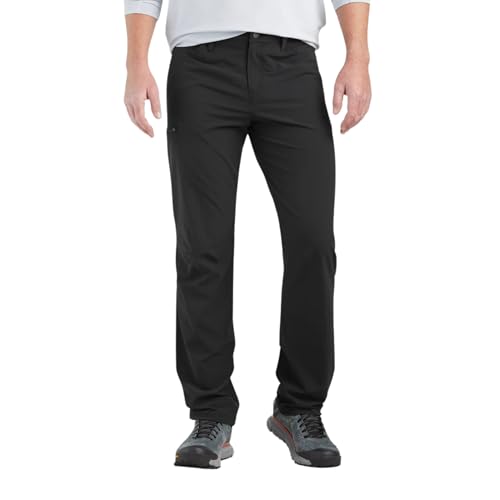
Outdoor Research Men's Ferrosi Pants
A stretch woven baseline for deciding how much more structure a softshell needs to add.
Consider: Lighter reference option; not equivalent to a substantial alpine softshell.
Check on Amazonmaterials
Softshell and woven are not perfectly opposing categories. Many softshell hiking pants are themselves woven fabrics, and the name softshell covers a wide range of designs. That makes shopping confusing if you expect the label to specify warmth, waterproofness or weight. A more useful comparison looks at the construction beneath the name and asks what additional material, shaping or weather resistance is doing for the walk you have planned.
Three places to start
As an Amazon Associate I earn from qualifying purchases. Purchases take place on Amazon.
A stretch woven baseline for deciding how much more structure a softshell needs to add.
Consider: Lighter reference option; not equivalent to a substantial alpine softshell.
Check on Amazon
A simple woven baseline before paying for technical softshell features.
Consider: Not a substitute for a shell or insulated garment.
Check on Amazon
Defined double-weave and ankle features for a more substantial technical option.
Consider: Added construction can be unnecessary for mild walks.
Check on AmazonEditorial selections from the products considered for this guide; not hands-on test awards. Budget and premium describe positioning, not a guaranteed current price.
When a product says softshell, look for a fuller explanation. Is the garment a stretch woven fabric? Does it use a double weave, a bonded lining or reinforced panels? Is there a membrane, or is the weather claim limited to a surface finish? Those details reveal more than the category word by itself.
Lightweight woven pants also vary. One can be a simple polyester design with a conventional waist; another can contain substantial elastane and a supple cut. The comparison should therefore describe two exact garments rather than imagining a single universal softshell and a single universal summer trouser.
A helpful first sentence is: this pair is an unlined stretch woven with limited hardware, or this pair uses a more substantial double weave with reinforced cuffs. If you cannot write that sentence from the available information, keep the missing detail visible. A close-up photograph may show texture but cannot reliably establish every layer of construction.
Once the construction is clear, decide whether those features answer your route's needs. The label itself does not justify paying more or carrying more material.
Some technical pants concentrate reinforcement where contact is expected, such as the seat, knees or lower legs. Others use a substantial textile throughout. That difference matters when you want durability in one area without the same bulk everywhere. It also changes how the garment folds, layers and feels during movement.
Outdoor Research's Cirque III Pants illustrate a defined double-weave softshell with separate scuff-guard material and adjustable ankle features. The manufacturer also lists articulation and belt adjustment. These are reasons to inspect the model for demanding footwear interfaces and movement, rather than evidence that every hiker needs that level of construction.
A lighter woven pair such as Columbia's Silver Ridge Utility serves a different brief. Its conventional hiking features can be sufficient for many ordinary walks without the same ankle hardware. Comparing it with Cirque III is useful precisely because they do not represent interchangeable versions of one product.
Check whether additional material would touch the surfaces relevant to your use. A reinforced instep can be useful around particular footwear and equipment, but it contributes less to someone whose main complaint is an uncomfortable waist. Buy reinforcement for a known contact point, not merely because a product photograph looks rugged.
An unlined softshell can feel very different from a fleece-backed design. The amount of air held within the fabric and the rest of your clothing arrangement also matter. Without an explicit lining description, do not assume a soft interior photograph means the pants are insulated.
Similarly, a heavier-looking pair does not come with a trustworthy universal temperature rating. Your pace and the other layers influence the experience. A garment chosen for slow walking may be too warm on a sustained climb, while the same construction may still need additional coverage during a long stop.
For the purchase decision, identify whether the warmth is built in or supplied separately. Permanent lining simplifies dressing but limits removal. A separate layer can offer another arrangement, although changing it during the outing may be inconvenient. The lining comparison handles that specific choice.
If winter is the main use, work through the complete winter clothing system rather than trying to extract a warmth guarantee from softshell terminology. Here, the goal is to understand what kind of main garment you are buying.
A manufacturer may describe a softshell as wind and water resistant. That is useful context, but it should remain narrower than waterproof. A dense fabric or DWR finish does not automatically provide the construction of a rain shell. If rain coverage is essential, check that requirement separately.
Ventilation can come from the fabric and from deliberate openings. Dedicated thigh or calf vents give a way to alter the garment while keeping much of the leg covered. A simpler pair may instead rely on its lighter construction or a looser cut. Neither approach is guaranteed to feel better for every activity.
Try opening any vents while wearing a pack. If the control is difficult to reach or conflicts with another layer, the feature may be less useful than it looks. Also check whether an opening exposes a pocket containing something you need to keep secure. A pocket zip and a ventilation zip do not necessarily serve the same function.
For an outing with one brief exposed section, a lighter main pair plus a carried layer may be simpler than a heavier softshell worn all day. For persistent cool exposure, the main softshell may reduce repeated clothing changes. That route-based choice is developed further in the wind-resistance guide.
A softshell's stretch can be appealing, but the full fit still matters. The waist, rise and leg shape determine where the textile is already under tension before you take a step. Stretch should support the intended movement, not be used to excuse an unsuitable cut.
Mountain Hardwear's Chockstone Alpine Light Pant is described with a double-weave stretch construction and articulated knees. Those are distinct design features to evaluate. The word Light in the name does not prove it weighs less than every other hiking pant, especially when brands report different sizes or measurement methods.
Put the pants through the positions that matter on your route. For ordinary walking, repeated stair steps and sitting can reveal a lot. For a more movement-demanding outing, inspect how the seat and knee shaping behave through a deeper bend. Do not rely solely on stretching a handful of material away from the leg.
Check the lower opening after movement. A technical cuff can interact with footwear differently from a plain hem, and extra hardware can become cumbersome if you do not need it. The best pattern is the one whose useful features remain useful after the garment is worn with your actual equipment.
Consider both the pants you wear and any additional legwear in the pack. A substantial softshell plus a shell may create a different total bulk than a light woven pant plus the same shell. If you also carry a spare pair, small differences in construction can become more noticeable in the packed system.
Do not compare fabric gsm with whole-garment weight. A fabric specification tells you mass per area, while garment weight includes pockets, closures and trims. Even two finished-pant weights may use different reference sizes. Keep the labels attached to the numbers and avoid a false precision that the data cannot support.
Pocket capacity has a similar trap. More storage can be convenient, but filling cargo pockets changes how the pants move. A lighter pair with sensible pack storage may be more pleasant than heavier pants bought solely to carry everything on the legs. Test the intended load rather than counting pockets on paper.
The price comparison should follow the same practical logic. Extra cost can buy technical construction and adjustment features. It cannot guarantee that those features solve your own problem. A less expensive, simpler woven option remains a strong choice when it satisfies the actual use.
| Your main need | Start the comparison here | Check before choosing |
|---|---|---|
| Mild walks and easy packing | Simple lightweight woven pants | Movement room, pocket usefulness and weather limitations |
| Cooler routes with regular contact or demanding cuffs | Documented technical softshell | Reinforcement location, footwear clearance and bulk |
| High steps with flexible fabric | Stretch construction plus shaping | Waist and seat fit, not just elastic percentage |
| Mixed sheltered and exposed sections | Vents or a removable overlayer | Whether you can make the change conveniently |
Silver Ridge Utility, Chockstone Alpine Light and Cirque III provide different points on this comparison. The named Chockstone version must be matched carefully: Chockstone Trail, Alpine, Alpine LT and Alpine Light listings should not receive one shared fabric paragraph unless their exact identities have been established.
If your existing light pants already work, identify the specific reason for adding a softshell. Wind comfort, a particular cuff requirement or repeated abrasion can justify the change. A vague sense that more technical clothing must be better is a weaker reason to buy and may leave you with a pair that stays at home.
Yes. Softshell is a broad clothing category, and many examples use woven textiles. Compare the actual construction rather than treating the terms as mutually exclusive materials.
Not necessarily. A double-weave construction and an attached fleece lining are different descriptions. Look for an explicit lining statement and the exact product specification instead of inferring insulation from the name.
Only if the new construction addresses the wear or contact you actually encounter. Reinforcement placement, seams and fit matter. A softshell label alone does not establish a longer lifespan than every lighter woven garment.
Read softshell as an invitation to inspect the construction, not as a complete performance specification. Establish whether the pants are lined, where reinforcement sits, how the cuffs work and what the weather claims actually say. Compare that package with a lighter woven pair that already meets ordinary hiking needs. Chockstone and Cirque designs can make sense when their technical features solve a concrete problem; Silver Ridge Utility may be the more useful choice when simplicity is the priority. Choose the garment you need to wear, not the most elaborate category name.