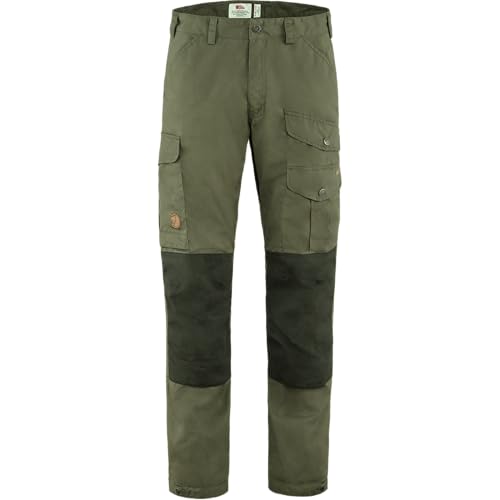
Fjallraven Men's Vidda Pro Trousers
A structured trekking example with documented G-1000 and reinforcement.
Consider: Not waterproof; exact fit generation matters.
Check on Amazonmaterials
A cotton-rich pair can be pleasant for an easy walk and inconvenient for a trip where clothing stays damp for hours. Both observations can be true. The useful question is not whether cotton belongs outdoors under any circumstances, but whether the particular fabric and garment make sense for the conditions, pace and opportunities to dry clothing on your trip. Cotton canvas, stretch casual trousers and reinforced trekking blends are not interchangeable products.
Three places to start
As an Amazon Associate I earn from qualifying purchases. Purchases take place on Amazon.
A structured trekking example with documented G-1000 and reinforcement.
Consider: Not waterproof; exact fit generation matters.
Check on Amazon
A lower-priced synthetic alternative to compare when drying and routine reuse matter more than cotton feel.
Consider: Polyester comparison option, not a cotton-containing pant.
Check on Amazon
Mixed panels provide a different reinforcement and movement approach.
Consider: Wax-compatible and stretch areas need separate treatment.
Check on AmazonEditorial selections from the products considered for this guide; not hands-on test awards. Budget and premium describe positioning, not a guaranteed current price.
For an easy, dry walk near home, a comfortable pair you already own may be sufficient. You can assess movement, footwear clearance and pocket security without assuming a technical purchase is mandatory. If the outing is short and changing clothes afterward is straightforward, the practical consequences of some dampness are different from those on a multiday route.
A longer trip changes the calculation. Repeated rain, wet vegetation, limited drying time and a need to reuse the same pants make retained moisture more inconvenient. The garment's dry feel in a shop does not reveal what it is like after being soaked and packed overnight. A forecast that includes cooler periods makes that distinction especially relevant.
Do not reduce this to a slogan about cotton. Broad slogans can obscure both the situations where an existing garment is useful and the reasons another material may be more practical. Explain the actual tradeoff: how much moisture the clothing may take up, how you will manage it and what other options you have if the main pair becomes uncomfortable.
The point is to select an appropriate clothing arrangement, not promise that a particular fiber makes the outing safe. Route, forecast, experience and the rest of your equipment remain separate decisions.
A pair labeled cotton blend may be mostly cotton with a small addition of elastic fiber, or it may contain a substantial amount of polyester or nylon. Those are different starting points. A small percentage of spandex can change flexibility without making the garment equivalent to a light synthetic trekking pant.
Mountain Hardwear's Men's Hardwear AP Pant provides a concrete cotton-rich example. The manufacturer lists 75% cotton, 22% nylon and 3% elastane for style 2122691, along with a peached woven fabric, articulated knees and roll-up features. That specification belongs to the AP model and should not be copied into the separate AP Active model, which the manufacturer describes with a different, nylon-rich composition.
Fjallraven's current Vidda Pro Trousers M show another construction approach. The manufacturer's G-1000 specification combines polyester and cotton, with reinforced areas and shaped knees. The result is not simply an ordinary cotton chino with a hiking label. It also is not automatically the same as Vidda Pro Lite or Ventilated versions.
These examples explain why comparing cotton against synthetic as two absolute categories can be misleading. Many trekking fabrics combine them. The useful comparison identifies the proportions, the weave, the reinforcement and the intended fit of the exact garment.
A water-repellent treatment can influence how droplets first behave on the exterior. It does not remove the underlying cotton content, and it does not establish that the finished pants are waterproof. Once moisture enters through wear, openings or sustained contact, the fabric still has to dry.
Waxed G-1000 deserves its own treatment rather than being folded into a generic spray-on waterproofing rule. Fjallraven explains that Greenland Wax increases water resistance and explicitly distinguishes that from waterproofness. The company also identifies compatible panels; mixed garments can contain stretch areas that should not receive the same wax treatment.
More wax is not automatically better for every outing. Resistance and airflow are part of the manufacturer's discussion of how the material can be adapted. A treatment decision should match the expected use and the exact garment instructions, rather than assuming that maximum treatment produces an ideal year-round pair.
For deciding whether you need a separate waterproof layer, use the hiking-in-rain guide. A waxed cotton blend may be an appropriate main trouser for a particular trip while still requiring a rain-shell decision. Those two choices are compatible; the finish does not have to perform every job.
Ask where the pants will dry after use. At home, you may have enough time to wash and air them before the next outing. In a hotel, the available space and ventilation can be limited. On a multiday walk, you may have little opportunity to dry a thoroughly wet waistband or reinforced seat before wearing the pair again.
Inspect material buildup. Thick seams, lined pockets and reinforced panels hold more textile than the single-layer leg. A cotton-rich pant with several substantial doubled areas can present a different drying problem from a simpler, lighter construction. This observation does not require an invented drying-time ranking between models.
Consider what happens if the garment must be packed damp. It can transfer moisture to other clothing unless separated appropriately, and it will need attention once you reach a place where drying is possible. That inconvenience may be acceptable on one itinerary and a strong reason to choose another fabric on another.
Compare with the alternatives you actually have. If a comfortable synthetic pair already serves wet trips, the cotton-rich option might be useful for dry local walks. If you need one pair for repeated washing and uncertain weather, ease of managing damp clothing may deserve priority over the preferred feel of the dry fabric.
A less elastic fabric needs enough pattern room to accommodate your stride. Check the seat and thighs, then take a deliberate high step. The goal is not a baggy silhouette for its own sake; it is a cut that lets the garment move without pulling the waist down or tightening sharply across the knee.
Shaped knees and gussets can help distribute movement through the pattern. Reinforced panels can change how one part bends compared with another. Try sitting as well as stepping, because a pair that feels fine on a level walk may become restrictive when the hips flex more deeply.
If a structured pair fits your waist but restricts your thighs, a different cut may be more effective than simply adding an elastic belt. A belt adjusts the waist; it does not create fabric where the garment is too narrow. Conversely, sizing up excessively can create folds that are awkward beneath a pack belt.
This is where trying the complete garment matters more than reading cotton as a comfort guarantee. Some people prefer a cotton-rich surface; others prefer a supple synthetic. Neither preference excuses poor movement fit. A practical choice respects both the feel you like and the way your body moves on the intended route.
The Hardwear AP Pant is worth investigating when you want a cotton-rich pair with explicit hiking-oriented construction details and a less overtly technical appearance. Confirm that the listing is the AP version documented by the manufacturer. An AP Active alternative answers a different material preference and should appear separately in a comparison.
Vidda Pro provides a more structured trekking direction, with G-1000 construction and reinforced areas. Choose it for the features you will use, not because the heavier appearance proves better performance everywhere. Its current manufacturer fit description should not be assumed to match every older listing exactly.
Keb presents a mixed-panel approach in which G-1000 areas and stretch fabric serve different parts of the garment. That design can be relevant to someone who wants reinforcement and movement features together. It also introduces a more involved care distinction between panels and a higher-priced purchase to justify.
These cotton-containing designs serve different preferences; none is a blanket wet-weather recommendation. The shopping panel pairs Vidda Pro and Keb with Columbia Silver Ridge Utility as a synthetic alternative. Consider that different material direction when managing damp clothing matters more than retaining a cotton-rich feel. Hardwear AP remains a manufacturer-documented construction example here, rather than an exact Amazon choice in this shortlist.
Follow the exact label for washing and drying. Cotton-containing blends can respond differently depending on finishing, construction and the other fibers present. Do not assume that every pair will shrink by the same percentage or that a hot wash is a sensible method of correcting a loose fit.
Care also affects finishes. A garment intended for wax treatment needs its manufacturer's process, while a different cotton-rich pair with DWR may require another routine. Household shortcuts that work on casual cotton trousers are not automatically appropriate for technical panels, elastic blends or trims.
Before purchasing, consider whether the maintenance matches your habits. If you want a garment that you can repeatedly wash in shared travel facilities, read the instructions with that situation in mind. If you enjoy a structured trekking pair and are comfortable caring for its compatible finish, that may be a reasonable tradeoff.
There is no need to discard an intact cotton pair because it fails a universal internet rule. Assign it to outings it handles well, and identify the specific conditions where another fabric or layer is the more sensible choice. That creates a useful wardrobe instead of forcing one material to cover every trip.
Spandex primarily changes elasticity. A small percentage does not erase the behavior of the rest of the textile or prove a drying-time claim. Read the complete composition and examine the amount of doubled fabric before comparing travel or wet-weather practicality.
No. G-1000 is a specified blended trekking fabric used in particular constructions, and the exact version matters. It still contains cotton, so the label should not be used to ignore moisture-management questions or imply waterproofness.
Not solely because of the fiber. If they fit comfortably and suit the usual conditions, they may remain useful. Consider another option when a particular limitation—such as prolonged dampness, restricted movement or difficult drying—becomes relevant to a different trip.
Cotton belongs in a trip-specific decision rather than a blanket approval or rejection. Keep a comfortable existing pair for the dry outings it handles well, and be more demanding when repeated wetting, cool conditions or limited drying time enter the plan. Hardwear AP, Vidda Pro and Keb demonstrate different ways cotton can appear in hiking-oriented construction. Read their exact labels and care instructions before choosing. The best reason to buy one is that its feel, structure and features serve your actual use, with its moisture tradeoffs understood in advance.