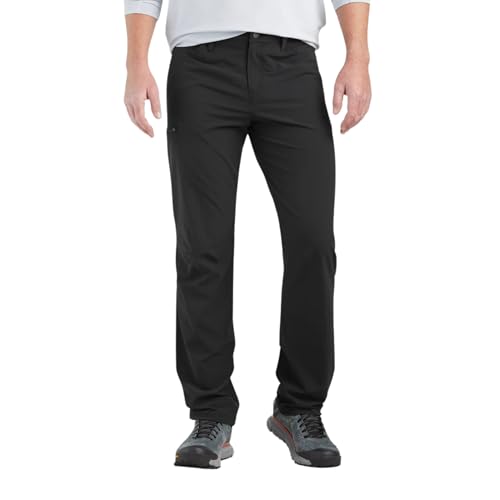
Outdoor Research Men's Ferrosi Pants
A stretch woven synthetic reference for comparing a complete trail pant with wool outer trousers.
Consider: Contains no wool; not an equivalent to a merino base layer.
Check on Amazonmaterials
A search for wool hiking pants can return heavy cargo trousers, tapered travel pants, joggers and thin long underwear. Their shared fiber name hides the most important difference: they occupy different places in a clothing system. Before comparing wool with nylon or polyester, decide whether you want the main outer pant or a layer beneath it. Only then do fabric composition, pocket design and washing requirements become useful purchasing information.
Three places to start
As an Amazon Associate I earn from qualifying purchases. Purchases take place on Amazon.
A stretch woven synthetic reference for comparing a complete trail pant with wool outer trousers.
Consider: Contains no wool; not an equivalent to a merino base layer.
Check on Amazon
A lower-priced polyester outer-pant alternative when practical trail use takes priority over wool content.
Consider: Synthetic comparison option, not a wool recommendation.
Check on Amazon
A verified merino outer-trouser listing for shoppers considering an athletic tapered travel silhouette.
Consider: Confirm exact blend and care; model name is not an odor-duration guarantee.
Check on AmazonEditorial selections from the products considered for this guide; not hands-on test awards. Budget and premium describe positioning, not a guaranteed current price.
A woven wool cargo pant carries keys, closes with a fly and usually functions as the visible outer trouser. A merino base layer is designed to fit underneath something else and may have no useful outerwear pockets. A wool-blend travel pant can function as an outer garment, but its tapered leg and everyday styling do not automatically establish suitability for repeated high steps or rough trail contact.
This distinction matters when a product roundup treats a lightweight merino legging as evidence that wool outer pants are light and packable. It is comparing different jobs. Conversely, a substantial cargo trouser does not prove that every wool-containing garment will feel bulky. Fiber content is one specification; construction and intended role are others.
Sort candidates by role before looking at percentages. Place outer trousers together, keep base layers in a separate list, and treat casual joggers as their own design choice unless their exact details support the activity you have in mind. A shopper seeking one pair for walking and dinner may legitimately prioritize different features from a backpacker choosing a main trail pant.
A useful comparison therefore asks what each garment replaces in your actual wardrobe. If a merino underlayer would be added beneath an existing synthetic pant, that is a layering decision. If a wool cargo pant would replace the outer pant entirely, you need to evaluate its waistband, knees, cuffs and pocket load as a complete trouser.
Wool-rich does not necessarily mean entirely wool. Big Bill's Merino Wool Cargo Pants, style 234MER, are described by the manufacturer as an 80% wool and 20% polyamide blend. That composition is a concrete example of a wool-led fabric using another fiber, rather than a reason to reject it as somehow inauthentic. What matters is whether the finished garment does the job you want.
The same discipline applies to synthetic pants containing elastane. Outdoor Research's published Ferrosi specification includes nylon and spandex, while Columbia's current Silver Ridge Utility uses recycled polyester. Those labels identify materially different recipes, but they do not produce a universal comfort ranking. Fabric weight, weave, pattern and the amount of room around the leg still affect the experience.
Avoid assigning a minimum wool percentage that supposedly makes every pant suitable for hiking. There is no threshold established here. A higher percentage alone does not tell you the garment's abrasion performance, drying time, warmth or fit. Those questions require the relevant construction information and, where performance numbers are claimed, appropriate product evidence.
Also separate fabric weight from finished garment weight. Big Bill describes its fabric as 21 oz; that is not a measured weight for every finished trouser size. Comparing that number directly with a published whole-garment weight for Ferrosi would create a misleading lightweight-versus-heavy calculation.
For someone taking short local walks and wearing the same trousers around town, appearance and willingness to follow the care instructions may outweigh packing convenience. A tapered merino-blend outer pant can be worth considering in that context, provided the actual cut allows comfortable movement. It does not need cargo pockets merely because the walk happens on a trail.
For repeated days of hiking where mud and laundry access shape the plan, cleaning requirements deserve earlier attention. A pant that requires professional cleaning introduces a practical constraint even if its fabric appeals to you. That is not a judgment on wool in general; it is a consequence of the exact garment's label and your itinerary.
For a steep outing involving frequent high steps, first compare movement in the outer trousers. Lift a knee, squat and sit while wearing the intended belt or pack. Pay attention to fabric tension across the seat and whether the knee can bend without drawing the waistband downward. A claim about natural fiber stretch cannot replace checking the complete pattern.
For travel that mixes walking with restaurants or work meetings, a cleaner pocket layout may be more useful than the most technical appearance. Decide how much of the trip actually involves hiking. Buying an elaborate trail pant for a predominantly urban itinerary can be as unnecessary as buying a tailored travel pant for continuous rough use.
Huckberry Proof 72-Hour Merino Wool Pants appear in an athletic tapered men's listing. The name and cut support considering them as a merino outer-trouser alternative for mixed everyday use. They do not establish an independently measured 72-hour odor result, and the model name should not be read as permission to skip cleaning regardless of condition.
Before choosing Proof for a hiking trip, verify the exact composition, washing instructions, pocket security and available movement in the selected version. The athletic tapered description is useful for narrowing a silhouette, but it is not a measurement of thigh or calf room. A trim lower leg may be attractive for travel while deserving extra attention with boots or underlayers.
Big Bill provides a different type of comparison. Its manufacturer page specifies a regular fit, pleated cargo pockets, button-and-flap rear pockets and dry-clean care. Those are meaningful distinctions from a streamlined stretch hiking pant. Consider how loaded cargo pockets behave when walking and whether the care arrangement fits the places you intend to take the trousers.
TUO Velocity Merino Pants are described in the available listing as hunting and outdoor pants. That makes them a possible wool-category comparison, not evidence that every advertised all-season or performance claim has been independently established. Match the exact product details to your hiking requirements instead of borrowing specifications from another wool trouser with a similar use description.
Choosing a synthetic shell fabric for the main pant does not prevent you from using wool elsewhere. A separate merino underlayer may be a component of a colder-weather outfit, subject to fit and the conditions. The outer pant still determines pocket access, much of the contact with vegetation and whether another layer can move comfortably beneath it.
That modular arrangement has a different cost and packing logic from one substantial wool outer trouser. You can change the underlayer while keeping the same outer pant, but adding fabric also changes the fit. Check the waistband, knees and lower legs with the layers together rather than assuming a pair that fits alone will accommodate anything beneath it.
Ferrosi offers a useful synthetic baseline because its manufacturer describes a stretch woven fabric and trail-oriented pocket and waist details. Columbia Silver Ridge Utility offers another baseline with a polyester fabric and a different cut and feature balance. Neither is presented here as a laboratory-proven winner over all wool garments.
If the real decision is what to add underneath existing pants, use the dedicated winter layering discussion rather than buying a new outer trouser simply to introduce merino. Keep the purchase attached to the missing function in your current outfit.
Read the sewn label for the exact garment. Some wool-containing products permit specific washing methods; others require dry cleaning. The Big Bill model above explicitly states dry-clean care, so a general article explaining that some merino garments are machine washable does not override its instruction.
Woolmark's care guidance distinguishes woven and knitted garments and advises drying wet wool away from direct heat or sunlight. Use those principles alongside the manufacturer's label, not as a reason to invent a universal wash cycle for every wool pant. Blends, trims and construction can change the relevant instructions.
For trip planning, translate care into ordinary questions. Where can you clean the garment properly? How will it be supported while drying? Will there be enough time before the next required wear? If the answers are awkward, a different pant may be more convenient even when the wool option initially feels appealing.
Odor marketing does not remove the need to address visible soil or spills. Equally, synthetic content alone does not tell you exactly how frequently a particular wearer will wash a pair. Choose based on the label and actual condition rather than a promised number of consecutive days.
The purchase price is only one part of the decision. A specialized wool trouser that needs a care routine you cannot maintain may see little use. A simpler synthetic pant that covers most of your walks can be the more useful purchase. The opposite can also be true when an everyday merino outer pant fits your clothing preferences and gets worn regularly beyond hiking.
Use the three linked options as contrasting starting points. Silver Ridge Utility is the budget synthetic reference; Ferrosi is the stretch-focused overall reference; Proof is the premium merino outer alternative. These labels describe this comparison's shopping positions, not proof that the premium fabric produces a superior result on every route.
Before ordering, write down the missing facts that would change your choice: the actual wool proportion, allowed cleaning method, thigh room, inseam or pocket closure. Resolve those details for the selected size and version. When the answer remains unavailable, there is no benefit in filling the gap with assumptions about the fiber category.
For a closer comparison of two common synthetic fabrics, continue with nylon versus polyester hiking pants. The question here is broader: which complete garment and care system belongs in your life, with wool outerwear kept distinct from wool worn underneath.
Usually they serve different roles. A thin legging may be an underlayer, while the cargo pant is the main outer trouser. Compare coverage, pocket function and intended wear before treating a shared fiber name as equivalence.
No. Follow the exact care label. Big Bill’s 234MER outer pant specifies dry cleaning, whereas other wool-containing garments may permit a particular wash method. A machine’s wool setting does not override the garment instruction.
The model name is not an independent performance measurement or a cleaning schedule. Consider the actual condition of the garment and the manufacturer’s care instructions; do not plan hygiene around the number in the name.
Choose between complete outer trousers before choosing a favorite fiber. Wool cargo pants, tapered merino travel pants and merino underlayers solve different problems. For a straightforward trail comparison, use Silver Ridge Utility and Ferrosi as synthetic references, then consider Proof when a merino outer garment fits your broader wardrobe. Big Bill illustrates why the exact care label can be decisive. The best purchase is the pair whose cut, pockets and cleaning requirements match your actual week, with any underlayer chosen separately and no unsupported promise attached to a wool percentage.