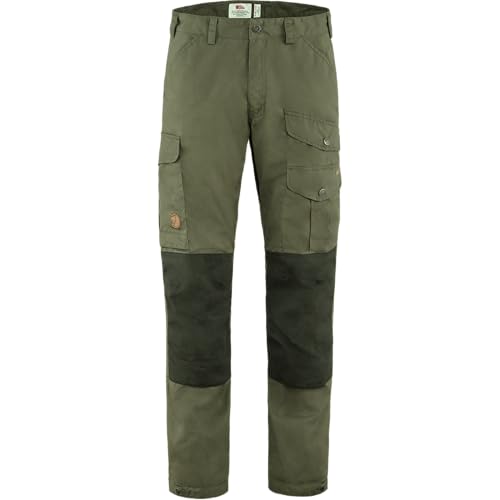
Fjallraven Men's Vidda Pro Trousers
A reinforced-panel alternative for shoppers whose real priority is structured trail construction.
Consider: Not labeled ripstop here; no tearproof claim.
Check on Amazonmaterials
The tiny grid in a fabric can look like a promise that damage will stop neatly at the next square. Real clothing is less tidy than that picture. Ripstop describes a reinforcement approach within a textile; it does not make the finished pants immune to holes, abrasion or failed seams. Understanding that distinction helps you decide whether ripstop is a useful preference or a distracting shortcut when comparing hiking trousers.
Three places to start
As an Amazon Associate I earn from qualifying purchases. Purchases take place on Amazon.
A reinforced-panel alternative for shoppers whose real priority is structured trail construction.
Consider: Not labeled ripstop here; no tearproof claim.
Check on Amazon
A simpler lower-priced woven alternative to compare before buying rugged features.
Consider: Exact source does not establish ripstop.
Check on Amazon
Technical scuff-guard and softshell construction for a different reinforcement approach.
Consider: Not represented as ripstop or puncture-proof.
Check on AmazonEditorial selections from the products considered for this guide; not hands-on test awards. Budget and premium describe positioning, not a guaranteed current price.
In ripstop fabric, reinforcing yarns are incorporated at intervals to create a grid-like structure. Textile supplier TVF describes this as a way to help limit the spread of small tears. The construction can use different materials, so ripstop and nylon are not synonyms. Polyester and cotton-containing fabrics can also use reinforcement patterns.
That distinction matters when a listing says only ripstop fabric. You still need the fiber composition, any stretch information and the intended use of the finished garment. Without those details, you know something about the textile's structure but not enough to predict how the pants will feel during a long climb.
The grid can also vary in appearance. Some are obvious; others are subtle. A photograph can show a texture without proving the exact yarn structure or every performance claim associated with it. Treat a clear manufacturer specification as stronger evidence than deciding from a small product image that the fabric must be ripstop.
The useful interpretation is modest: this construction is one element intended to influence how a tear behaves. It does not settle the entire purchase. A pant with a less visible weave can still have an appropriate design for your route.
A snag can start a local tear. Repeated rubbing can gradually wear an area thin. A seam can fail where pieces are joined, and a zipper can stop working while the surrounding textile remains intact. These are different forms of damage, so one fabric feature cannot be expected to prevent all of them.
If your previous pants wore through at the inner thigh, ask about fit, rubbing and material placement there. A ripstop grid elsewhere on the leg is not a complete answer. If the cuff repeatedly catches under a heel, the hem length and opening may need attention before choosing a tougher-looking fabric.
Likewise, a pack belt can concentrate contact around the waist. Pocket edges may receive repeated stress from the way you carry a phone or other items. Those local issues require a garment-level assessment. The broad durability inspection guide covers them in more depth; the point here is to avoid assigning their solution to a weave name.
A tear-resistant design can be useful without being tearproof. Do not interpret the name as permission to force the fabric past sharp obstacles or continue using a damaged area without inspection. A reinforcement grid is a construction feature, not a substitute for noticing wear.
Waterproofness requires its own evidence. The presence of a reinforcement pattern says nothing by itself about a membrane, coating, seams or openings. A light ripstop shell fabric could be used in a waterproof garment, while a ripstop hiking pant could have only limited water resistance. The surrounding construction determines the distinction.
A DWR finish is also separate. It affects the way droplets interact with the exterior and can require care over time. It does not turn the ripstop grid into a waterproof barrier. When rain is central to the outing, check the rain-layer decision rather than treating a rugged fabric description as sufficient.
Sun protection is another independent claim. You cannot assign a UPF rating from the grid pattern, fabric color or fiber name. Look for a stated applicable rating for the exact garment. A broad outdoor-use title does not fill that gap.
The same discipline applies to wind. Some ripstop fabrics are built for very light wind layers, others for structured trousers. Without comparable test information, their shared name does not provide a numerical ranking of airflow resistance.
When pants are too tight through the seat or thighs, ordinary movements can put repeated tension across the textile and seams. Choosing ripstop does not remove the need for adequate movement room. Check a high step and a seated position instead of judging the size only at the waist.
A gusset, articulated knee or roomier cut can reduce the amount of pulling needed for movement. Elastic fiber can provide another kind of flexibility. Those features are not interchangeable with the reinforcement grid, though a garment can combine several of them.
Ask whether the stretch claim applies to the whole fabric or only certain panels. A pair with a reinforced area may bend differently across that section. On a mixed-panel trouser, the most useful movement may come from the stretch areas rather than the fabric carrying the rugged-sounding name.
For shoppers replacing a favorite pair, identify what actually worked. If it was the comfortable rise, controlled cuff and secure pocket placement, preserve those priorities. A new ripstop model in an unsuitable cut may be a worse purchase than a non-ripstop alternative that matches the fit you need.
A ripstop pattern exists within the fabric. A reinforced knee or seat adds material or a different textile to a specific area of the garment. The two approaches can coexist, but one should not be described as the other.
Fjallraven Vidda Pro offers a useful example of why this matters. The manufacturer documents G-1000 construction and reinforced rear and knee areas for the researched current model. That does not give us permission to relabel the garment ripstop. Its panel placement is a legitimate feature to compare on its own terms.
Outdoor Research Cirque III similarly uses a defined softshell construction with scuff-guard material in particular areas. The fact that a model has a robust technical description does not establish a ripstop grid unless the source states it. Columbia Silver Ridge Utility provides a simpler woven comparison, again without needing to invent a weave claim.
These alternatives can satisfy some shoppers who began with a ripstop search but really wanted a durable hiking design. If the grid construction itself is a firm requirement, keep it as a filter and seek explicit evidence. If the real requirement is reinforcement in a certain location, compare that feature directly.
| Question | Useful evidence | Insufficient shortcut |
|---|---|---|
| Is it actually ripstop? | Exact product or textile specification | A grid-like photograph |
| What is it made from? | Complete fiber label for that model | Assuming all ripstop is nylon |
| Will it move comfortably? | Fit, shaping and applicable stretch details | Rugged or tactical in a title |
| How does it manage rain? | Separate finish and waterproof-construction evidence | Inferring waterproofness from weave |
| Where is it reinforced? | Documented panel locations | Calling the whole garment indestructible |
Use the checklist before comparing price. A cheaper product with missing specifications is not necessarily worse, but the uncertainty should remain part of the choice. An expensive product should meet the same evidence standard rather than receiving assumed features because of its brand.
Be especially careful with multipurpose marketplace titles that list hiking, work, tactical and waterproof together. A long title can combine claims without explaining construction. Those claims need independent checking; the number of activities named does not establish suitability for each one.
Ripstop can be a sensible preference when you want a particular fabric construction and can confirm it in the exact garment. It should usually sit alongside other requirements, not above them all. A pair that binds at the knee or lacks the inseam you need will remain inconvenient regardless of the weave.
Make a two-column note: the problem I want to solve, and the feature that addresses it. If the problem is uncontrolled cuffs, the answer may be hem adjustment. If it is a repeatedly worn seat, panel construction deserves attention. If it is a concern about a small snag spreading, ripstop may be relevant, with realistic limits.
This also prevents unnecessary upgrades. An intact pair that serves your usual route does not need replacement simply because a newer option advertises a grid. A future purchase can incorporate the feature when it solves an identified need and the rest of the garment remains suitable.
If fabric catches on something, stop pulling against it and inspect the affected area when practical. Look for an opening, damaged yarns or a nearby stressed seam. The product's name cannot tell you whether that particular damage will remain small.
Choose repair methods according to the textile and the location of the damage. Stretch areas, coatings and heavily loaded seams may require different treatment from a simple flat patch. A repair that works on a pack is not automatically appropriate for a moving knee or a closely fitted seat.
Keeping the damage visible in your decision is more useful than assuming the grid has solved it. For a purchase, this means asking what evidence supports the construction. For an existing pair, it means responding to the condition in front of you rather than the promise suggested by the word ripstop.
No. Ripstop describes a reinforcement construction, and different fibers can be used. Read the composition separately so that the weave term does not hide the actual material or any elastic blend.
Yes. Repeated abrasion, fit-related rubbing and local wear can damage fabric despite a reinforcement pattern. Evaluate the location and cause rather than assuming the name guarantees that every kind of damage is prevented.
No. They are clearly identified hiking-pants alternatives with documented construction features. We do not assign a ripstop claim where the exact manufacturer information does not establish it. Use them to compare the broader need for reinforcement and useful trail design.
Keep ripstop in its proper place: a useful construction detail with specific limits. Confirm the weave, then compare fiber, movement fit, reinforcement location and the weather claims separately. A shopper who really needs a controlled cuff or a better-fitting seat should solve that issue directly rather than buying a grid pattern as a universal upgrade. The alternatives discussed here demonstrate different approaches to hiking-pants construction without being mislabeled ripstop. Choose the exact feature that addresses your problem, and continue to inspect and care for the garment after purchase.