
Columbia Men's Silver Ridge Utility Pants
Mixed security and cargo storage provides a practical layout to assess.
Consider: Exact device fit and hipbelt clearance are not established by pocket names.
Check on Amazonconstruction
A pocket earns its place when you can reach the thing inside without rearranging your pack or interrupting your stride. Pocket count alone misses that point. Six poorly positioned compartments can be less useful than two that fit your phone, stay closed and sit clear of a hipbelt. Plan the small load you actually carry, then examine how each pocket changes once the trousers are on your moving body.
Three places to start
As an Amazon Associate I earn from qualifying purchases. Purchases take place on Amazon.
Mixed security and cargo storage provides a practical layout to assess.
Consider: Exact device fit and hipbelt clearance are not established by pocket names.
Check on Amazon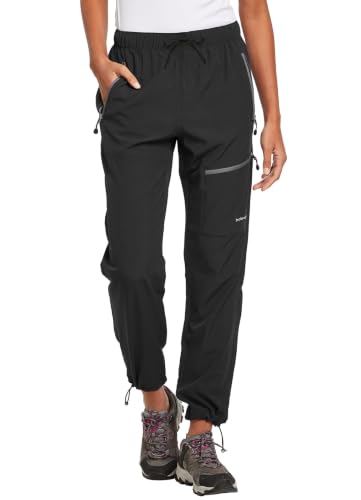
Lower-priced listing family for comparing multiple closures and a light pocket load.
Consider: Check the exact version rather than assuming all BALEAF pocket maps match.
Check on Amazon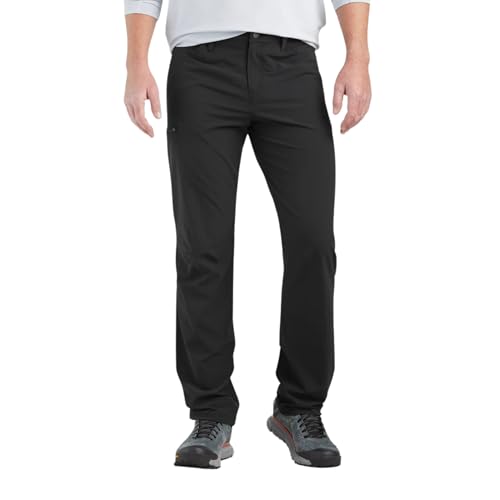
Documented hip and rear security storage offers a more expensive alternative layout.
Consider: A premium price does not establish compatibility with your phone or pack.
Check on AmazonEditorial selections from the products considered for this guide; not hands-on test awards. Budget and premium describe positioning, not a guaranteed current price.
Lay out what you genuinely need on your body rather than in the pack. That might be a phone, a small tissue packet, a key and one snack. Separate items you use repeatedly from those carried only in case. An object that rarely leaves its compartment may belong in a secure pack pocket, freeing the trousers from weight and clutter.
Now identify anything hard, sharp-edged or awkwardly shaped. A car key can press through a thin pocket bag when seated, and a rigid phone can bridge the curve of a thigh. Do not put fragile objects in positions that repeatedly meet rock, a bench or a hipbelt. This is a placement decision, not a promise that a particular pocket protects electronics.
Avoid designing the system around the maximum load the pants can physically hold. A stuffed garment can pull downward, alter waistband fit and change how fabric moves around the knees. The useful target is an ordinary walking load that stays comfortable. If your day requires many bulky tools or supplies, a separate carrying system may be more appropriate than adding another cargo compartment.
Group items by how often they leave the garment. A snack wrapper needs a place to return after use, not only a place for the unopened snack. A key that stays untouched all day can occupy a less convenient secure compartment than a repeatedly consulted phone. Planning the return journey of each object keeps the pocket system from becoming less orderly as the day goes on.
Phone compatibility involves more than screen size. Use the phone with its ordinary case, grip or accessory attached. A pocket opening must admit the widest part, and the bag must accommodate the object's length without leaving it perched against the closure. Manufacturer pocket dimensions, when supplied for the exact model, help narrow a shortlist but do not replace a movement check.
Insert the phone while standing, then sit and raise a knee. Look for pressure where the lower edge meets the thigh. A pocket can be deep enough yet poorly placed, especially if the item lies across the hip crease. If the phone jams the opening when bent, retrieving it may become more difficult precisely when you stop to check a map.
Do not infer dimensions from a product photograph showing an unfamiliar object. Camera angles and garment sizes change the impression. If a listing merely says phone pocket, treat that as the intended purpose rather than proof of compatibility with your device. Ask for a measurement or choose a purchase route that lets you assess fit under the seller's actual terms.
A waistband and front-pocket layout that works without a pack can change under a hipbelt. Put on the loaded pack you normally use and settle it as intended. Check whether the belt crosses the opening, traps a zipper pull or presses an item into your pelvis. Do not assume that a pocket remains accessible simply because its top sits below the waist seam.
Reach each compartment with the opposite hand as well as the nearest one. This can reveal an opening that is awkward when one hand holds trekking poles or steadies the pack during a stop. You need not demand effortless access from every angle, but you should know which items require a deliberate pause.
Outdoor Research describes a right-hip mesh security pocket and a zipped rear pocket on the referenced men's Ferrosi Pant. That location information is useful, but it does not establish compatibility with every hipbelt. The exact belt width, trouser rise and wearer proportions decide the interface. Compare pocket placement on the body rather than turning a brand's waist description into a blanket access guarantee.
An open hand pocket is quick to use but offers no fastened barrier at the opening. A zipper can retain small items during movement when fully closed, although the slider must be easy to grasp. Hook-and-loop closures may be simple to locate by touch but can collect debris and require the surfaces to meet properly. Flaps add coverage yet can interfere with a hand approaching from above.
Try each closure with the intended object already inside. A zipper that works smoothly empty may be under tension when the pocket is full. Keep fabric clear of the teeth and avoid forcing the slider around an object that is too large. Check that a pull does not protrude into another layer or catch on adjacent gear during ordinary movement.
No ordinary trouser pocket should be treated as a waterproof container unless its construction is specifically documented for that purpose. A covered zipper or a water-repellent face fabric does not establish waterproof storage. Use an appropriate separate container for something that must stay dry, and consider whether the pack offers a better location for it.
| Observed problem | First change to compare |
|---|---|
| Phone presses when seated | Move it away from the hip crease; compare another compartment before changing trouser size. |
| Thigh pocket swings while walking | Reduce the load or compare a higher, closer-fitting storage position. |
| Hipbelt covers the zipper pull | Move frequently used objects to an accessible location and reserve that pocket for infrequent access. |
Swing usually comes from an object hanging away from the leg in a roomy bag. Bounce can occur when it moves vertically with each step. Pressure comes from a relatively fixed object being held against the body. A slimmer pocket may reduce movement yet increase pressure, so simply choosing the tightest compartment is not always the answer.
Walk up and down a short familiar stairway with your typical pocket load. Then sit for several minutes. If the item swings near the knee, a higher location or smaller load may help. If it presses at the hip, moving it laterally or into the pack may work better than sizing the trousers up. Changing garment size to solve one loaded pocket can introduce a loose waist or excess fabric elsewhere.
Rear pockets deserve particular caution when sitting because the body can load whatever is inside. Remove rigid objects before settling onto them. A zipped rear compartment may suit a small flat item during walking, but that does not make it the ideal place for a phone throughout the day. Decide how your sitting routine fits the storage plan.
Columbia lists a zipped security pocket and hook-and-loop cargo or rear storage on the current Men's Silver Ridge Utility Pant. The current prAna Stretch Zion Relaxed has a left zipped cargo pocket. Mountain Hardwear's current Men's Hardwear AP Pant lists two zipped back pockets and a thigh phone pocket. These layouts offer different starting points, not a numerical ranking of usefulness.
The current Stretch Zion Standard is a separate style with a concealed front zip pocket and cargo zipper described by prAna. Do not assume an older Zion II or a similarly named Amazon listing shares that map. Likewise, an AP Active title is not permission to copy every closure feature from the cotton-rich AP model. Match the named version before relying on a compartment for a specific task.
BALEAF listings that advertise multiple zipped pockets can provide a lower-priced comparison, but count does not reveal shape or placement. Inspect the exact selected garment. A useful shortlist might deliberately include a simple security-pocket pant, a compact cargo design and a more compartmentalized option so that the fitting exercise answers which arrangement you prefer.
Give the objects that stay in your trousers consistent homes. Consistency makes it easier to notice when something is missing and reduces the temptation to search every compartment at a stop. Keep the routine simple enough to remember after a long day: one place for the phone, one secure place for a key, and disposable packaging returned to an appropriate container.
Before taking the pants off or washing them, empty every pocket and open hidden compartments deliberately. Small objects can lodge in corners that a quick pat misses. Check the pocket bags for obvious wear at the same time. A thin spot or opening is a reason to stop relying on that pocket until it has been addressed appropriately.
Revisit the arrangement when you change packs or phones. A new case may alter fit more than expected, and a wider hipbelt can turn a convenient pocket into an inaccessible one. Good storage is a relationship between garment, objects and other gear. The trousers cannot establish it on their own, even when the product name emphasizes cargo capacity.
Use whichever fits the cased phone without interfering with sitting, stepping or pack access. A thigh pocket can move the phone away from the hip crease, but a low or loose pocket may swing. Test both positions with your usual load.
A closed zipper adds an access step and helps retain contents during movement, but it is not a theft-proof system. Placement, attention and the surrounding situation still matter. Do not treat a security-pocket label as a guarantee against loss.
The load may exceed what the waistband comfortably supports, or the waist and rise may not suit you. First reduce or relocate the contents. Tightening a belt excessively can create discomfort without solving the pocket-placement problem.
Buy the pocket arrangement that works with the objects and pack you already use. The best evidence is a comfortable loaded walk followed by an equally comfortable sit, with closures you can operate and openings you can reach. A smaller, orderly system often beats maximum capacity. Choose exact model layouts with care, then keep rigid, bulky or moisture-sensitive items in a more suitable place when the trousers cannot carry them well. Pocket usefulness is measured in fewer awkward moments, not in the largest number on a product title.