
Columbia Men's Silver Ridge Utility Pants
Regular-cut reference with a partial elastic waist and gusset for the full movement check.
Consider: Utility construction must match the exact listing; regular fit is not universal.
Check on Amazonfit
A pair of hiking pants can look convincing in a mirror and still pull against your knees on the first steep step. Standing tells you where the fabric rests; movement tells you whether the garment has enough room, the right proportions and useful shaping. Treat a fitting as a short sequence of ordinary trail motions. The goal is comfortable movement with a stable waistband, not a particular silhouette or the loosest pair in the store.
Three places to start
As an Amazon Associate I earn from qualifying purchases. Purchases take place on Amazon.
Regular-cut reference with a partial elastic waist and gusset for the full movement check.
Consider: Utility construction must match the exact listing; regular fit is not universal.
Check on Amazon
A fixed-waist catalog example for comparing upper-leg room and waist stability against adjustable formats.
Consider: Athletic fit is listing wording, not proof of extra thigh room; do not transfer Guide Pro 2.0 features.
Check on Amazon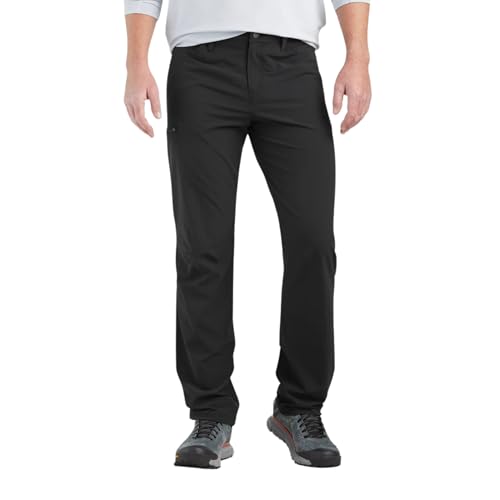
A stretch-focused alternative with an internal drawcord to compare under movement.
Consider: Greater stretch does not correct a short rise or wrong thigh shape.
Check on AmazonEditorial selections from the products considered for this guide; not hands-on test awards. Budget and premium describe positioning, not a guaranteed current price.
Wear the underwear and any thin layer you normally use beneath your trail clothing. Empty dress-pants pockets before changing, then bring the actual small items you expect to carry. A phone, key pouch and folded map change how pocket openings and thigh fabric behave. Testing with empty pockets alone can miss a problem you notice on every walk.
Start with the waistband resting where this model is designed to sit. Pulling a mid-rise pair much higher to improve the hem can create apparent crotch tightness; wearing it unusually low can make the seat seem baggy. Fasten the normal closure without a belt first. Use a belt later to assess fine adjustment, rather than disguising an unsuitable waist.
Try both adjacent sizes if the chart puts you between them, but keep the same movements and pocket contents for each. Otherwise you may choose the pair that received the easier test. Remain indoors and follow the seller's return conditions while deciding; washing or altering a questionable pair removes useful comparison options.
A stable waist stays in place while you walk, reach overhead and sit. It need not grip so tightly that the fabric leaves a persistent hard ridge or makes you want to undo the closure. Evaluate the front fastening, sides and rear separately. An elastic panel may accommodate one area while a rigid front still presses when seated.
Sit on a normal chair for several minutes rather than briefly crouching in front of a mirror. Lean forward as if tying a shoe. Notice whether the closure digs in, the waistband rolls, or the rear drops enough that you keep pulling it back. Those observations are more useful than a universal rule about inserting two fingers under the waistband, because finger size, elastic tension and preferred wearing position differ.
If the waist is slightly generous but the rest works, a modest adjustment can be reasonable. If holding the pants up requires large folds under a belt, compare another waist-to-hip proportion. Our guide to waist gaping addresses that specific mismatch.
The rise connects the waistband to the crotch seam. Too little usable rise can pull the back down when you sit or climb; excess fabric can hang low and interfere with leg movement. Neither diagnosis should come from the appearance of a single wrinkle. Look for what happens repeatedly when you move.
Take a comfortable squat, then straighten. If the pants drag the waistband downward and do not recover without adjustment, check whether the seat is restricted, the rise is too short, or both. A larger size might add room, but it may also introduce a loose waist. A different pattern can be the better answer when the trouble repeats across neighboring sizes.
Stretch fabric does not make this check unnecessary. Fabric that is already pulled taut while standing has less comfortable movement reserve. Likewise, a crotch gusset changes seam layout and available shape; it does not guarantee enough seat depth for every wearer. Choose the pair that supports your ordinary range of motion without asking its elastic fibers to compensate for the wrong dimensions.
Step onto a stable, low stair while holding a rail if needed. Repeat with the other leg, then lift a knee as you would over a root. You are assessing clothing, not testing balance or flexibility. Stop at the movements that are normal and comfortable for you.
Watch where the tension begins. Horizontal pressure across the upper thigh suggests a different issue from resistance directly over the bent knee. A tight lower leg can also pull fabric downward and make the knee seem restricted. Smooth the leg into its normal position and repeat before deciding that the entire pant needs to be larger.
Articulated knees use seams or darts to place extra shape around a bend. Their usefulness depends on those shaped areas landing near your knees. If the knee panel sits far below the joint, shortening only the hem will not move it. If your waist fits but the upper leg stays tight, use the more targeted larger-thigh fitting workflow before sizing up again.
Put your normal phone in its intended pocket and take several steps. It should not force the pocket opening outward, pull across the hip, or repeatedly strike the knee. Pocket depth and location matter as much as the number advertised. An otherwise good fit may work better with the phone in a pack pocket instead.
Bend to reach a shoe and retrieve a small item from each pocket you expect to use. Look for zipper sliders or folded contents pressing against the thigh. Close the pockets and check again; an open zipper can conceal tension by allowing the opening to spread. A pocket that feels easy while standing may be difficult under a hipbelt.
For convertible pants, test the leg zipper ring in both a seated position and a high step. The fabric above and below may stretch while the zipper band does not. You do not need to reject all convertibles if one pair binds; compare its zipper height and circumference with another model before deciding the format cannot work.
Add the pack you intend to carry, adjusted as you normally wear it and with a representative load. A pack changes the pressure around the waist and can hold a loose waistband in place during a misleadingly successful trial. First confirm that the pants work without it, then inspect the interaction.
Walk, sit briefly and reach for a pocket. A buckle, belt loop, drawcord knot or thick seam may lie directly beneath the hipbelt. Moving one adjustment slightly can solve a small clash, but repeatedly shifting the pants to escape pressure indicates that this waistband and pack may be a poor combination.
Note whether the discomfort appears immediately when the pack is fastened or only after a particular movement. That timing helps separate a fixed contact point from fabric that gathers as you bend. Record the observation and use the focused waistband and hipbelt guide to compare closure designs without repeating the entire fitting sequence.
Columbia's Men's Silver Ridge Utility Pants offer a regular fit, partial elastic waist and gusset. That combination is a useful starting comparison when you want some waist adjustment without treating the entire garment as a stretch legging. Check the exact Utility version: an older Silver Ridge listing is not sufficient evidence for the current model's construction.
The current prAna Stretch Zion Relaxed Pant is described as relaxed straight, with an adjustable webbing waist and ventilated gusset. It presents a different shape to compare with a closer-fitting cut. The Standard and Slim versions should be assessed separately; the family name does not establish identical room through the seat or leg.
Outdoor Research's Men's Ferrosi Pant provides another approach through its listed nylon-and-spandex fabric and internal drawcord. More elastic fiber is not a promise that it fits every larger thigh or every hip-to-waist ratio. Compare what happens in the movements above, then choose the features of the pair that already fits. A technically elaborate fabric cannot repair an incompatible pattern.
A slightly long plain hem, a comfortable waist needing a small adjustment, or a pocket better used for a lighter item may be manageable. A crotch that constantly pulls, knees that bind on ordinary stairs, or a waistband that must be relocated after every sit is a stronger reason to try a different size or model.
Write down the failure rather than simply noting that a pair feels wrong. For example: waist stable, seat pulls on sitting, right cargo pocket presses when full. This gives you a useful comparison for the next pair and prevents buying another garment with the same unresolved problem because its fabric sounds better.
Finally, repeat the successful movements after wearing the pants indoors for a while. Fabric settling, elastic relaxation and a seated posture can reveal changes that a thirty-second try-on misses. Judge length separately with your footwear using the hiking-pants length check. Overall fit passes when the garment remains comfortable and functional through the ordinary positions you actually use.
No. The waist needs to stay stable while the seat, thighs and knees retain enough movement room. Extra cloth at every point can introduce sliding, bunching and swinging pocket contents. The useful amount of ease depends on the pattern and your intended movements.
It is one useful check, but it does not test seated waist pressure, loaded pockets, hem clearance or a backpack hipbelt. Combine a squat with a step, walking and several minutes of sitting to locate different restrictions.
The pocket may occupy space already needed by your hip or thigh, or its shape may pull the surrounding fabric when loaded. Try a different pocket, a smaller load or a model with better pocket placement before increasing the entire size.
Choose hiking pants by the movements they accommodate, then by the features you prefer. A stable waist, unforced seat and free step provide a better foundation than a fit label such as athletic or relaxed. When one region is tight and another loose, change the proportions rather than automatically adding size. Keep notes from your pack-and-pocket trial, and repeat the same sequence on competing pairs. The right result is a garment you can stop adjusting during an ordinary walk, without depending on excessive belt tension or constant fabric stretch.