Map the contact instead of loosening everything
Put on the pants with normal pocket contents and adjust the waist as you would for a walk without a pack. Then fit the backpack according to its own instructions and your usual load. Do not begin by moving the pack to escape a buckle; first identify the point that causes pressure.
Check the center front, both sides and the back of the waistband. Hard contact may come from a belt buckle, button, zipper guard, drawcord knot or thick belt loop. A folded shirt hem or bunched trouser fabric can create pressure even when there is no obvious metal or plastic part beneath it.
Walk for a few minutes and reach forward. Notice whether the pressure stays in one place or appears only when the pack shifts. A single persistent point suggests a local hardware conflict; a broad tight band may reflect the pants' waist tension, the pack adjustment or both. Change one element at a time so you can tell which adjustment helps.
If a small position change clears the contact while both garments remain comfortably placed, it may be enough. If the only solution is wearing the pants far lower than designed or moving the pack away from its appropriate fit, compare a different waistband arrangement instead of normalizing that compromise.
Compare external belts, internal cords and fixed closures
An external belt adds a second layer of webbing and a buckle to the waistband. It can provide useful adjustment, but the stack of belt, trouser band and pack padding may become noticeable. Try the actual buckle rather than judging only the belt's flexible section.
An internal drawcord often reduces external hardware, yet its knot can still sit beneath pressure. Tie and secure it as intended, then test sitting and leaning. A long loose cord or a large knot should not be assumed comfortable simply because it is hidden inside the waist.
A fixed button-and-fly closure can be relatively tidy if the waist fits accurately. Columbia's Women's Leslie Falls Pants II has a structured non-stretch waist; its fabric stretch does not mean the waistband will adapt around a pack. Check the fit under load instead of expecting the fabric composition to solve a closure issue.
Partial elastic can accommodate modest changes, but inspect seams at the transition between elastic and fixed sections. Fully elastic waists may gather excess fabric when cinched. None of these formats wins automatically. The useful choice supplies enough stability with the least troublesome contact for your particular pack, body and carried load.
Decide where the waistband and hipbelt should meet
The relative heights of the trouser waist and backpack hipbelt determine whether they overlap, touch at an edge or sit apart. Your torso proportions and the equipment design affect that relationship. A universal instruction to put every waistband above or below every hipbelt would ignore those differences.
Test the trousers at their intended rise first. Pulling a low-rise pair upward can create crotch tension, while pushing a mid-rise garment down may introduce a sagging seat. Neither is a good baseline for judging compatibility. If a different rise seems promising, try a pattern designed for that position.
Bend to a shoe, sit on a bench and reach overhead. A combination that feels fine standing may trap the waistband when the torso bends. Check whether the back waist slides beneath the pack padding and stays there, requiring repeated adjustment after each movement.
For short or long torsos, this test may matter as much as inseam. The petite fit guide and tall fit guide explain why leg length labels cannot predict waistband placement. Choose the rise-and-pack combination through an actual trial rather than using height alone to decide.
Evaluate useful model features without treating labels as guarantees
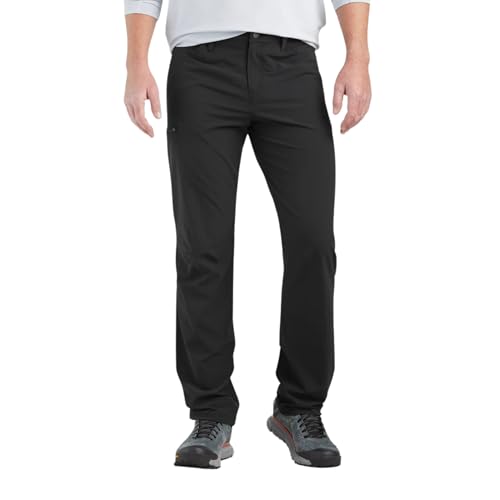
Outdoor Research describes the men's Ferrosi Pant waist as harness-compatible and lists an internal drawcord with a tricot-lined waistband. Those are relevant design details to investigate when trying to reduce external interference. A climbing harness and your backpack do not necessarily contact the same area, so the description is not a promise of pack comfort.
The current prAna Stretch Zion Relaxed Pant lists adjustable webbing at the waist. That can reduce the need for a separate belt, but the adjustment hardware still needs to be checked beneath your hipbelt. Keep the Relaxed, Standard and Slim II variants separate when comparing both fit and construction.
Columbia Men's Silver Ridge Utility Pants has a removable belt and partial elastic waist. Removing the belt may simplify the contact area if the remaining waistband stays stable. If the pants then slide, do not ask the backpack to act as the missing support; choose another adjustment or a better waist size.
Eddie Bauer describes the Guide Pro 2.0 with hidden elastic and a higher back rise than its predecessor. These are useful comparison points for how the rear waist behaves, but they belong to that version. An older listing with a similar family name does not establish the revised waistband. Features narrow your candidates; the loaded trial selects the workable combination.
Test pocket access as part of the waistband decision
Fasten the hipbelt and try to reach every trouser pocket you intend to use while walking. A pocket opening near the waist may be partly covered even when the pocket itself has ample capacity. Zipper pullers can end up beneath the belt edge, making access awkward.
Put your phone in the intended pocket and sit briefly. The object may press upward against the belt or push a pocket seam into the hip. A lower thigh pocket can avoid that overlap, but check whether the phone then strikes the leg during a step. Moving the load downward trades one interaction for another.
Decide which items truly need to be in the pants. If a pack pocket keeps one object more accessible, that may be the simplest solution. Avoid rejecting an excellent overall fit because an unused pocket is blocked, but do not count an inaccessible compartment as a practical benefit either.
Keep total pocket load representative. Testing with nothing in the pants and a nearly empty backpack understates the interaction you want to assess. Conversely, filling every pocket with objects you never carry can create an artificial problem. Use the actual routine so the decision improves your walks rather than optimizing a demonstration in the fitting room.
Make a controlled adjustment before replacing equipment
Change one variable: remove an optional belt, flatten a shirt fold, reposition a permitted adjustment slightly or move one pocket item. Repeat the same walk and bend. If the improvement is clear and the waist remains stable, record it as part of the setup.
Do not alter essential backpack fit solely to make unsuitable pants feel acceptable. Follow the pack manufacturer's fitting guidance and keep the load representative. This article can help identify clothing contact, but it cannot infer the correct suspension setting for every pack from the shape of its waistband.
If pressure remains at the same hardware point, compare a lower-profile closure or a different waistband height. If the entire trouser waist feels restrictive before the pack is added, return to the pants fitting check. If the waist needs severe tightening because the hips determine a larger size, the waist-gaping guide addresses that underlying mismatch.
Finish by removing the pack and walking again. A successful combination should not rely on the hipbelt to hold up otherwise loose trousers. The pants need their own workable fit, and the backpack needs its own fit; compatibility means those two successful setups can coexist without repeated adjustments or a persistent contact point.
Questions about hiking-pants waistbands under a backpack hipbelt
Can my backpack hipbelt replace a trouser belt?
It may incidentally hold the waistband in place, but that is not a sound fit test. The pants should remain stable when the pack is removed. Otherwise stops, seated breaks and unloading can reveal a waist that never fitted independently.
Does harness-compatible mean backpack-compatible?
It identifies a design intention worth examining, but harnesses and backpacks can place pressure differently. Test the exact pant with your own loaded pack before relying on that description.
Why does an internal drawcord still press under my hipbelt?
The knot, cord channel or gathered fabric may sit directly beneath pressure. Tie it as intended, flatten any unnecessary folds and compare its position. Hidden hardware or cord is not automatically pressure-free.
Should I buy a larger waist to reduce pack pressure?
Only if the pants themselves are too tight. A larger waist may create more folds beneath the belt without removing a buckle conflict. Locate whether the pressure comes from fit, hardware or load placement before changing size.
Final Verdict
Treat waistband comfort under a pack as a compatibility test with two independently fitting items. Locate the exact pressure point, make one modest adjustment and repeat the same loaded movements. Internal cords, removable belts and integrated adjusters offer useful choices, but none can bypass the trial. Keep pockets loaded realistically and confirm that the trousers stay up after the pack comes off. When the conflict persists, choose a closure or rise that works with your equipment instead of repeatedly shifting either item into an awkward position. The winning setup is the one that remains uncomplicated while you walk.
Sources and further reading