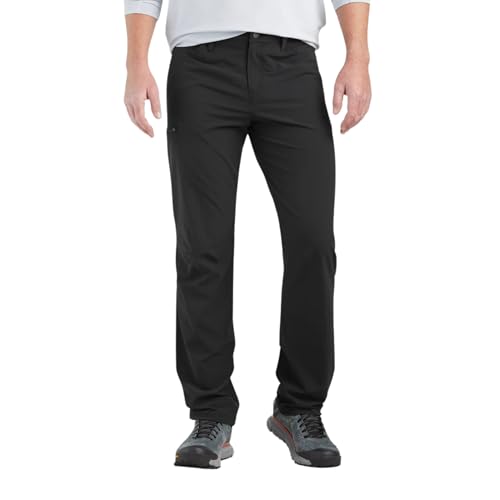
Locate the restriction before changing size
Stand with the waistband at its intended position, then lift one knee comfortably. Notice whether pressure begins at the upper thigh, crotch seam, seat or calf. Fabric can transmit tension from one area to another, so the place you feel a pull is not always the only cause.
If a narrow calf grips the lower leg, smooth the fabric upward and repeat. If the apparent thigh resistance changes, taper may be part of the problem. If the waistband is pulled down during the step, examine rise and seat depth as well as thigh width.
Compare both legs. Small body differences, habitual stance and pocket loads can produce different sensations, and a single quick movement can miss them. You are looking for an ordinary step that does not require repositioning the garment. The general fit check provides the wider sequence; this guide concentrates on keeping upper-leg room without creating a loose waist.
Build a thigh reference from pants that already move well
Lay a comfortable reference pair flat and measure across the upper leg at a clearly recorded distance below the crotch seam. Choose a repeatable landmark and use it on each comparison. Different measuring positions can produce different numbers, especially when the leg tapers rapidly.
Record whether the fabric is relaxed or stretched. Do not pull a stretch garment to its maximum and compare that width with an unstretched woven pair. The useful reference is how much room the garment provides before movement asks the fabric to extend further.
Add front rise, back rise and waist measurements if you can take them consistently. These explain why two pants with a similar flat thigh width may feel different when worn. A lower crotch or shallower seat can consume usable movement room. Treat the measurements as clues for comparison, not a formula that predicts fit to the fraction of an inch without a trial.
Also note whether the reference has been altered or noticeably stretched through wear. That history can explain why its measured shape differs from the original size chart and prevents treating an old garment as an untouched factory specification.
Look beyond the word athletic
Athletic can describe a brand's intended customer, a closer silhouette or a pattern with extra room in selected areas. Without measurements or a precise fit description, it does not prove a larger thigh allowance. Slim, tapered and athletic can even appear together in product copy.
Look instead for statements about the upper leg and seat, then verify them through the chart and trial. A relaxed straight cut may offer a different starting point from a slim taper, but relaxed is not a standardized amount of extra fabric. Compare neighboring cuts within the same brand when possible to see what actually changes.
A roomier leg can also carry more fabric around the knee and cuff than you want. The goal is not the widest trouser available; it is enough upper-leg room with a controlled waist and usable lower leg. If only the cuff is generous, that surplus does little for the tight region above it.
Understand what a gusset can and cannot solve
A crotch gusset changes how fabric and seams meet between the legs. It can provide useful shape for a step or squat and reduce reliance on a restrictive seam intersection. Its effect depends on the dimensions around it, not merely the presence of an extra panel.
If the thigh is already taut while standing, the gusset cannot create unlimited circumference along the entire upper leg. Likewise, knee articulation adds shape near a bend but does not automatically release a tight seat. Evaluate these construction details as part of a whole pattern.
Compare the same movement in a conventional seam layout and a gusseted model if both are available to try. Notice whether the difference occurs at the crotch, upper leg or knee. That gives you a reason to value the feature for your body rather than assuming every garment advertising a gusset solves the same fitting problem.
Use stretch as movement reserve
Stretch can make a fitted silhouette easier to move in, but a pant should not need to remain near its maximum extension simply to fit your standing body. That can leave pockets pulled open and the waistband under constant tension. Check how the fabric lies before the high-step trial.
Fiber percentage alone does not describe the finished stretch behavior. Fabric construction, direction of stretch and pattern room all contribute. Outdoor Research lists a nylon-and-spandex fabric for the men's Ferrosi Pant; that makes it a useful stretch-oriented comparison, not a guarantee that it fits every larger thigh.
Sit for several minutes and walk again after the fabric has settled. A pair that initially feels acceptable may reveal pressure at the thigh seam or shifting at the waist. Conversely, some ordinary wrinkling is not a failure. Judge comfortable movement, pocket function and garment stability instead of requiring a perfectly smooth leg in every position.
Compare model versions that offer different approaches
The documented prAna Stretch Zion Relaxed Pant uses a relaxed straight fit, adjustable webbing waist and ventilated gusset. That is a relevant pattern to investigate when you want upper-leg room while retaining waist adjustment. Do not assign that relaxed description to the Slim Pants II or the current Standard variant simply because they share Zion in the name.
Eddie Bauer's Men's Guide Pro 2.0 describes a roomier rise, higher back rise and revised gusset compared with its predecessor. Those changes make rise worth examining alongside thigh room. An original Guide Pro or a Rainier listing remains a separate product and should not inherit the 2.0 fit revision.
Columbia Men's Silver Ridge Utility offers a regular fit with partial elastic at the waist and a gusset. Compare it with the stretch-focused Ferrosi and the relaxed Zion if the exact versions are available in your size. These are construction examples for your fitting process, not a claim that one named pant is the universal answer for muscular or fuller legs.
Test loaded pockets before accepting the larger leg
Put the phone and small items you normally carry into the pockets. A cargo pocket lies over the same thigh area that needs movement room, and its contents can create local pressure even when the empty leg feels comfortable. Close any zippers during the trial so the opening cannot spread and conceal tension.
Walk, climb a step and sit. If the phone pushes into the front of the thigh only when seated, compare a side location or carry it in your pack. If every pocket distorts the leg, the pattern may still be too close for your intended use.
A pocket arrangement with fewer compartments can be more useful than a crowded cargo layout if it keeps objects away from the bend of the hip. Evaluate reach as well as capacity. You should be able to retrieve the item without pulling the entire pant leg upward or loosening the waist to create room.
Choose between adjustment, tailoring and another cut
A modest waist adjustment can complete a good thigh fit. A deeply cinched belt producing several large folds suggests the size increase has gone too far. Those folds can sit beneath a pack hipbelt and create a new pressure problem, even if they seem tolerable without a load.
A tailor may be able to reduce a simple waistband, but pocket openings, elastic panels and the seat seam can limit what is practical. Ask for an assessment before buying solely on the assumption that the waist can be rebuilt. The alteration guide explains why technical details complicate otherwise familiar trouser work.
If the thighs fit only in a size whose rise, waist and knees all move out of position, choose another model. Record which dimension failed and use that observation to narrow the next search. Solve a waist-to-thigh mismatch by finding the right distribution of room, then let features and appearance break the tie between genuinely workable options.
Questions about hiking pants for larger thighs: solve tight legs without a loose waist
Do larger thighs always need relaxed hiking pants?
No. Some stretch or differently shaped regular cuts may work, while some relaxed pants add room mostly elsewhere. Compare the actual upper-leg allowance and movement behavior rather than treating relaxed as a guaranteed solution.
Will a belt fix the loose waist after I size up for my thighs?
It can manage a modest difference. If it creates deep folds, shifts the rise or presses beneath a backpack hipbelt, the larger size is probably not the best proportion. Another cut may retain thigh room with a better waist.
Are ripstop pants less suitable for athletic thighs?
Ripstop describes a reinforcement pattern, not the thigh dimensions or a universal stretch level. Check the exact fabric and garment cut. A roomy ripstop pair can move better for you than a narrow non-ripstop pair.
Final Verdict
Keep the waist-to-thigh relationship at the center of the decision. Find enough upper-leg room in a workable rise, then assess stretch, gussets and articulation as supporting features. A relaxed Zion, regular Silver Ridge Utility or stretch-oriented Ferrosi may offer different useful trials, provided the exact version is matched. Reject a size increase that merely transfers the problem into a loose waist and misplaced knees. The successful pair allows a normal step with loaded pockets while remaining stable above the hips, without relying on hard cinching or permanently taut fabric.
Sources and further reading