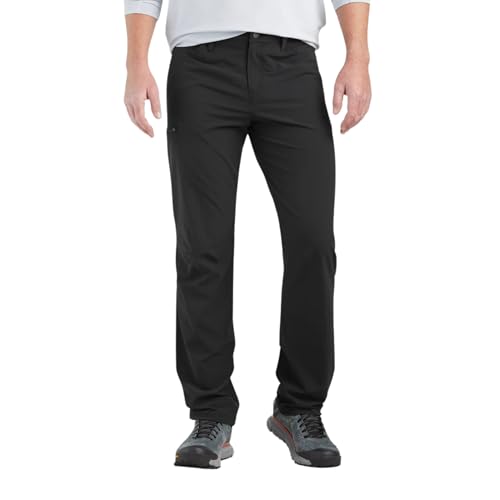
Outdoor Research Men's Ferrosi Pants
Compare when a stretch-focused hiking cut and secure storage would improve on casual joggers.
Consider: A different silhouette may matter more than its technical features.
Check on Amazoncomparisons
Pulling on the joggers beside the door is an easy way to get outside. Whether they remain the right choice after an hour depends on details hidden by that familiar name. Joggers can be a shape, sweatpants can describe a casual garment and track pants can cover several different constructions. The useful comparison is between your actual pair and the trail garment you might buy, not between two rigid clothing categories.
Three places to start
As an Amazon Associate I earn from qualifying purchases. Purchases take place on Amazon.
Compare when a stretch-focused hiking cut and secure storage would improve on casual joggers.
Consider: A different silhouette may matter more than its technical features.
Check on Amazon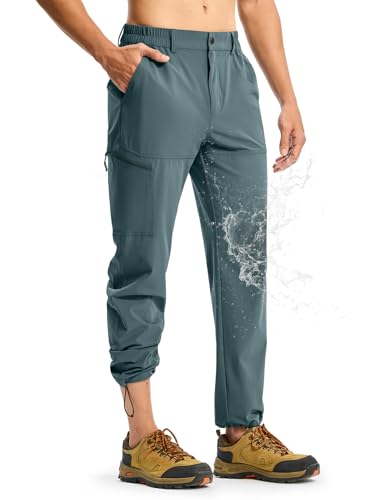
A lower-price listing to investigate when you prefer jogger styling for walking.
Consider: The short listing title does not establish fabric composition, pocket count or exact cuff construction.
Check on Amazon
For a deliberate move toward vented, panelled trekking construction.
Consider: Unnecessary complexity if your everyday pair already meets the route needs.
Check on AmazonEditorial selections from the products considered for this guide; not hands-on test awards. Budget and premium describe positioning, not a guaranteed current price.
Start by reading the composition of the joggers you own. Do not assume they are cotton fleece, synthetic knit or a particular blend. Look inside as well: a brushed interior, a separate lining and a smooth unlined fabric create different garments even when the external shape is similar. The word jogger mainly tells you something about a cut or styling convention, not every layer touching your legs.
Then inspect the hiking candidate with the same attention. The exact TBMPOY Men's Outdoor Fishing Jogger listing combines hiking, fishing and jogger language, with lightweight in its title. That makes it a useful example of overlapping categories, though the title alone does not establish its composition or exact hem construction. Check those details on the selected garment before comparing it with your everyday sweatpants. A familiar shape can appear in a trail-oriented range without every specification being the same.
Material information still does not settle comfort by itself. Fabric thickness, cut, lining and the amount of clothing underneath all matter. If you like the softness of your existing pair, identify what produces that preference rather than chasing a generic promise of premium fabric. If you find the pair too bulky, compare a visibly different construction instead of buying another garment with the same broad fiber names.
Check the care instructions alongside the composition. A garment that fits your laundry routine may be easier to keep in regular use than one you repeatedly postpone washing or drying. Do not assume a synthetic fabric permits high heat or that a familiar sweatshirt routine applies to a technical finish. The manufacturer's care label belongs to the exact item, including its trims and closures.
An elastic waist can be comfortable at home because the pockets are empty and no pack belt crosses it. Before taking that comfort for granted on a walk, add your phone, keys and the pack you plan to wear. Walk up a few steps and sit down. Notice whether the waist settles into a stable position or gradually slides as the load moves.
Drawcords create an adjustment option, but tightening harder is not always a good fix. A bulky knot can sit under a hip belt, while excessive tension can make the abdomen uncomfortable. Move the knot if the garment allows it, reduce the pocket load and compare the waistband position. These simple changes can reveal that a storage problem was being misread as a size problem.
A structured waistband is not inherently superior. Columbia Leslie Falls Pants II has a structured nonstretch waist with a button and fly, even though its leg fabric contains elastane. For someone who wants a more defined waist shape, that may be useful. Someone who values easy pull-on dressing may prefer elastic. The comparison is about how the whole upper garment behaves during movement, not a hierarchy of serious versus casual clothing.
With a pack, reach into the pockets you expect to use. A high opening may be covered by the belt, and a lower opening may become more accessible. Your usual joggers may already arrange that well. If they do not, a trail-oriented design should earn its place by solving the exact interference. The waistband and backpack guide goes further into pressure points and belt interaction.
Many everyday pants have simple open pockets. That can be perfectly convenient for hands and awkward for a loose key when you sit low or raise a knee. Test retention in the movements you actually make; do not rely on how deep the opening looks. A pocket's angle, its bag and the flexibility of the surrounding fabric all affect where its contents go.
A zipper is a useful closure option, but it does not tell you whether the pocket comfortably fits your phone. For the TBMPOY Outdoor Fishing Jogger, do not infer a complete pocket map from the short listing title. Inspect the selected option's images and full details, then check the openings that matter to you. The relevant improvement over casual joggers would be a pocket that fits your essential item and stays accessible, not an assumed count borrowed from another similarly named product.
Ferrosi provides another hiking-pant comparison with secure pocket arrangements and a drawcord waist. Use it to examine a roomier woven leg and a different arrangement of seams and openings, not to assume every item will stay perfectly still. A rear pocket may be fine while standing and inconvenient when you sit. A thigh pocket may remain reachable under a pack but put a hard object across the leg during a high step.
If you carry a small pack anyway, moving a bulky object out of your trousers can be more useful than replacing the trousers. Keep frequently used items accessible and leave the rest where they do not affect the garment's fit. This is particularly relevant when comparing a familiar lightweight casual pair with a more elaborate hiking model: the extra pockets are valuable only when their placement improves your routine.
A comfortable garment for a gentle start may become warmer than you prefer during an extended climb. A very light unlined pair may feel different when you stop moving. Neither observation follows from the jogger label alone. Compare the fabric and layers against the effort and pauses you expect, and remember that the forecast at departure is only one part of the outing.
If you are comparing substantial brushed sweatpants with a thinner unlined hiking pant, you are changing both construction and the amount of material worn. That can be the point of the purchase. Be explicit about it. If you are comparing a smooth synthetic track pant with a similar-weight trail garment, the more useful difference may be pocket security or fit rather than a dramatic change in weather performance.
Do not treat water-resistant marketing as a reason to leave a needed rain layer behind. Ordinary joggers and ordinary woven hiking pants are not automatically waterproof. The outer layer must fit over whichever you choose, including any loaded pockets. Bend your knees and sit while wearing the combination; a shell that fits over close casual pants may behave differently over a fuller cargo leg.
For an outing that ends with a drive or another activity, think about whether you can change if your clothing becomes damp or dirty. Practical changing and laundry arrangements can matter more than whether a garment looks technical. The guide to drying, wicking and breathability claims explains why those words should not be treated as interchangeable guarantees.
If an elastic waist and tapered silhouette make your everyday joggers easy to wear, you do not have to abandon those preferences to consider a trail garment. Look first for the feature you are missing: a closed pocket, a different fabric thickness, a rise that stays put or room for another layer. TBMPOY Outdoor Fishing Joggers provide a budget-positioned listing to investigate if you want to keep jogger styling. Confirm the fabric and storage details before deciding whether that individual option changes the feature you dislike in your current pair.
Ferrosi is the overall comparison candidate when you are open to a different leg shape and want a stretch-focused hiking design. At the premium end, Fjallraven Abisko Lite Trekking offers a combination of stretch and G-1000 fabric areas plus ventilation. Its more involved construction is relevant to someone who actually wants panels and vents. It is not a necessary progression from casual clothing to being a better walker.
Hem design has its own detailed tradeoffs, especially around footwear and adjustments. Those belong in the cuffed hiking-pants guide; do not let them overwhelm a broader decision about the fabric and waist you want to wear. A cuff can be comfortable in one outfit and awkward in another, without changing the fact that both garments may be suitable for different walks.
Before buying, give your existing pair a fair comparison on a familiar suitable outing. Note one concrete issue rather than collecting vague impressions: the phone pulled the waist, the lining felt too bulky, or the outer layer did not fit. A useful replacement changes that detail while keeping the parts of the old garment you enjoy. If no recurring problem appears, continuing to use the joggers is a reasonable outcome.
They can belong to both. Jogger describes a style of garment rather than a complete performance specification. A trail-oriented jogger may have synthetic woven fabric and zipped pockets. Evaluate those details rather than forcing it into a single exclusive category.
They may, if the exact pair has comfortable movement, suitable fabric and adequate storage for the outing. Check the garment rather than assuming every track pant is constructed alike. Conditions and your ability to change plans still matter, especially if the route becomes longer or less familiar.
It may hold the waist more firmly but leave the phone moving or pressing against the leg. Try another pocket or carry the phone in a suitable pack location. If the garment only stays in place with uncomfortable tension, its storage or fit may not suit that load.
Only if pocket retention is an actual problem for your use. You might carry essentials elsewhere or already find the pockets adequate. Closed storage can be a practical improvement, but it should answer a need rather than become a required feature for every short walk.
Treat familiar joggers as a starting point with known advantages, then inspect what changes when you add trail movement, carried objects and weather layers. The best upgrade may keep the same elastic waist and silhouette while improving one overlooked detail. It may also turn out that your existing pair is entirely adequate for the walks you have planned. Choose a hiking model for a specific construction benefit you will use, and keep fabric, pocket layout and waistband behavior ahead of the name printed on the label.