Divide a mixed day into clothing demands
List the parts of the outing that make different demands on the trousers: walking to an area, repeated large steps, periods of standing or sitting, and any time wearing equipment over the garment. This is a clothing-planning exercise, not an instruction for climbing. The activity and equipment require their own appropriate knowledge and guidance.
A long approach can make ventilation and a comfortable walking stride important. A different part of the day may make knee movement, waist bulk or pocket access more noticeable. If you judge only the most technically interesting portion, you can overlook hours spent wearing the same pants elsewhere. If you judge only an easy approach walk, you may miss a conflict that appears when additional equipment is put on.
Some people solve this with one versatile garment, while others prefer separate clothing for distinct activities. Neither approach is inherently superior. Consider whether a change is practical, whether carrying another garment is worthwhile and whether the first pair genuinely fails at one role. A second purchase should solve an identified mismatch rather than satisfy the idea that every activity needs a separate uniform.
Test the pattern through more than a squat
Squatting is a useful ordinary fit check, but it is not the whole movement story. Raising one knee while the other leg remains extended creates a different demand. Reaching down to adjust footwear changes the waist and seat. A wide controlled stance can reveal tension across the upper thigh that a symmetrical squat does not show.
Inspect where that tension comes from. Fabric stretch, a gusset, knee shaping and the dimensions of the pattern can each contribute to movement. The current prAna Stretch Zion Relaxed Pant, for example, includes a vented gusset and adjustable waist in a nylon-elastane fabric. That is a specific construction to compare, not a promise that every prAna trouser or every Zion generation moves identically.
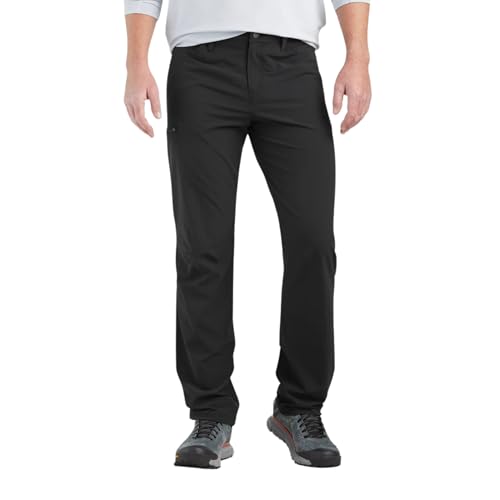
Outdoor Research Ferrosi offers another stretch-focused example, with a nylon blend containing elastane. The listed material does not tell you to choose the smallest possible size. If the rise is wrong or the pocket bags pull across the hips, fabric extension may not resolve the discomfort. Fit should remain comfortable before it reaches the limits of its stretch.
The detailed guide to stretch, gussets and articulation explores these features. In a hiking-versus-climbing comparison, use them as different ways a garment can accommodate movement. There is no required combination that makes a pant suitable for every body or every activity.
Keep the harness assessment specific and supervised by its instructions
A waistband feature can become a pressure point when another item sits over it. A button, belt buckle, knot or thick seam may be unobtrusive during a walk and noticeable under equipment. Evaluate the exact garment with the equipment you use, following that equipment's fitting and use instructions. Do not alter equipment fit to compensate for an uncomfortable pair of trousers.
Ferrosi's manufacturer describes harness-compatible construction, which is a useful reason to inspect it for this role. It does not establish that every harness, body shape or size pairing will feel the same. A statement about clothing compatibility is also not a certification of protective performance. Keep those claims separate when reading product pages.
A belt included with pants may or may not be the waist solution you want. Check whether you can remove it, whether the garment remains stable without it and whether another compatible adjustment is provided. If the waist only stays in place when an awkward buckle is tightened, consider a different rise or pattern instead of treating the discomfort as inevitable.
This article does not recommend a way to adjust a climbing harness, choose climbing equipment or perform a climbing movement. The garment question is limited: does the clothing sit comfortably without interfering with properly selected and used equipment? If the answer is unclear, obtain appropriate guidance for the equipment rather than relying on a clothing comparison to resolve it.
Pocket orientation matters once the waist is covered
A pocket can be comfortably reachable during the approach and inaccessible under equipment. That difference is easy to miss when shopping from photos taken without anything over the trousers. Identify which objects you need access to during each part of the day and whether the pocket's opening remains reachable in the relevant clothing setup.
Avoid assuming that a high, low, vertical or horizontal opening is universally best. The body position, equipment and object shape all affect the result. A pocket that closes securely can still hold an object in an uncomfortable place, while an easy-to-reach opening may be irrelevant if that item should be carried elsewhere for the activity. Follow the requirements of the activity rather than maximizing trouser storage.
Mountain Hardwear AP Active provides a different example to inspect: it uses a listed nylon-elastane fabric with articulated knees, zipped rear pockets and a thigh phone pocket. That layout may suit parts of a mixed day, but it is not proof of access under every piece of equipment. The exact current AP Active must also be distinguished from the cotton-rich AP Pant despite their similar names.
Try the relevant movements without carrying hard items first, then assess the placement of any essentials you would legitimately carry in the garment for the activity. This helps distinguish an uncomfortable pocket load from a poor overall cut. It also prevents an otherwise useful garment from being rejected because one object belongs somewhere else.
Locate the fabric you want to contact rough surfaces
Knees, seat, lower legs and pocket openings experience different kinds of wear. A garment can reinforce one area while leaving another comparatively light or stretchy. Examine that placement against your own intended use. A heavy overall fabric is not automatically better than targeted construction, and a lightweight garment is not automatically short-lived.
Fjallraven Keb combines stretch areas with G-1000 panels and includes vents and shaped construction. Its premium role in this comparison is for someone who wants that combination across a walking day with ordinary surface contact. It is not presented as certified climbing protection. Nor should its fabric layout be transferred to other Fjallraven models that look similar in a thumbnail.
Outdoor Research Cirque III illustrates an even more specialized direction, with double-weave fabric, scuff reinforcement and boot-related features. Those details may be relevant to particular mountain-clothing needs, but they do not make it a default for a warm approach or every climbing session. More construction is a tradeoff to evaluate, not a universal step upward.
If your primary outing is walking with occasional hands-on terrain, the scrambling clothing guide owns that route-specific selection question. This comparison remains about how two garment categories overlap and where equipment or movement can create a mismatch. Do not use a trouser recommendation as a substitute for assessing the activity itself.
Weather and rest time can outweigh the category name
A garment chosen for mobility may provide little insulation during a long pause. A more substantial fabric chosen for contact can feel different on an active approach. Plan the clothing system around both situations. A pant called climbing does not guarantee warmth, and a pant called hiking does not guarantee breathability under every effort level.
Check the role of any water-repellent finish with the same care. DWR and water resistance do not establish a waterproof shell. If a weather layer is needed, it must fit over the trousers without constraining movement or creating unwanted bulk at the waist. The full combination deserves inspection rather than assuming one technical garment handles all conditions.
Care instructions can affect how practical the garment remains between outings. Mixed panels, stretch fabrics and finishes may have different maintenance requirements. Follow the exact label and manufacturer guidance, particularly if a fabric can be waxed in some areas. Keeping the clothing usable is more valuable than adding unneeded treatments based on a general outdoor-clothing routine.
Let the approach and the equipment each have a veto
The overall example here is Ferrosi, worth comparing when stretch and the manufacturer's harness-related design language align with your needs. Silver Ridge Utility is the budget-positioned walking example for someone whose main requirement is the approach or a hiking day. Keb is the premium panelled and vented option. These picks are clothing candidates, not a declaration that all three are equivalent for climbing activities.
Give each candidate two separate assessments: ordinary walking comfort and compatibility with the rest of your appropriate clothing and equipment. A strong result in one should not excuse a clear problem in the other. When one garment cannot serve both roles comfortably, consider whether separate clothing is the more practical answer rather than searching for a universal winner.
Questions about hiking pants versus climbing pants
Are climbing pants automatically better for high steps than hiking pants?
No. Pattern, rise, fabric and size decide how the individual garment moves. Hiking models can include gussets and articulated construction, while climbing-labelled models also vary. Compare controlled ordinary movements in the exact pair rather than assigning mobility from the product category.
Does harness-compatible clothing mean the pants are safety equipment?
No. The phrase describes an intended clothing interaction. It does not establish protective certification for the pants or verify every equipment pairing. Select and use climbing equipment according to its own instructions and appropriate guidance, independently of a trouser recommendation.
Can an included trouser belt create a reason to choose another model?
Yes, if its bulk or position conflicts with the clothing and equipment you need to wear. First check whether the belt is removable and whether another provided waist adjustment suits you. Do not compromise required equipment fit to accommodate the trousers.
Should I buy separate pants for the approach and the activity?
Only when one garment does not meet the distinct needs and changing is practical. Consider the length of the approach, weather, movement and equipment interaction. A versatile pair can be convenient, but a clear fit conflict is a better reason for separation than the activity names alone.
Final Verdict
A useful crossover pant has to work during the less dramatic hours as well as the moments that demand extra movement. Check the approach stride, the waist under appropriate equipment and the pocket layout separately. Manufacturer details can identify candidates worth trying, but they cannot certify a personal equipment combination or replace activity-specific guidance. Choose one garment when it fits both roles comfortably; choose a different arrangement when either role exposes a real limitation. The category label should follow that decision rather than make it for you.
Sources and further reading