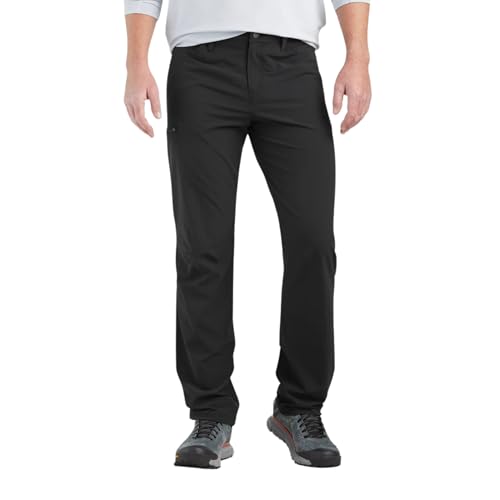
Outdoor Research Men's Ferrosi Pants
Documented stretch-oriented fabric and waist details suit a movement-first comparison.
Consider: No hands-on scrambling test or safety certification is implied.
Check on Amazonuses
A high step onto uneven ground can expose a trouser problem that level walking never reveals. The knee rises, the seat needs room, and a loaded pocket may press into the thigh at the same time. For scrambling, choose clothing that accommodates those movements and tolerates the contact you expect. Pants remain clothing: their construction does not replace route judgment, appropriate equipment or the skills required by the terrain.
Three places to start
As an Amazon Associate I earn from qualifying purchases. Purchases take place on Amazon.
Documented stretch-oriented fabric and waist details suit a movement-first comparison.
Consider: No hands-on scrambling test or safety certification is implied.
Check on Amazon
Lower-priced documented gusset and comfort-stretch example for occasional larger steps.
Consider: No reinforced-knee or abrasion superiority claim.
Check on Amazon
Current mixed-panel design provides a more elaborate construction alternative.
Consider: Match exact fit revision; added structure does not establish protective performance.
Check on AmazonEditorial selections from the products considered for this guide; not hands-on test awards. Budget and premium describe positioning, not a guaranteed current price.
Begin on a stable floor with a low, secure step rather than trying a new garment on consequential terrain. Raise a foot to a height that is comfortable for you. Notice the waistband, seat, crotch and front thigh. If the pants pull down at the back, they may be borrowing length from the waist because the rise or seat cannot accommodate the movement.
Now try a comfortable side step and a seated knee bend. Different movements place different demands on the pattern. A pant that extends well forward may still feel tight across the upper thighs when the legs separate. The goal is not the deepest possible pose; it is enough room for the ordinary range you expect to use without persistent tension or a shifting waistband.
Separate a local restriction from general tightness. If the thigh is stretched while standing, a more suitable cut is the first comparison. If one seam presses only during bending, inspect that junction and its placement. If the knee panel sits well below your knee, changing the hem alone will not necessarily correct it. The construction guide explains how fabric extension, gussets and articulation contribute differently.
Repeat the checks with a modest, realistic pocket load. A phone can turn an otherwise comfortable bend into pressure at the thigh. If you normally wear a base layer, include that layer too. Testing the actual arrangement helps prevent you from attributing a problem to the wrong component or assuming that an empty, unlayered fitting represents the intended use.
Think about where your clothing is likely to touch the terrain during your ordinary style of movement. Knees and seat may meet rough surfaces, but calves and cuffs can also brush rock or vegetation. Examine the actual panel placement rather than accepting a rugged descriptor as a complete answer. Reinforcement that sits below your knee may not address the contact location you had in mind.
The current Fjallraven Vidda Pro Trousers M lists reinforced rear and knees. The current Keb Trousers M uses a combination of G-1000 panels and stretch material, with ventilation details documented by the manufacturer. These represent different construction approaches, not a laboratory ranking of abrasion resistance. Confirm the exact revision before applying current details to a listing with an older fit or a different variant name.
Added material can affect bend, warmth and bulk. Feel the edge of a reinforced panel when the leg is flexed, and assess whether it creates a stiff transition. A reinforced design that restricts your movement may be a poor trade even when its contact zones appear well chosen. Conversely, a light flexible fabric may be comfortable but require more care around repeated rough contact.
Do not infer protection against impacts, cuts, punctures or falls from these features. Knee-pad openings on some trousers identify a garment arrangement; they do not establish that a pad is supplied, certified or appropriate for your activity. This buying guide evaluates clothing convenience and construction. It does not provide climbing instruction or designate ordinary trousers as protective equipment.
Look down at your footwear with the pants settled naturally. Excess hem should not sit beneath the sole, and an adjustment tail should not hang where it can interfere with walking. A cuff that is comfortable above a low shoe may gather differently around a higher boot. Choose a workable opening and length rather than relying on repeated manual repositioning.
Move through a few normal steps and observe whether the fabric swings toward the opposite shoe. A wider leg is not inherently unsuitable, but unnecessary loose material can be distracting. Equally, a very narrow opening can restrict the calf or pull the trouser leg upward. Controlled fit means enough movement without excess fabric in the wrong place, not choosing the tightest silhouette available.
Secure pocket contents before more involved movement. A fastened compartment can help retain small items, yet a zipper does not protect a phone from pressure against a surface. Consider moving rigid or fragile objects into an appropriate pack location. Keep pockets lightly loaded so their contents do not pull the garment out of its fitted position.
Check access during a deliberate stop rather than planning to retrieve things while moving through difficult ground. An object can be secure but inconveniently placed under a belt or other gear. That may be acceptable if you rarely need it, whereas a frequently checked phone may deserve a different home. The best layout makes the necessary pause straightforward and leaves the legs free of distracting weight.
Mountain Hardwear's current Men's Chockstone Alpine Light lists a nylon-elastane double weave, four-way stretch, articulated knees and zipped hand and thigh pockets. These details explain why it belongs in a mobility-focused comparison. They do not mean every Chockstone-named listing shares the same fabric or that the model is lighter than every ordinary hiking pant. Match the exact Alpine Light style before using its specifications.
Outdoor Research describes the referenced men's Ferrosi Pant with a nylon blend containing fourteen percent spandex and a waist intended to coexist with a harness. That is manufacturer context about design. It is not evidence that any particular harness-and-pant combination has been assessed for you, and the trousers are not part of a certified protective system merely because of that description.
Columbia's current Men's Silver Ridge Utility includes a gusset and comfort stretch in a polyester fabric, offering a different and less expensive construction approach. A person whose route requires ordinary walking with occasional larger steps may find a simpler design adequate if the fit is right. There is no requirement to buy an alpine-labeled garment for every uneven trail.
For a more structured premium option, consider the documented paneling and ventilation of the exact Keb version. Its mixed materials and adjustment features introduce different care and fitting considerations. Compare these tradeoffs against the specific contacts and movements you expect. A higher price can buy particular construction choices; it cannot settle whether those choices are useful to your route or body.
Use a consistent sequence to decide whether a prospective pair deserves to stay on your shortlist. First, check standing fit with the waist in its intended position. Second, perform a comfortable high step and side step. Third, sit with the ordinary pocket load. Fourth, walk in your actual footwear and inspect the hem. Finally, operate any closures and adjustments you expect to use.
Write the result in concrete terms. “The waistband drops when I raise my left knee” is useful; “not technical enough” is not. “The phone presses against the knee during a bend” suggests relocating the phone or choosing another pocket map. “The cuff catches beneath the heel” directs attention to length and opening. A named problem gives you a clear comparison criterion for the next pair.
Do not try to repair a basic fit mismatch with several accessories before deciding whether another cut works better. Tight belts, tightly cinched ankles and a different underlayer can each conceal part of a problem while creating another. Start with a garment that behaves comfortably on its own, then add the equipment and layers you actually need.
If the terrain calls for specialist clothing or protective equipment, consult appropriate activity guidance and the relevant manufacturers. This article cannot evaluate route difficulty or personal readiness. Its practical contribution is narrower: helping you choose trousers that do not unnecessarily restrict movement, overload contact points or complicate footwear and pocket use during the outing you are already prepared to undertake.
Compare the left and right sides during the same sequence. A pocket loaded on one side or a rotated waistband can create an uneven result that seems like a general mobility problem. Empty the relevant compartment or settle the garment and repeat the movement. This helps separate a changeable loading issue from a consistent pattern mismatch before you decide that the cut itself is unsuitable.
Not in every case. The value depends on how often that area contacts rough surfaces and whether the reinforcement fits your knee position. Assess the added stiffness and warmth as well as the potential wear benefit; it is not impact protection.
Yes. A short rise, tight seat, misplaced knee shaping or a structured seam can limit movement even when the main fabric extends easily. Locate the restriction during a fitting check and compare the pattern rather than only the fiber percentage.
No. It describes an intended clothing interface. It does not make the trousers PPE, certify a particular combination or replace the instructions for specialist equipment. Confirm comfort separately and follow the actual equipment guidance.
A light, secure load may be workable, but hard or fragile objects can create pressure and distraction. Evaluate where each object sits during bending and contact. Moving some items into an appropriate pack location may give a cleaner, more comfortable garment fit.
For scrambling, a useful trouser choice begins with unrestricted ordinary movement and ends with a tidy, manageable garment. Check the high step, the seat and knee contact zones, the phone position and the hem around your footwear. Choose stretch, shaping or reinforcement because each addresses a defined need. Keep manufacturer claims attached to the exact model and remember the limits of clothing. A technically named pant is not a substitute for preparation; a well-matched cut is valuable because it removes avoidable clothing problems from an activity that already demands attention.