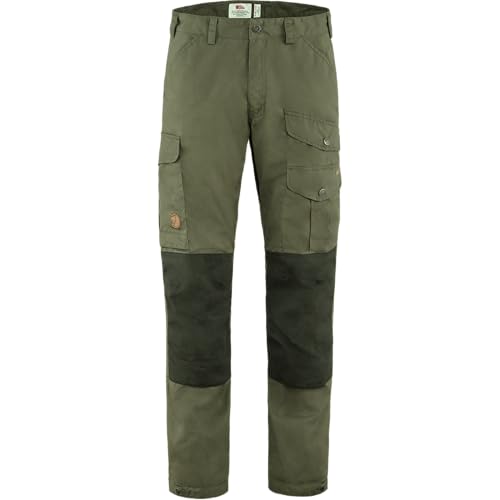
Build a wear map from your habits
List the contacts that happen repeatedly on your outings. Sitting on rough surfaces loads the seat differently from brushing low vegetation with the calves. A hipbelt rubs a relatively narrow waist area. A phone held in the same pocket can repeatedly press its lower corner against the bag. The location and frequency of contact matter more than a general description such as hard use.
If you have an old pair, examine it in good light. Compare both sides and distinguish surface appearance from actual thinning, an open seam or damaged hardware. A slightly shiny area is not automatically a structural failure, but it can show where contact concentrates. Photographing the location gives you a reference when comparing a new garment's panel layout.
Do not assume another person's longest-lasting pant is the right answer for your wear map. Their gait, footwear, route and pocket load may differ. A reinforced knee offers little benefit if you mainly wear through rear cuffs, while a scuff guard at the hem may not address repeated seat abrasion. Start with the problem you can describe specifically.
Also note whether the damage appeared gradually or followed one identifiable incident. Slow cuff fraying suggests a different purchasing priority from a one-time snag that would have damaged many ordinary garments. Without that distinction, it is easy to spend heavily on general reinforcement when a corrected length or a changed carrying habit addresses the recurring issue more directly. Keep the history specific enough to guide the next inspection.
Fit changes how fabric receives stress
Overly tight fabric is already under tension before it meets a rough surface or a demanding movement. An unsuitable rise can concentrate strain at the crotch when you step up. A long hem can drag beneath the heel, and a loose lower leg can brush the opposite shoe repeatedly. These issues can shorten useful wear without saying anything simple about the fiber quality.
Fit does not mean choosing the loosest option either. Excess fabric may fold into contact points, catch during ordinary movement or rub against itself. Aim for enough room to move without uncontrolled cloth in places that repeatedly meet footwear or vegetation. The balance depends on the intended activity and your proportions.
Test the garment with a normal pocket load and your walking shoes. Watch the hem from the side while taking a step, and notice whether a hard pocket item pulls the fabric into a pronounced corner. Removing that concentrated load may help more than paying for a heavier weave. Good wear management begins with how the garment is used, not only what it is made from.
Read reinforcement as a map, not an adjective
A reinforcement should be located where you need it and attached in a way that does not introduce a new problem. Look at the edge of an added panel, the inside feel and how the area bends. More layers can add bulk or stiffness, which may be acceptable at a frequently abraded point but unnecessary elsewhere.
Fjallraven's current Vidda Pro Trousers M lists reinforced rear and knee areas. The current prAna Stretch Zion Relaxed lists a rear cuff scuff guard. Those features address different zones and should not be flattened into a single durability ranking. The Vidda Pro Ventilated, Lite and other variants also need separate verification; shared family names do not establish identical panels.
A reinforcement is not puncture-proof armor or protective equipment. Neither ordinary reinforced trousers nor a branded fabric name establishes protection from sharp objects, bites or hazardous work. Keep the shopping decision focused on documented garment construction and likely repeated rubbing, without turning a useful detail into an unsupported safety claim.
Inspect stitches and junctions without pretending to run a lab
Turn the garment inside out where practical. Look for obviously loose stitching, skipped areas, exposed unfinished edges where they are not intended and strain around heavily loaded junctions. Pay attention to pocket corners, belt loops, fly ends and the point where several panels meet. These observations can identify a visible concern, although neat appearance alone does not prove exceptional strength.
Gently move the garment through its intended range while observing the seam. Do not pull aggressively to test breaking strength; damaging a new product teaches little about ordinary use. If stitches open visibly during a normal fitting movement, first check whether the size and cut are appropriate. An overstretched seam may reflect a fit problem rather than a universal defect in the model.
Hardware deserves equal attention. Operate zippers and fasteners several times without forcing them. Look for fabric that repeatedly feeds into a slider or an adjustment that slips during an ordinary movement. A sound main fabric does not compensate for a closure that cannot do its job. Report any concern through the actual seller or manufacturer process rather than attempting an unsuitable modification.
Treat fabric numbers as incomplete evidence
Fiber percentages identify ingredients, not a finished durability test. Nylon, polyester, cotton and elastic fibers can be arranged into many different fabrics. A heavier material may offer a different feel and contact response, but weight alone cannot tell you how a specific seam, pocket or abrasion zone will perform.
Ripstop describes a reinforcing pattern in the weave; it does not mean a garment cannot tear. Likewise, a fabric mass stated in grams per square meter is not the weight of the completed pants. Mountain Hardwear lists fabric mass for the current Hardwear AP and AP Active, which differ in composition. Those figures should not be converted into whole-garment comparisons or years-of-use predictions.
If a manufacturer provides test results, read the method, reference size or sample and any comparison conditions before interpreting them. Results from different procedures may not be directly comparable. In the absence of matched evidence, make a limited statement about the documented construction and your own requirements instead of inventing a strongest-fabric ranking.
Ask how the garment could be maintained
Repairability is worth considering before damage occurs. Can a tailor reach a likely wear point? Is the cuff built around a complex zipper or adjustment? Does the manufacturer publish care information or offer a repair inquiry route? These questions help you understand options, but they do not establish that a particular repair or warranty service will be available for your purchase.
Simple construction can be easier to assess, while specialized panels or finishes may require more care. A heavily shaped knee is not necessarily difficult to repair, but a repair may affect its flexibility or appearance. If longevity is a priority, ask a qualified repairer about the specific construction rather than assuming every hole accepts the same patch.
Follow the exact care label. Grit left in folds or closures and incompatible washing or drying choices can complicate wear management. Do not apply one brand's treatment method to an unrelated fabric. This guide is about choosing and inspecting a prospective garment; the separate repair guide covers decisions after damage has occurred.
Make the buying decision around the dominant wear point
For repeated seat and knee contact, a model with documented reinforcement in those areas deserves a closer look, provided its fit and weight are acceptable. For cuff damage, prioritize correct length, footwear clearance and a relevant scuff guard. For pocket wear, consider a better load position or less concentrated weight before choosing a more elaborate cargo design.
The current Vidda Pro is a premium construction example for reinforced rear and knees, while the current Stretch Zion Relaxed illustrates cuff-focused detail with a different cut and material approach. An ATG by Wrangler Synthetic Utility listing provides a lower-priced comparison, but its utility name should not stand in for an inspection of the actual garment. Budget options still deserve the same careful fit and seam checks.
Avoid buying features aimed at a problem you do not have. A heavier reinforced trouser may be worthwhile on your routes, or it may be extra mass and warmth for little benefit. A durable purchase is one you can wear comfortably, care for correctly and keep using for its intended task. No honest selection process can promise a fixed lifespan before that use occurs.
Questions about durable hiking pants: how to inspect likely wear points
Can I judge durability by rubbing the fabric between my fingers?
That can reveal texture and help you compare feel, but it does not reproduce long-term abrasion or seam loading. Use it as a comfort observation. Look separately at fit, panel placement, closures and any credible model-specific test information.
Are double knees always worth the added material?
Only when repeated knee contact is important enough to justify the bulk, warmth and movement tradeoffs. If your wear appears mainly at the hem or pockets, reinforcement elsewhere may not address the reason you replace trousers.
Does an expensive hiking pant come with a longer useful life?
A higher price may accompany particular materials, construction or support, but it does not guarantee lifespan. Fit, use and care remain important, and any warranty or repair terms must be checked for the exact purchase.
Final Verdict
Let your own wear pattern guide the investment. Correct an overlong hem, a strained rise or a badly loaded pocket before expecting a stronger-looking fabric to solve everything. Choose reinforcement where contact actually happens, inspect seams and closures, and understand the available care and repair information. This approach cannot promise that a pair will last a set number of seasons, but it makes the purchase more defensible. The most useful durability feature is the one that addresses a real failure point without making the trousers unpleasant to wear.
Sources and further reading