
Columbia Men's Silver Ridge Utility Pants
A full-length documented model for assessing an ordinary pant-to-gaiter overlap.
Consider: No universal gaiter compatibility is asserted.
Check on Amazonuses
A gaiter and a trouser cuff can each fit well on their own and still make an awkward pair. The gaiter's upper closure may land on a bulky fold, a pant drawcord may sit underneath it, or a short leg may leave an unintended gap. Check that shared area before buying new trousers or a new accessory. Often the useful change is a cleaner overlap, not a more elaborate product.
Three places to start
As an Amazon Associate I earn from qualifying purchases. Purchases take place on Amazon.
A full-length documented model for assessing an ordinary pant-to-gaiter overlap.
Consider: No universal gaiter compatibility is asserted.
Check on Amazon
Lower-priced full-length listing if a different leg shape or length is needed.
Consider: Check the actual opening; the utility title does not establish accessory fit.
Check on Amazon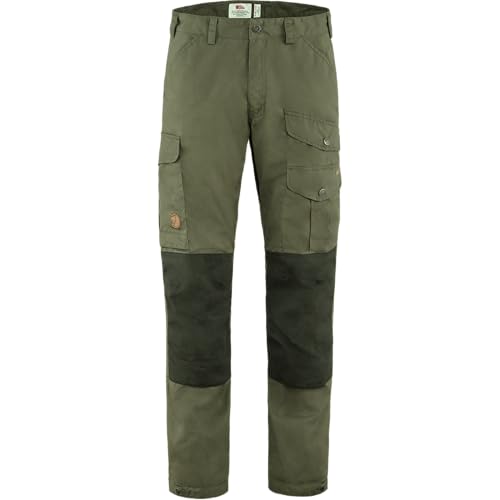
Current cuff straps and boot hooks provide a more elaborate lower-leg interface to inspect.
Consider: Those features can also conflict with separate gaiter attachments.
Check on AmazonEditorial selections from the products considered for this guide; not hands-on test awards. Budget and premium describe positioning, not a guaranteed current price.
Begin with the gaiter's top edge and the trouser section it will contact. Note whether the pants are full length, cropped, gathered at the ankle or adjustable. Then look at the gaiter's intended footwear and height. The relevant interface is the actual overlap between those pieces, not a general statement that both are designed for hiking.
A short running-style gaiter may sit mainly around a shoe and ankle, while a taller design reaches farther up the calf. These formats create different trouser contacts. REI's gaiter fitting guide emphasizes assessing gaiters with the footwear you intend to wear and avoiding uncomfortable overtightening. Use the specific manufacturer's instructions for fastening and adjustment.
Lay the components beside one another before wearing them. Identify drawcord toggles, cuff snaps, zippers and any attachment points. This simple inventory helps you see where one component could press beneath another. Do not add improvised straps or modify a closure until you understand the intended arrangement; a visible fitting mismatch is a reason to reassess the combination first.
Keep the gaiter's own size identification available during the comparison. If you borrow another pair to investigate a fit problem, note which component changed rather than assuming all accessories marked medium are equivalent. Footwear shape, calf fit and closure range can differ across designs. A useful fitting record names the exact pant, footwear and gaiter combination that worked so you can reproduce it later.
Put on socks, pants and footwear in a normal sequence. Let the trousers fall to their natural position, then arrange the gaiter according to its own instructions. Avoid starting with the trouser leg artificially pulled high or tightly rolled unless that is an intended and comfortable setup. Otherwise the fitting may look neat only until you take the first few steps.
Close the gaiter without trapping a concentrated bunch of fabric at its upper edge. If excess cloth gathers, smooth it gently and examine whether the pant opening or length is responsible. A roomy leg can sometimes overlap comfortably, but several thick folds under a closure may create pressure that a smaller amount of fabric would avoid.
Do not compensate by tightening the gaiter as far as it will go. The goal is a stable fit within the product's design, not maximum compression of all the layers beneath it. If the closure cannot engage appropriately without substantial strain, check the gaiter's size guidance and the trouser bulk. A different size or combination may be necessary.
Take ordinary steps, sit and raise a knee onto a low stable step. Watch whether the trouser fabric pulls upward through the top of the gaiter or leaves an unintended gap. Check whether the upper edge stays in a comfortable location rather than moving onto a broad part of the calf or behind the knee.
Inspect the footwear connection after movement as well. The gaiter has its own fastening requirements, and a trouser cuff should not interfere with reaching or checking those components. If the pants cover an adjustment you need to operate, decide whether that occasional access is manageable. A secure arrangement should not require unexplained changes to the manufacturer's attachment method.
Pay attention to stacked hardware. A pant toggle that feels harmless outside a gaiter can become a pressure point beneath it. A snap cuff can create a thicker line at the same height as the gaiter's closure. Sometimes relaxing or repositioning an intended adjustment solves the conflict; sometimes another hem shape is a better fit. The important observation is the complete moving combination.
A straight hem gives you a relatively continuous tube of fabric to arrange, but its width and length still matter. Too much length can leave extra material around the ankle, and a very broad opening may form bulky folds. Begin with a sensible inseam before trying to control that excess with an outer accessory.
A gathered jogger cuff holds material closer at one point. It may remain tidy above the shoe, yet an elastic band beneath another closure can feel different from either layer alone. Check whether the gathering sits inside, below or above the gaiter's contact zone. A jogger format is neither automatically incompatible nor automatically ideal.
An adjustable hem offers more possible positions, but the mechanism has a finite range and physical bulk. Columbia's current Women's Leslie Falls Pants II uses snap cuffs, while the current Men's Paramount Pro from The North Face lists drawcord hems. Those are different mechanisms with different points to inspect. Do not assume that all models in either family share the same opening.
A rain layer introduces the direction in which water runs over overlapping pieces. REI advises a shingled arrangement with rain pants outside gaiters in a downpour, rather than allowing runoff to enter at the gaiter's upper edge. That is useful context, but the exact rain shell, footwear and gaiter instructions still control your setup.
Do not transfer that statement into a claim that every ordinary woven hiking pant should always be outside every gaiter. The materials and intended job differ. A water-repellent hiking pant is not a waterproof shell merely because it overlaps the top of an accessory. Read the rain-layer guide for the distinction between a surface finish and waterproof construction.
If you expect to add a shell during the outing, test that complete arrangement beforehand. The outer leg must have sufficient room for the pieces beneath it, and any lower-leg opening must accommodate the intended dressing process. A setup that works without the shell may become crowded once another layer is added. Evaluate that change at home rather than relying on a universal over-or-under slogan.
Fjallraven's current Vidda Pro Trousers M lists cuff straps and boot hooks. The current Abisko Lite Trekking Trousers also has lower-leg adjustment and boot-hook details. These features provide their own footwear interface, but they do not establish compatibility with every separate gaiter. Check whether the intended attachment points and fabric positions can coexist without interference.
Outdoor Research's current Cirque III has more specialized lower-leg features, including ankle zips and a boot-lace hook in the manufacturer description. It should not be treated as the same garment as the Cirque II, or as an ordinary light trail pant with only a different name. Extra hardware can be useful for its intended purpose while requiring more careful overlap with other equipment.
For a simpler starting point, a full-length Columbia Silver Ridge Utility or a captured lower-priced utility listing may be enough to assess the interface you need. You do not need a pant advertised for gaiters if the ordinary leg fits the accessory correctly. The shopping comparison should be driven by your existing footwear and gaiter, not by a requirement to acquire matching brand names.
If the upper closure sits on an uncomfortable cuff band, first see whether an intended adjustment can move the band out of that zone. If the trouser leg is too short to overlap, a longer garment may be the appropriate change. If the gaiter is not designed for the footwear, different trousers will not necessarily fix its lower attachment.
For excessive fabric, check inseam and leg shape before considering alteration. A tailor can assess whether a hem modification is practical, but it may affect snaps, drawcords or other features. Avoid cutting away hardware or adding elastic based on a generic internet method. The construction and manufacturer instructions matter.
Finish by taking the combination apart and putting it on again. A setup that only works after a complicated one-time arrangement may be inconvenient for repeated use. You should be able to identify the correct overlap, operate the closures and notice when something is out of place. The best interface is both comfortable in motion and straightforward enough to reproduce.
Not necessarily. The pants need a compatible length, opening and amount of fabric for the particular gaiter and footwear. Test the full arrangement and follow the accessory instructions. A special label is less informative than a stable, comfortable overlap.
Some combinations may overlap, but a short pant and a gaiter can also leave a gap or create an awkward upper-edge contact. Check the actual heights on your leg during movement. Do not assume that choosing a taller accessory automatically resolves the format mismatch.
A thick roll may create a pressure band or interfere with closure. First evaluate the intended garment length and available adjustments. If rolling is used, the result must remain comfortable and consistent with the equipment instructions rather than being forced into place.
They do not turn the rest of the trousers into waterproof clothing. The pant fabric, seams and outer weather layer remain separate parts of the system. Use the relevant rainwear guidance and exact product specifications for that decision.
Treat the gaiter connection as a fitting problem shared by several pieces of gear. Settle the pants naturally, check the overlap in motion and keep cuff hardware from becoming trapped under another closure. Distinguish ordinary debris-management arrangements from a rain-shell system, and follow the actual equipment instructions. If the combination fails, identify whether length, bulk or accessory fit is responsible before buying more. A compatible interface should be easy to reproduce, comfortable to wear and honest about the weather and coverage limits of each piece.