
Columbia Men's Silver Ridge Utility Pants
A documented replacement example when you need to restart with a known version and measured fit.
Consider: No promise of zero shrinkage; follow the received garment label.
Check on Amazoncare
Yesterday the waistband closed easily; after laundry it seems less forgiving. That observation deserves attention, but it does not yet tell you whether the pants shrank. A twisted waistband, a different layer underneath, a changed measuring method or damaged elastic can produce different problems that feel similar. Diagnose the change before pulling the fabric hard, washing it again or deciding the entire pair must be replaced.
Three places to start
As an Amazon Associate I earn from qualifying purchases. Purchases take place on Amazon.
A documented replacement example when you need to restart with a known version and measured fit.
Consider: No promise of zero shrinkage; follow the received garment label.
Check on Amazon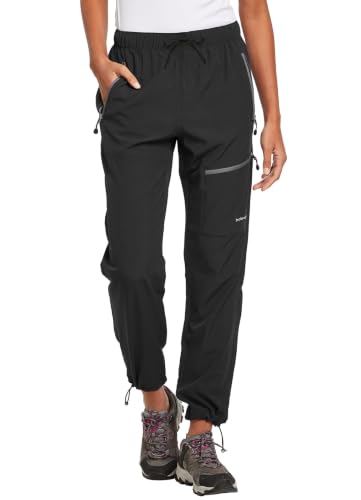
A lower-cost elastic-waist candidate when that construction suits the diagnosed fit need.
Consider: Elastic waist does not guarantee unlimited adjustment or recovery.
Check on Amazon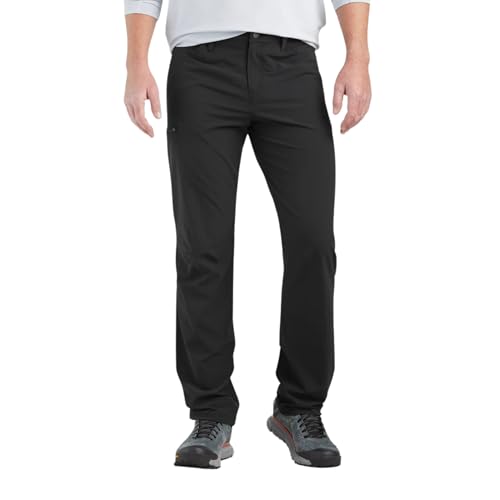
A higher-priced option to assess against a clear inseam and movement baseline.
Consider: A premium fabric claim cannot replace correct care.
Check on AmazonEditorial selections from the products considered for this guide; not hands-on test awards. Budget and premium describe positioning, not a guaranteed current price.
“Tighter” is a useful first impression but a poor final diagnosis. Does the waist no longer close, does the thigh resist a step, or has the hem moved upward? Has a stretchy panel become baggy instead? Each description points to a different part of the garment and a different decision.
Separate a shorter dimension from reduced stretch. A waistband can feel less flexible without an obvious change in its resting width. Conversely, a nonelastic section can become uncomfortable because a neighboring panel has shifted or because the garment is sitting at a different height on the body.
Do not keep forcing the closure while investigating. Lay the trousers out, look for twisted components and remove any belt or pocket contents that could change how they sit. This basic inspection sometimes reveals a mechanical issue that an aggressive wash would not solve.
Measure only when the garment is fully dry and arranged consistently. Use the same flat surface, smooth folds without stretching them out, and identify the exact points you measure. A flat waistband width and a circumference pulled around the body are different measurements.
If you recorded dimensions before laundering, compare the same areas. Useful locations include inseam, waistband at rest and thigh width at a defined point. Without a baseline, measurements can describe the current garment but cannot prove how much it changed. Be honest about that limit.
Compare fit while wearing the same kind of underlayer and footwear as before. A thicker baselayer can affect the waist and thighs, while a different boot can change the apparent hem position. The aim is not a laboratory test; it is to remove obvious differences before blaming the fabric.
Check the cycle, water setting, drying method and any treatment applied. Read the garment label again rather than relying on a remembered general instruction. Ask whether it was dried with a hotter load, left close to a concentrated heat source or handled differently from previous washes.
Identify new products as well. A detergent change, softener or reproofing process may be relevant to the manufacturer's troubleshooting, even when you cannot determine the effect yourself. Record the product names and sequence so that support can assess a specific situation.
Do not infer the cause solely because the change appeared after washing. Timing is evidence worth recording, not proof of a particular fiber reaction. A mixed-material garment or altered hem can complicate the explanation, and a manufacturer may need the style number and photographs to advise usefully.
Different fibers and constructions respond differently to care, but a composition label does not tell you an exact shrink rate for the finished trousers. Fabric preparation, stitching, panels and manufacturing choices matter. Avoid internet rules promising that all nylon, cotton or polyester pants change by a predictable percentage.
The current Columbia Men's Silver Ridge Utility Pant is documented differently from older Silver Ridge variants. prAna also distinguishes versions of Stretch Zion with differing composition details. If you look for care guidance under a family name alone, you may be learning about a different garment.
Stretch fabric requires equal caution. The presence of elastane or spandex does not make a trouser indefinitely recoverable after any treatment. Nor does it establish that a structured waistband stretches like the leg panels. Examine the component that has changed rather than generalizing from the main fabric label.
If the garment has no clear dimensional change and the fit difference disappears when layers or positioning are matched, continue observing rather than treating it. You may have been comparing different wearing conditions. Keep a measurement record now so that a future change is easier to assess.
If a dimension appears different but the garment is otherwise intact, contact the manufacturer with the model, care history and measurements. Ask whether the observation is expected and whether any specific recovery step is recommended. Do not substitute a home remedy that requires a temperature or chemical the label prohibits.
If the waistband, fibers or panels show visible damage, repeated washing may make the situation harder to interpret. Stop the experiment and evaluate repair or replacement. A pant that can still be fastened is not necessarily comfortable or stable enough for its intended use if a component has lost its function.
Buying oversized hiking pants and planning to shrink them deliberately is unreliable. You cannot assume that waist, seat, inseam and mixed panels will change in the same proportion. Hardware and finishes add further reasons not to improvise a hot treatment.
The opposite strategy is equally uncertain. Pulling a too-small pair forcefully does not redesign its rise, pocket placement or knee position. Even if a section temporarily gives, that does not establish a lasting improvement or preserve the garment's intended shape.
Choose a better size or cut when the issue is original fit. The movement-based fitting guide can identify whether the restriction comes from the waist, rise or thighs. That information is more actionable than trying to make the whole garment change in an uncontrolled way.
A conventional hem may be adjustable by a competent alteration service when the garment construction permits it. That can solve excessive length. It does not restore lost elastic recovery or correct damage across a panel. Keep the proposed repair matched to the actual issue.
Waist alterations can be more complicated around integrated elastic, webbing adjusters and shaped panels. Ask an alteration professional to assess the item before assuming it is a simple inexpensive fix. An adjustment that changes how pockets or seams sit may introduce another inconvenience.
Read the alteration guide for those construction questions. Where the trouble is a tear or opened seam, the repair guide covers a different decision path. Do not bundle every fit change under the word shrinkage.
Photograph the readable care label and note the settings you intend to use. Sort the trousers with garments that have compatible instructions rather than placing every outdoor item in one load. Dry them by the permitted method and inspect the thicker areas before deciding the cycle is complete.
Establish a simple baseline for a pair that fits well: perhaps the resting waistband width and inseam, measured consistently. You do not need an extensive spreadsheet. A few notes and photographs can distinguish a new issue from an uncertain memory months later.
If you travel frequently, check whether accommodation laundry can follow the required process. A rushed dryer setting is not worth relying on to prepare your only walking pair. The packing guide helps build a rotation when drying access is limited.
If the pants are no longer usable, identify whether the next purchase needs a different size, pattern or care requirement. Otherwise, you may repeat the same mismatch under a new brand name. A garment that requires a process you cannot reliably follow may be inconvenient even when it fits beautifully at first.
For readers already replacing a pair, Columbia Utility, BALEAF elastic-waist joggers and Outdoor Research Ferrosi provide different examples to compare. Their inclusion is not a claim that one cannot shrink or lose stretch. Each selected garment needs its own care check and fitting.
Keep the failed pair's history useful. Record what changed and what remains uncertain. That makes a manufacturer inquiry more productive and helps you choose a replacement for a concrete reason rather than reacting to one unpleasant laundry surprise.
| Observation | Next question |
|---|---|
| Hem appears higher only with different boots | Does the measured inseam differ, or is the cuff sitting differently on the footwear? |
| Waist feels tighter over a baselayer | Does the original underlayer reproduce the earlier fit? |
| One stretch panel stays distorted | Is the surrounding stitching intact, and what model-specific assessment does the manufacturer recommend? |
| Several dimensions changed after an unapproved cycle | What exact settings were used, and is a permitted recovery process documented? |
No reliable garment-specific percentage follows from fiber content alone. Use the exact care instructions and consistent before-and-after measurements. Without a baseline, avoid claiming a precise amount of shrinkage.
It is not a dependable fitting method and may distort components. Choose the appropriate size or seek model-specific advice rather than using forced stretching to compensate for the wrong cut.
Provide the style information, care-label photograph, actual wash and drying sequence, the affected area and any consistent measurements. State what you observed without assuming a cause you cannot establish.
A fit change calls for comparison before correction. Establish which part changed, eliminate differences in layers and measuring method, and review the care history. Avoid hot shrink-to-fit experiments and forceful stretching; neither gives you control over a technical garment's shape. When the evidence is unclear, manufacturer guidance is more useful than another improvised treatment. If replacement becomes necessary, choose a cut and care process that address the identified problem, while keeping the lesson specific to the pair rather than condemning an entire fiber or brand.