
prAna Men's Stretch Zion Pants
Product-level finish wording can be read alongside the brand materials policy.
Consider: Match Standard generation; not an independent chemical certification.
Check on Amazonmaterials
A finish claim is only as useful as its scope. PFAS-free might appear beside a fabric name, in a brand-wide policy or in a seller's title with no explanation of the garment version. Those are different kinds of evidence. For hiking-pants shopping, the practical task is to connect the wording to the exact item and understand what it says about production, without turning it into an unsupported claim about every component or a personal health outcome.
Three places to start
As an Amazon Associate I earn from qualifying purchases. Purchases take place on Amazon.
Product-level finish wording can be read alongside the brand materials policy.
Consider: Match Standard generation; not an independent chemical certification.
Check on Amazon
A lower-priced exact model with manufacturer non-PFC DWR wording.
Consider: Do not extend plain-model claim to every Paramount variant.
Check on Amazon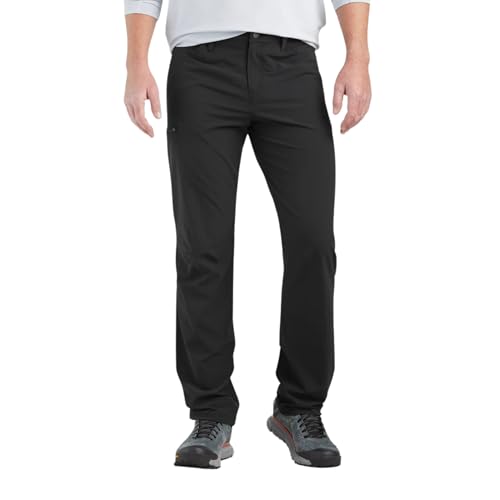
A stretch-focused option within a brand publishing a dated new-product policy.
Consider: Exact generation must fall within policy scope; no laboratory absence claim.
Check on AmazonEditorial selections from the products considered for this guide; not hands-on test awards. Budget and premium describe positioning, not a guaranteed current price.
PFAS refers to a broad family of fluorinated substances. In outdoor clothing, the discussion often concerns water-repellent finishes and, for some garments, membranes. Manufacturers may use phrases such as PFC-free DWR, non-PFC DWR, designed without PFAS or made without intentionally added PFAS. Read the full explanation rather than treating every short label as identical evidence.
The wording no intentionally added describes a production choice. It should not be silently rewritten as a guarantee that an independent laboratory found no trace of any relevant substance in every component. Those are different claims requiring different evidence. If a page does not provide a test method, detection limit or certification, do not invent one.
Likewise, a claim about the DWR finish does not automatically describe all trims, membranes or other parts of a garment. Sometimes a manufacturer explicitly extends its policy to the entire product; sometimes the statement is narrower. Preserve that distinction in a comparison rather than broadening it because the shorter phrase looks cleaner in a product card.
This guide addresses how to interpret purchasing information. It does not estimate exposure from wearing a particular pair, compare individual health risks or declare a product non-toxic. Those conclusions require evidence beyond the clothing descriptions considered here.
Outdoor Research states on its responsibility page that new products from January 1, 2025 are free from intentionally added PFAS, including DWR treatments and membranes in the described outerwear and shells. The word new and the date are meaningful. They should not be erased when evaluating an older item sold under a familiar family name.
Patagonia's materials explanation similarly describes its transition for new products from the Spring 2025 season onward and explains why it uses intentionally added language. This is a useful example of the kind of scope statement to look for, not evidence that a particular third-party listing necessarily belongs to the covered production.
A marketplace page can continue selling an older style after a manufacturer updates the current version. A new purchase date does not necessarily mean new production. The complete model identifier, style code and available garment information are therefore more helpful than assuming every item sold today reflects the newest policy.
If the generation is unclear, ask the seller or manufacturer a focused question about the exact style rather than asking whether the brand is generally PFAS-free. A specific answer can resolve the purchase; a broad marketing reply may leave the original uncertainty unchanged.
Recycled nylon or recycled polyester describes where material comes from. It does not, by itself, identify the chemistry of a water-repellent finish. A garment can make both kinds of claims, but each needs its own supporting information.
The same principle applies to certifications and supplier programs. A brand's participation in a system is not automatically a certification of every finished pant or a statement that every possible substance is absent. Read what the named program verifies and whether the exact product carries the applicable claim. Do not convert a company-level logo into a garment-level test result.
prAna's materials guide says PFAS are not intentionally used in its products. Its individual product pages can use more specific finish wording, such as PFC-free DWR. Reading the policy and exact item together is more informative than relying on either alone.
For the shopper, the discipline is simple: keep separate notes for fiber composition, recycled content, finish terminology and any applicable certification. Combining them all into a single green or clean score hides which facts are known and which are assumptions.
Two finishes can both cause droplets to bead on a fabric while using different chemistry. A photograph or a home water-drop check can tell you something about visible repellency in that moment. It cannot identify the ingredients or prove compliance with a manufacturer's chemical policy.
The reverse mistake is assuming that a finish made without intentionally added PFAS must be ineffective. The policy statement concerns chemistry; the product's weather-performance description is a separate source of information. Assess the actual garment's intended function, construction and care requirements without inventing a universal performance penalty or advantage.
DWR itself remains a surface water-repellent treatment. Regardless of the chemistry wording, it does not turn an ordinary woven pant into a waterproof rain shell. If the trip requires waterproof coverage, inspect that construction separately using the rain guide.
This distinction protects against two unhelpful purchases: paying for a finish claim while overlooking an unsuitable fit, and rejecting a suitable garment because a chemistry label is mistaken for a performance score. Both decisions need more precise information.
| Record | Example of useful detail | Reason |
|---|---|---|
| Exact item | Complete model name and style code | Prevents transferring a newer specification to an older version |
| Exact wording | Non-PFC DWR or no intentionally added PFAS | Preserves the scope of the claim |
| Scope and date | Finish only, product-wide, or new production after a date | Shows what the statement actually covers |
| Source | Manufacturer product page, policy or applicable documentation | Separates direct evidence from a seller's unsupported shorthand |
For an ambiguous listing, the note can include an unresolved field. That is not a failure; it makes the decision reviewable. If chemical scope is a firm purchasing requirement, choose an option for which the missing information can be resolved rather than guessing from the brand.
Avoid searching for an answer you prefer and then applying it to the wrong product. A detailed explanation for a jacket, for example, may help you understand terminology without establishing the finish on a pair of pants from a different collection or year.
The North Face Men's Paramount Pants, style NF0A7WZE, have a manufacturer non-PFC DWR description. That statement can be used for the matched model. It does not automatically describe Paramount Active, Pro, Convertible or every five-pocket variation. If the exact listing identity is uncertain, resolve it before treating the source as a match.
prAna Stretch Zion Standard Pants offer an example with an individual PFC-free DWR description and a separate brand materials policy. The current Standard style and the current Relaxed style have different fabric specifications. The broader policy does not remove the need to identify which trousers you are buying or verify their fit.
Outdoor Research Men's Ferrosi Pants provide a third comparison within a brand that publishes a dated new-product policy. To rely on that policy for a particular purchase, the exact item's relationship to the covered production must be clear. A Ferrosi family name alone is not presented here as laboratory proof of chemical absence.
The Best Budget, Best Overall and Best Premium labels refer to shopping positions and garment usefulness within this comparison. They are not chemical-safety grades. Paying more cannot substitute for clearer documentation, and a lower-priced matched product can provide a more definite claim than a premium listing with an unresolved generation.
When a water-repellent garment needs maintenance, follow its exact care instructions and select a compatible treatment. Do not assume that any product called waterproofing spray is appropriate for every hiking textile or consistent with the finish preferences that guided your purchase.
Read the aftercare product's own ingredient or policy information if PFAS scope is important to you. A garment's original production statement does not describe everything a previous owner or you might later apply to it. This is particularly relevant when buying used clothing with an unknown treatment history.
Avoid trying to wash a garment until it can be declared chemically free of something. A household laundering routine does not provide analytical proof, and aggressive cleaning can conflict with the care label. Maintenance should preserve the garment's intended function, not create a claim that has not been tested.
If you are satisfied with an existing pair, a new policy announcement does not by itself tell you to discard it. Consider its condition, your preferences and the available manufacturer information. This article does not make disposal or health recommendations from an unknown exposure scenario.
Before buying, decide what information is essential. You may require a product-specific finish statement and a documented current version. Another shopper may simply want to understand what the brand's wording means before comparing fit and cost. Make that threshold explicit so that a vague label does not quietly become a stronger assurance than you intended.
Keep any useful manufacturer reply with the item information. If a future revision changes the wording, you will still know what was confirmed for your purchase. That is more reliable than remembering that a brand was on a general list at some point.
Once the documentation meets your requirement, return to ordinary garment questions: movement, pockets, coverage, care and the conditions of use. A finish claim is meaningful, but it is one part of a useful hiking pant rather than the whole reason the garment earns a place in your wardrobe.
Not necessarily. It describes the scope of the manufacturer’s production claim. Analytical absence would require separate information about what was tested and how. Do not silently strengthen the wording beyond what the source establishes.
Not by itself. Check the policy’s dates and scope against the exact model or production information. The date you buy an item does not establish when it was made.
No. The phrase concerns the surface finish and its chemistry description. Waterproofness depends on the garment’s separate barrier, seam and opening construction. A DWR-treated woven pant should not be promoted as a rain shell without that evidence.
The strongest PFAS-related shopping decision keeps the original wording intact and connects it to the exact garment. Record the model, scope, date and source; leave unresolved production details unresolved until clarified. Paramount, Stretch Zion Standard and Ferrosi provide different examples of product and policy documentation, not a ranking of chemical safety. Once the evidence meets your preference, compare the pants on fit and actual use. Clear documentation is worth more than a sweeping label, and neither a price tier nor a water-beading photograph can replace it.