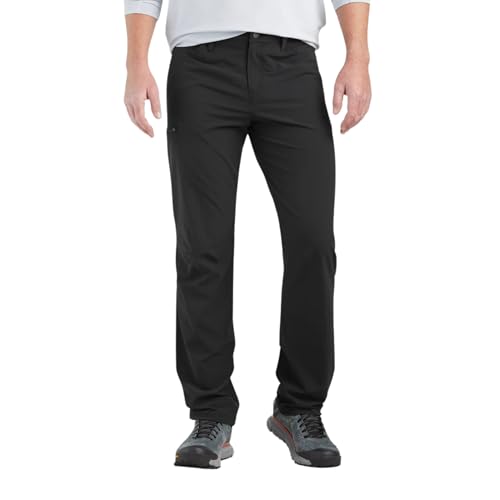
Outdoor Research Men's Ferrosi Pants
A water-resistant hiking option to compare if you are replacing a pair rather than renewing it.
Consider: It is not a waterproof shell.
Check on Amazoncare
Water used to gather into little beads on the thighs. Now the fabric darkens more readily, so it is tempting to reach straight for a waterproofing spray. Pause before treating it. The change might involve dirt, an exhausted surface finish, a waxed panel or expectations the garment was never designed to meet. Identifying the construction comes before choosing a product, and sometimes cleaning is the only first step required.
Three places to start
As an Amazon Associate I earn from qualifying purchases. Purchases take place on Amazon.
A water-resistant hiking option to compare if you are replacing a pair rather than renewing it.
Consider: It is not a waterproof shell.
Check on Amazon
The lower-priced replacement example in this maintenance-focused trio.
Consider: Confirm exact model care; do not assume a particular reproofing system from the family name.
Check on Amazon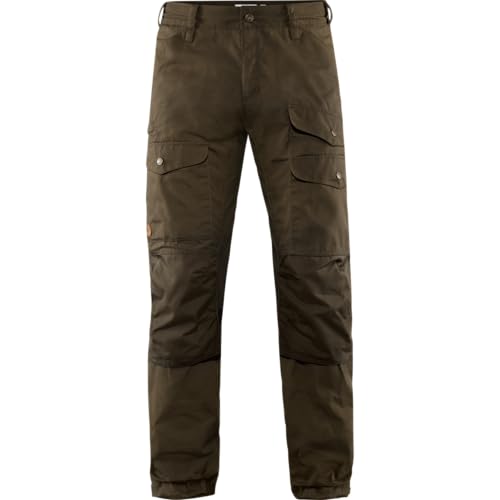
A higher-priced alternative whose exact material panels and care process deserve study before buying.
Consider: Use model-specific material guidance; not every panel or Fjällräven trouser accepts wax.
Check on AmazonEditorial selections from the products considered for this guide; not hands-on test awards. Budget and premium describe positioning, not a guaranteed current price.
Ask what the pants originally claimed. Water repellent, water resistant and waterproof do not describe identical construction. A woven hiking pant with a surface finish may shed brief droplets but allow water through during prolonged exposure. Restoring that surface behavior does not change the underlying limits.
DWR stands for durable water repellent. The finish encourages droplets to remain on the surface rather than spreading into the face fabric. “Durable” does not mean permanent. Dirt, oils and wear can reduce beading, which is why compatible care can matter over the life of a garment.
If the trousers include a waterproof membrane or other barrier, surface repellency is still a separate part of the system. Follow the instructions for that exact construction. The process for ordinary hiking pants should not be substituted for specialized waterproof outerwear care.
Find the garment's model and care label. Check whether the manufacturer names a finish, gives renewal guidance or specifies a wax-care system. The general fiber composition is not enough: two nylon-rich pants can have different coatings, components or treatment restrictions.
Fjällräven's G-1000 guidance is a useful warning against blanket advice. It describes waxing appropriate G-1000 material and cautions against applying the same treatment to other panels on mixed-material garments. A trouser with both reinforced and stretch sections needs a panel-aware approach.
Do not assume every Fjällräven pant is all G-1000, or every water-resistant synthetic trouser should receive the same spray. Match the product to the actual material and the manufacturer's instructions. If the finish cannot be identified, obtain clarification before applying something difficult to remove.
REI's DWR guidance explains that contamination can interfere with surface performance. That makes cleaning a sensible diagnostic step where the garment instructions permit it. Removing dirt and residues can reveal whether a new treatment is necessary rather than simply covering the existing problem.
Use the exact garment's permitted detergent and wash process. Rinse as directed and follow its drying method. Do not add fabric softener, bleach or another laundry product without confirming compatibility. A product selected for scent or stain power may be the wrong choice for the finish you are trying to maintain.
Keep the task limited. You are preparing the fabric for assessment, not attempting every possible treatment in one session. Washing, reproofing and heat activation performed together without a verified process make it harder to understand what changed and can introduce avoidable incompatibilities.
Once the garment is clean and prepared as its instructions require, look at how a small amount of water behaves on a suitable area. Follow any manufacturer assessment guidance. Compare obvious worn or soiled zones with less-used areas, while recognizing that different panels may be designed differently.
This observation is about surface wetting, not a standardized test of waterproofness. It cannot establish a hydrostatic rating, prove seam resistance or predict how long you can remain comfortable in rain. Do not turn a few beads on the thigh into a claim that the trousers are ready to replace a shell.
Uneven beading can also reflect localized wear. A seat or knee receives different contact from a sheltered leg panel. Before repeatedly coating the whole garment, inspect the affected area for abrasion or physical damage that a finish treatment cannot repair.
If the instructions specify compatible reproofing, follow the treatment product and garment guidance together. Confirm application method, preparation, amount, curing and drying requirements. A spray-on and a wash-in product are not interchangeable merely because both mention water repellency.
Some systems permit a heat step; others do not. GORE-TEX, for example, publishes different guidance for different outerwear constructions, including exceptions that should not receive conventional drying or DWR treatment. That is precisely why a generic instruction to tumble every pant is inappropriate.
Where garment and treatment requirements conflict, do not select the more convenient set. Find a compatible product or ask the manufacturer. A method that requires a prohibited drying temperature is not made suitable by using less of the treatment.
Greenland Wax belongs to Fjällräven's specified G-1000 care approach. It should not be presented as a general treatment for any trouser that looks rugged. On mixed garments, identify the relevant panels carefully and follow the brand's detailed instructions.
Wax can affect the balance between water resistance and air flow, so more is not automatically better for every use. The decision should follow both the manufacturer's process and the conditions for which you wear the garment. Avoid improvising around unsuitable panels or concentrated heat sources.
A separate spray finish has its own compatibility requirements. Applying a second unrelated treatment on top of an uncertain wax or coating is not a reliable way to combine advantages. Establish what is already on the fabric and what the maker recommends before mixing maintenance systems.
A hole remains a hole after surface treatment. An opened seam or damaged zipper needs a construction repair, and a worn waterproof layer needs specialist assessment where applicable. Reproofing is not a replacement for patching, stitching or checking manufacturer support.
Similarly, a garment that was never waterproof does not gain sealed seams because droplets bead on the fabric. If sustained rain is the problem, the useful solution may be a suitable rain layer. Read when ordinary hiking pants need a shell before spending repeatedly on finish products.
The expectations question matters as much as the treatment. If the pants performed within their original water-resistant limits but you now need a different weather system, maintenance cannot redesign them. Keep the pair for its appropriate role and choose additional equipment for the new requirement.
Keep a simple note of the garment model, treatment name and process followed. This helps you avoid unknowingly combining incompatible products later. It also gives the manufacturer useful information if the fabric changes appearance or behavior after treatment.
Do not create an arbitrary calendar rule that every pair needs reproofing each month or after a fixed number of walks. Use garment condition and the maker's instructions. Some areas may wear faster because of your activity, and washing frequency varies substantially between owners.
After any permitted treatment, allow the complete drying or curing process before packing the pants. Check pocket bags and other layered areas, then store the garment appropriately. A rushed process can leave you uncertain whether an apparent problem is poor application, incomplete drying or the wrong expectation.
If you are replacing a pair, consider whether its care system fits your routine. A wax-maintained reinforced trouser and a lightweight synthetic model can require different ownership habits. The right choice is not necessarily the one with the strongest promotional water claim.
Columbia Silver Ridge Utility and Outdoor Research Ferrosi provide examples of ordinary hiking-pants choices that should not be mistaken for waterproof shells. Fjällräven Vidda Pro Ventilated is a different construction to investigate through the exact model's care information. These are shopping comparisons only; buying another trouser is unnecessary when compatible maintenance restores the existing one.
Use the washing guide for the preparation stage and the repair guide when the problem is physical damage. Keeping those tasks separate leads to more useful decisions than applying increasingly strong treatments to every change in appearance.
A successful maintenance result should match the garment’s original role. You may see improved surface beading on a compatible treated panel, while the trousers remain ordinary water-resistant clothing. That is a useful result without calling them waterproof. Check the garment again during normal appropriate use and record any unresolved change, rather than deliberately exposing it to prolonged water to prove a point.
If the fabric becomes unusually stiff, discolored or tacky after treatment, do not keep adding product. Review the instructions and contact the relevant maker with the treatment history. The next useful action is diagnosis; layering another finish on top can make both the problem and its cause harder to assess.
No. A surface treatment does not create a waterproof membrane or seal the garment’s construction. It may renew compatible repellency, but the original design limits remain.
Inspect and clean as directed first. Knees may have localized wear or damage, and different panels may need different care. Follow the manufacturer process rather than repeatedly coating everything.
Fjällräven’s guidance limits its G-1000 waxing process to the appropriate material. Do not extend it to other panels simply because they are sewn into the same garment.
Restore the finish you actually have, using the process that belongs to the garment. Begin with identification and compatible cleaning, then judge whether additional treatment is needed. Keep wax systems, conventional DWR and waterproof construction distinct. If the problem is a tear or a need for sustained rain protection, change the task rather than expecting reproofing to solve it. A careful maintenance decision can preserve a useful pair; a stronger-sounding treatment cannot overcome the limits of its original design.