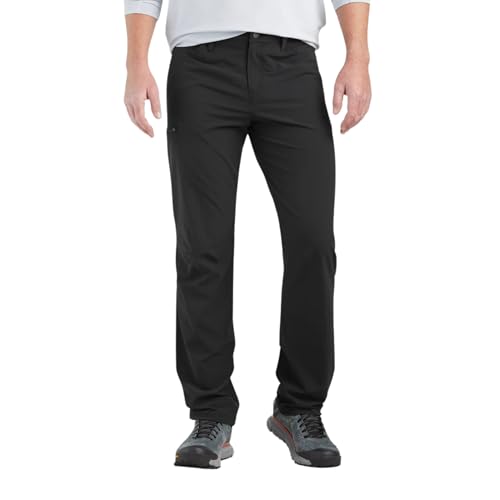
Outdoor Research Men's Ferrosi Pants
A stretch-focused covered alternative for active walking.
Consider: Not a rain shell and not equivalent to the airflow of shorts.
Check on Amazoncomparisons
An open climb and a narrow overgrown descent can ask very different things of the same outfit. Shorts leave the lower legs uncovered throughout both; pants keep fabric between skin and the surroundings, even when that coverage becomes warmer than you want. The useful comparison begins with where you will walk and stop, not a rule that serious hikers always wear one or the other.
Three places to start
As an Amazon Associate I earn from qualifying purchases. Purchases take place on Amazon.
A stretch-focused covered alternative for active walking.
Consider: Not a rain shell and not equivalent to the airflow of shorts.
Check on Amazon
A simpler full-length starting point when leg coverage is the main purchase reason.
Consider: Mechanical stretch and fit must suit the wearer.
Check on Amazon
Worth comparing when leg vents and reinforced panel construction are priorities.
Consider: More construction than many straightforward warm-weather walks require.
Check on AmazonEditorial selections from the products considered for this guide; not hands-on test awards. Budget and premium describe positioning, not a guaranteed current price.
Think through the route in sections. A broad gravel path may have little vegetation at leg height. A connecting trail can narrow until grasses and branches touch the calves repeatedly. An exposed ridge can introduce wind after a sheltered ascent. Choosing from the temperature at the parking area misses these differences, because the most uncomfortable part of the outing may happen much later.
For shorts, ask whether you are happy leaving the knee, shin and calf exposed wherever the route goes. For pants, ask whether you can tolerate full fabric coverage while climbing. A pair that feels pleasant standing outside can feel different once your effort increases. Neither answer needs to be permanent: the same person might prefer shorts for local summer paths and pants for a route with sustained brush contact.
Coverage should not be confused with a protective rating. Ordinary trousers can put a layer between skin and light contact, but thin fabric can snag or tear and cuffs leave openings. They do not establish protection against bites or thorns. If that question is the deciding factor, read the more specific guide to pants around insects and brush before treating a longer hem as a complete solution.
Shorts expose more skin to moving air, which is their clearest practical advantage in this comparison. Pants have to manage the space inside the garment through cut, fabric and sometimes vents. A loose woven leg and a close stretchy leg may both reach the ankle yet feel quite different. Do not use the word lightweight as a substitute for inspecting that construction.
The current Columbia Silver Ridge Utility Pants illustrate a covered option with 100% recycled polyester and mechanical comfort stretch. Outdoor Research describes Ferrosi Pants as a stretchy nylon blend, with wind and water resistance. Those are different routes to a trail garment; neither description proves which will feel cooler on your body. The same applies to two shorts with different linings or waistbands: shorter does not describe everything touching your skin.
Ventilation also depends on what the route permits. Opening a vent while walking is useful only if you can reach it and it does not expose a pocket's contents. Removing a layer may be inconvenient on a crowded trail or an exposed stop. Build the choice around adjustments you will actually make. The dedicated hot-weather pants guide examines covered options in more detail; this decision is whether to start with that coverage at all.
People often choose clothing for the hardest climbing section and forget lunch, navigation stops or waiting for a group. Your effort changes, while the wind or shade may not. With shorts, the lower legs remain exposed during that pause. With pants, they remain covered, though a thin woven fabric is not insulation simply because it reaches the ankle.
Picture a concrete outing: a steady climb through sheltered woodland, a meal beside an open viewpoint, then a relaxed descent. If you routinely feel cold while stopped, choosing entirely around the climb may leave you dissatisfied. Conversely, buying a heavy pant to solve a brief cool pause can make the long active portion less comfortable. Clothing for the rest of the body and planned layers belong in the decision too.
For a route that moves across conditions, the relevant question is how readily you can adjust your whole clothing system. A packable weather layer addresses a different need from exchanging shorts for ordinary hiking pants. Do not assume the latter creates rainwear. Review planning for changing weather when the trip includes a substantial forecast change rather than just a cool place to sit.
A loaded pocket has a location, not merely a capacity. On shorts, a deep pocket may sit close to the hem and swing against the leg. On pants, a cargo pocket can place the same object beside the thigh or knee. Either arrangement can be awkward. Try your normal phone and small essentials in the actual pockets rather than deciding that more fabric automatically means better storage.
A backpack waist belt complicates matters at the top of both garments. Buttons, drawcord knots and pocket openings may end up under the belt. Sit down, lean forward and reach for a pocket while wearing the pack you expect to use. An item that stays accessible without twisting the waistband has a real practical advantage over one you can reach only when standing without luggage.
The premium Fjallraven Keb offers several pockets and leg ventilation, but that does not make it a better answer for a person who carries only a phone on a short walk. Its additional construction is relevant when you want those particular features. Treat storage needs as a small inventory problem: decide which objects belong on your body and which can stay in the pack, then compare the two garment lengths.
Columbia Silver Ridge Utility is a reasonable budget-positioned starting point in this group if you want full-length coverage and conventional trail pockets. Its regular fit and listed inseam choices are worth inspecting before looking at more elaborate garments. The decision here is not that everyone should replace shorts with it; it is whether a straightforward covered option solves the gaps you identified on your route.
Ferrosi is the overall comparison candidate for someone who wants stretch and a relatively uncomplicated pant for active walking. The manufacturer lists a drawcord waist and several secure pocket arrangements. Fit still decides whether that stretch is useful: buying a tight size because the fabric stretches can leave the waistband or pocket bags uncomfortable. Move in the garment with your normal underlayers before assigning it the role of everyday trail pants.
Keb belongs at the premium end for a walker specifically seeking vented legs and a combination of stretch fabric and reinforced G-1000 panels. It is more involved than the minimum needed to cover the lower legs. Compare the value of those vents and panels with your actual outings, and keep its weather limitations clear. Ventilation features do not turn it into shorts, and wax-compatible fabric does not turn it into a waterproof shell.
Write one column for reasons you want uncovered legs and one for reasons you want covered legs. Useful entries are concrete: a long warm climb, a narrow section of brush, an extended exposed rest, or a dislike of fabric around the knees. Less useful entries are identities such as being a shorts person or needing to look outdoorsy. The concrete entries let you reconsider when the route changes.
Next mark which concerns last most of the outing and which last only a few minutes. Full-length clothing can be a sensible compromise when contact with vegetation dominates the day. Shorts may be the clearer answer when a broad open route, warm conditions and personal comfort all point toward exposed legs. An occasional cool breeze alone does not prove that you need a different entire garment category.
There is a separate choice about pants that convert or roll up. That mechanism deserves its own assessment of seams, closures and packed components, so it is covered in roll-up versus convertible hiking pants. First decide whether changing leg coverage is important enough to you to justify that extra mechanism. It should answer a real adjustment need, not simply make a product description sound more versatile.
If both options appear suitable for a modest familiar route, compare them on ordinary outings before planning around either for a more committing trip. Keep the comparison specific: did the hem interfere with stepping, did a pocket bounce, did the waistband bother you at a stop, and did you wish for different coverage? You do not need a dramatic endurance test to notice those practical issues.
Change one major thing at a time where possible. A shorts outing with no pack is not directly comparable to a trousers outing with a loaded backpack in different weather. Your observations are still useful, but attach them to their context. The goal is to understand your clothing preferences, not declare a winner for all hikers or treat one comfortable afternoon as proof of weather performance.
No. A listed UPF rating applies to the specific garment and covered areas under its rating conditions. Shorts leave more leg skin uncovered, while pants can still leave gaps at the ankles. Garment length is one part of planning for exposure, not a whole-body promise.
Distance alone does not settle the question. Surface, vegetation, weather, stops and your experience with the garment matter. A long open path and a shorter overgrown trail can create very different coverage needs. Avoid replacing that route assessment with a mileage threshold.
There is no universal packing rule. Decide what change you are preparing for and whether ordinary pants actually address it. If the concern is sustained rain, a verified rain layer has a different role. If it is a preference for covered legs during a stop, assess that separately.
Let the most persistent demands of the route decide the starting garment. Shorts make sense when you welcome uncovered legs throughout the outing; pants make sense when coverage remains useful even during the warmer sections. Compare pocket access and pack comfort after that first decision. If you already own a pair that works for a familiar route, this comparison does not create a reason to replace it. Spend on a different length or more elaborate construction when you can name the specific problem it will solve.