
Columbia Men's Silver Ridge Utility Pants
A middle-position example with specific manufacturer construction details to compare against cost.
Consider: Older Silver Ridge names can represent different garments.
Check on Amazonfoundations
Two trousers can differ greatly in price while looking nearly identical in a small product image. The explanation might be a different fabric, more elaborate pattern, specialized hardware, brand positioning—or simply a discount on one size. Deciding whether to spend more requires separating those possibilities. This comparison focuses on what you can inspect and verify, rather than pretending that a higher price predicts how many hikes a pair will last.
Three places to start
As an Amazon Associate I earn from qualifying purchases. Purchases take place on Amazon.
A middle-position example with specific manufacturer construction details to compare against cost.
Consider: Older Silver Ridge names can represent different garments.
Check on Amazon
The lower-priced reference for checking whether straightforward features already meet your needs.
Consider: No comparative lifespan or laboratory performance result is available here.
Check on Amazon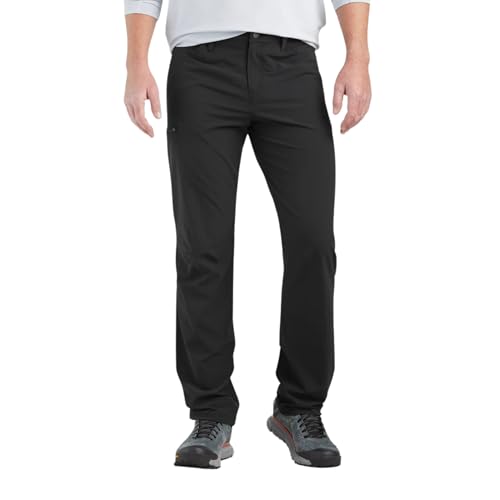
A higher-priced construction to consider when its waist and movement arrangement solve a specific issue.
Consider: A premium position does not ensure a better fit for your body.
Check on AmazonEditorial selections from the products considered for this guide; not hands-on test awards. Budget and premium describe positioning, not a guaranteed current price.
A bargain found in one waist and inseam may disappear when you select another. Colors, sellers and older versions can carry different prices. Establish the exact item before deciding that one brand is cheaper than another. Otherwise, the comparison may silently pit a clearance variant against a new full-price model.
Keep the date and selected configuration in your private shopping notes. You do not need to record every price fluctuation, but you do need to know whether the offer matches the trousers you intend to order. A title with a familiar family name can conceal a different cut or generation.
Our Budget, Overall and Premium labels describe the relative positions of the reviewed examples. They do not promise that the same order will hold for every size or future offer. Follow the Amazon destination to check the actual configuration and purchase details before using price as your deciding factor.
A straightforward trouser can solve a straightforward need. If your walking happens on maintained trails, you may value uncomplicated pockets, an acceptable inseam and comfortable movement more than specialized panels or adjustment systems. A lower-priced model that fits those priorities can represent a sensible purchase.
The ATG by Wrangler Men's Synthetic Utility Pant is a useful budget comparison because the reviewed listing sits below the Columbia Utility and Outdoor Research Ferrosi examples in price. That observation is enough to establish its relative position here. It does not establish that its fabric behaves identically to either alternative.
Give the budget candidate the same fitting test you would give the expensive pair. Sit with your phone in the pocket, step upward and try your pack. Look at seam alignment and the way the waistband sits. Rejecting an ill-fitting bargain is not extravagance; a low price has little value if the garment remains unworn.
A broader or more suitable size system can matter. If an exact short or long inseam avoids an alteration that would interfere with a cuff mechanism, that is a concrete benefit. Check model availability rather than assuming every manufacturer size-chart entry represents a purchasable variant.
Pattern features may also matter. A gusset, shaped knees or a carefully positioned pocket can address a repeated movement problem. Look for the feature on the exact garment and assess it physically where possible. A photograph of an articulated knee is a reason to investigate, not proof that it matches your proportions.
Hardware and finishing deserve similar scrutiny. An unobtrusive waist adjuster may sit better beneath your hipbelt; a zipper that opens in an accessible direction can make a security pocket useful. These advantages are personal and specific. They are stronger reasons to spend more than an undefined promise of adventure-ready construction.
Documentation has value too. Clear fiber information, care instructions and model identification reduce uncertainty. That does not mean an undocumented product is necessarily poor. It means you have less evidence on which to base a demanding purchase, and should price that uncertainty into your own decision.
Columbia's current Men's Silver Ridge Utility Pant has a manufacturer description naming recycled polyester, a partial elastic waist, a gusset and specific storage. It offers enough detail to compare the intended arrangement against your needs. Its position between the other examples does not make it the mathematical midpoint in comfort or durability.
Outdoor Research's Men's Ferrosi Pant carries a higher reviewed price and a manufacturer-described nylon-and-spandex fabric with waist adjustment and zip storage. Someone seeking that particular combination may find the additional expense justified. Someone who dislikes its cut would gain little from buying it solely because it is premium in this group.
ATG's Synthetic Utility Pant provides the lower-cost reference. Consider its selected listing, actual measurements and closure arrangement directly. Avoid filling gaps in the description with specifications borrowed from another ATG style. Similar names within a brand are not a reliable shortcut.
A comparison table should therefore record evidence, not invented test results. Suitable columns are exact version, stated fabric, waistband arrangement, listed inseam and current selected offer. Unsuitable columns include an unexplained “comfort 9.7” or “three times more durable” when no comparable testing supports those numbers.
Imagine two hypothetical pairs priced at forty and one hundred dollars. If both receive fifty outings, their simple purchase cost per outing would be eighty cents and two dollars. This example is arithmetic, not a prediction that either pair will reach fifty outings or reflect the current prices of our picks.
Now change the circumstances. If the cheaper pair does not fit and stays in a drawer, its cost per useful outing may be poor. If the more expensive pair duplicates a comfortable garment you already own, it may add little value despite frequent wear. The useful variable is not imagined lifespan; it is whether the purchase solves a genuine problem.
Include foreseeable costs that you actually know, such as a quoted hem alteration or a compatible care product you do not already have. Do not manufacture resale values or repair costs. A rough honest comparison is preferable to a precise-looking spreadsheet built from guesses.
Examine where wear is likely to happen in your routine. Frequent kneeling, pack contact or loaded pockets may concentrate stress in different places. Ask whether an ordinary fabric repair would be possible, whether an adjustment is replaceable and whether the manufacturer provides a support route.
A repair portal does not automatically guarantee free service for every purchase. Eligibility, charges and regional conditions need checking directly. Nor does a complex construction necessarily mean better repairability: more integrated panels or hardware can make some repairs less straightforward.
The repair guide explains how to evaluate a damaged area without assuming replacement is inevitable. For purchasing, the key is to notice foreseeable weak points and to understand that a brand's reputation cannot establish the future condition of your particular garment.
Zip-off legs add little value if you always keep your legs covered. Heavy reinforcements may be unnecessary on gentle paths. A permanently lined design can be inconvenient if you prefer adjusting separate layers. The presence of these features should not automatically push a pair higher on your shortlist.
Likewise, paying for a garment optimized around an unfamiliar activity is not the same as future-proofing. Buy for the walking you realistically plan to do. You can reconsider when your route, season or equipment changes, using experience with your current trousers to define the next requirement more precisely.
A modest option also makes sense when you are still learning your preferred cut. Keep the experiment focused: choose a sensible fit and clear listing, then observe what actually matters. Do not confuse experimenting with repeatedly buying unsuitable bargains that never address the original problem.
Choose a comfortable spending limit before browsing. Then name the single improvement that could justify crossing it: perhaps a verified inseam, a better waist arrangement or a particular pocket that works with your pack. This creates a deliberate exception rather than allowing every marketing feature to increase the budget.
Compare the final two candidates using the movement-based fit check. If the lower-priced pair meets the requirements just as well, saving the difference is reasonable. If the expensive option resolves an important problem, the additional cost has an understandable purpose.
The best value is the pair that earns its place in your routine. You can find examples in the men's collection and women's collection, but a new purchase is optional when your existing pants already meet the same standard.
Your value calculation can change when your walking changes. Taking a loaded pack more often may make waistband details more valuable than they were on short outings. A new climate may make a lining less useful. Those changes do not prove the original budget or premium choice was wrong. They explain why a later purchase might prioritize something different. Assess the equipment against the current routine, while keeping a still-useful pair for the conditions it already handles well.
No. Price alone cannot establish durability. Exact fabric construction, use, fit, care and wear locations matter, and comparative lifespan claims require evidence that ordinary product listings rarely provide.
It can change the value comparison for the selected offer. Recheck the size, color and version before treating the discount as relevant. A sale on an unavailable size does not lower your purchase cost.
Not necessarily. Some specialized constructions have more specific care requirements. Read the label and manufacturer guidance; a higher price is not permission to ignore washing or finish maintenance.
Set your budget around the problem you want solved. Give the lower-priced pair a fair chance, and make a premium candidate explain its extra cost through fit, usable construction or clearer documentation. Avoid assigning imaginary longevity to either option. If both satisfy the same requirements, the cheaper one can be the better value. If one offers the only suitable inseam or waistband arrangement, paying more may save an unsuccessful purchase rather than merely buy a more recognizable name.