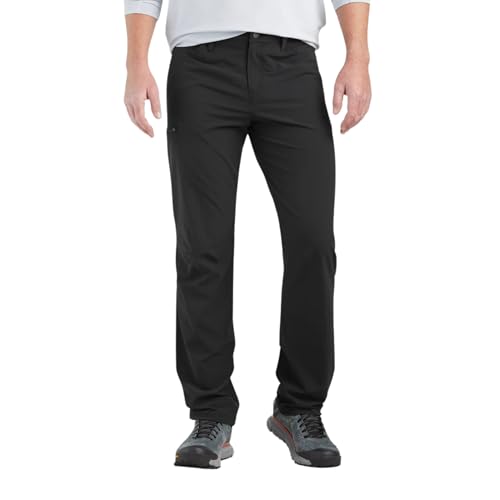
Outdoor Research Men's Ferrosi Pants
The general-trail starting point when elaborate boot hardware is unnecessary.
Consider: Still requires a fit check and a separate prolonged-rain plan.
Check on Amazonmodel comparisons
A zipper at the ankle can tell you more about a pair of outdoor trousers than the word technical in an advertisement. Cirque III carries a set of boot- and mountain-oriented details that Ferrosi does not share. The question is whether those details solve your actual hiking problem or add bulk you will carry without using. This comparison concerns the men’s Ferrosi and Cirque III, not every pant carrying the Cirque name.
Three places to start
As an Amazon Associate I earn from qualifying purchases. Purchases take place on Amazon.
The general-trail starting point when elaborate boot hardware is unnecessary.
Consider: Still requires a fit check and a separate prolonged-rain plan.
Check on Amazon
A lower-priced ordinary-trouser alternative for less specialized walks.
Consider: Not a substitute for Cirque III features where those features are an actual requirement.
Check on Amazon
The specialist option when double weave and adjustable boot openings address the intended kit.
Consider: More substantial construction and hardware may be unnecessary on warmer everyday walks.
Check on AmazonEditorial selections from the products considered for this guide; not hands-on test awards. Budget and premium describe positioning, not a guaranteed current price.
Cirque III’s manufacturer description includes gusseted ankle zippers, drawcord cuffs, instep lace grommets and a boot lace hook. These are practical details when a trouser must work with substantial footwear. The lower leg can be managed in ways that an ordinary fixed hem does not allow, but only if the exact boot and pant fit work together.
Before deciding that those features justify the purchase, ask what boots will actually be worn. A low hiking shoe on a maintained summer path presents a different problem from a bulky boot in colder conditions. Extra opening hardware can be unnecessary if the hem already clears your everyday footwear comfortably.
Try the pant with the intended footwear rather than evaluating its ankle shape barefoot. Check whether the opening closes without pulling at the knee, whether a cuff adjustment creates a pressure point, and whether fabric trails under the heel when walking. An impressive list of ankle features cannot correct an inseam that is too long or a lower leg that does not suit the boot.
The current Ferrosi page lists a nylon-and-spandex fabric. Cirque III is documented as a 90-denier double weave made from nylon, polyester and spandex, with a separate reinforced scuff-guard fabric. This is a meaningful construction difference, but it should not be reduced to a claim that Cirque is simply the better pant.
A more substantial garment can be appropriate when abrasion exposure, colder stops and the chosen footwear make it useful. The same garment can feel like unnecessary bulk on a warm, steadily moving walk. The construction explains why the two deserve separate shortlists; it does not provide a temperature rating or a promise about personal warmth.
Outdoor Research publishes different garment-weight figures for the referenced pages, but a controlled comparison would need consistent sizes and conditions. There is no need to turn those figures into an invented performance score. The decision is already clear enough: assess whether Cirque III’s extra construction solves an identifiable need that the simpler Ferrosi does not.
Ferrosi’s documented waist uses an internal drawcord with a tricot lining. Cirque III has an adjustable embedded belt, and its ActiveTemp treatment is described at the waistband. The treatment should not be presented as insulation spread throughout the garment or as proof that a wearer will remain at a comfortable temperature.
Wear the intended base clothing and fasten the actual backpack. Sit, lean forward and take a large step without immediately tightening either waist system. If the trouser moves because the rise is wrong, extra belt tension can make matters less comfortable while leaving the underlying fit problem unresolved.
After finding a stable adjustment, add the normal pocket contents. Observe whether the waist stays where it was with empty pockets. A heavier object pulling the trouser down can make an otherwise comfortable fitting misleading. The more elaborate Cirque III arrangement does not automatically win this test, and Ferrosi’s simpler adjustment does not automatically lose it.
Both referenced models provide zipped storage, but Cirque III adds features associated with its mountain-oriented design. The manufacturer lists zipped hand and thigh pockets and a beacon-pocket clip. That clip is a storage detail, not evidence that the pant itself provides avalanche protection or substitutes for appropriate equipment, training and trip decisions.
For ordinary hiking, identify whether a thigh pocket will carry something that needs quick access. If it remains empty on every outing, the existence of the pocket is not a compelling reason to pay for a more specialized trouser. The same principle applies to hardware that is attractive in a product photograph but irrelevant to the route.
Ferrosi’s right-hip security pocket and zipped rear pocket may be sufficient for a person who keeps most items in the pack. Another reader may find that a particular item sits better on the thigh. Test access with the hipbelt fastened, because a pocket that works while standing without a pack can become awkward once the belt covers its opening.
The manufacturer uses water- and wind-resistance language for these models. That is different from demonstrating the construction of a waterproof rain shell. Cirque III’s heavier appearance, reinforced areas and mountain hardware should not be interpreted as proof that it can manage prolonged rain without another layer.
Think of the trousers within the complete outfit. A cold start followed by a sustained climb may require different decisions from a day of short efforts and lengthy stops. A fixed more substantial pant can be convenient when those conditions remain consistent, while a lighter trouser can offer more flexibility when combined with separate layers.
No precise temperature recommendation follows from this guide. Humidity, wind, pace, individual comfort and under-layers all matter. If your main question is how to deal with rain, solve that directly with a suitable weather-layer choice. Do not buy Cirque III merely because its name sounds more protective than Ferrosi, and do not expect a water-repellent treatment to settle the rain-layer decision.
The catalog contains Cirque II, Cirque III and Cirque Lite listings. Their similar names make it easy to read one product description and assume it covers every sale listing. That is exactly the shortcut this comparison avoids. The III construction and hardware described here belong to the III source.
A Cirque Lite offer may be worth considering, but the lighter-format name is not permission to copy III fabric percentages or its precise scuff-guard composition. An earlier II listing likewise needs its own evidence. If the exact garment matters because of a boot opening or waistband detail, a suffix mismatch is a practical buying error rather than a minor naming issue.
Read the entire listing title before comparing current prices. Then verify the selected size and model against the description. If a retailer groups different options on one page, confirm which one is active after selecting the size. Preserve the model name in your shopping notes so that a later color change does not silently change the garment you are evaluating.
For a maintained trail with modest footwear and a light pack, begin by asking whether Ferrosi offers enough pocket security and an acceptable moving fit. If it does, identify exactly what Cirque III would add. A feature that never gets used does not improve the trip merely because it appears on a higher-priced model.
For an outing built around more substantial boots and frequent contact at the lower leg, examine Cirque III’s scuff area and ankle adjustment more closely. Check how the pant sits over the boot when kneeling and stepping high. Any benefit depends on that compatibility, not on the label alpine by itself.
For mixed travel with occasional day hikes, consider whether either specialized feature set is necessary. The budget ATG option in the panel offers a separate ordinary-pant comparison. It is not a replacement recommendation for a route where you have already established a need for particular Cirque hardware. Match the shortlist to the requirement before allowing price or brand familiarity to decide the order.
Read the actual care instructions for the purchased garment before washing or restoring a water-repellent finish. A pant with stretch fabric, reinforced sections and multiple hardware pieces deserves model-specific care, not an assumption that every Outdoor Research trouser can be treated identically.
Before laundering, empty small pockets and inspect closures for dirt. Afterward, check the waistband adjustment and lower-leg hardware before packing the trousers for another trip. A loose or damaged closure is more useful information than a vague belief that a technical pant should last indefinitely. This is routine inspection advice, not a report of durability testing.
If your normal routine favors simple laundering and very little equipment-specific adjustment, include that preference in the purchase. The right garment is the one whose features you use and whose care you will actually follow. Paying for a more elaborate design while ignoring the details that keep it working is not automatically better long-term value.
No. Cirque II and Cirque Lite are separate versions in the returned listings. The double-weave, waistband and ankle details discussed here are tied to the Cirque III manufacturer page.
The clip is a storage feature. It does not establish protective performance for the trousers or replace the equipment, training and decisions appropriate to the activity.
Only if its construction and boot-oriented features answer your requirements and its fit works. For an ordinary warm-weather walk, additional bulk and hardware may provide little benefit.
Use the exact model chart and repeat the moving-fit check with the intended layers. Shared branding does not establish identical rise, thigh room or lower-leg shape.
Ferrosi and Cirque III belong in different starting conversations. Choose Ferrosi first when you need a flexible everyday trail pant and its waist and pockets work with your kit. Move Cirque III forward when you can name a useful purpose for its double weave, scuff reinforcement and adjustable boot openings. Keep the III suffix attached to every specification, and retain a separate plan for prolonged rain. The strongest purchase decision comes from matching the trousers to the route and footwear, not treating the more elaborate model as an automatic upgrade.