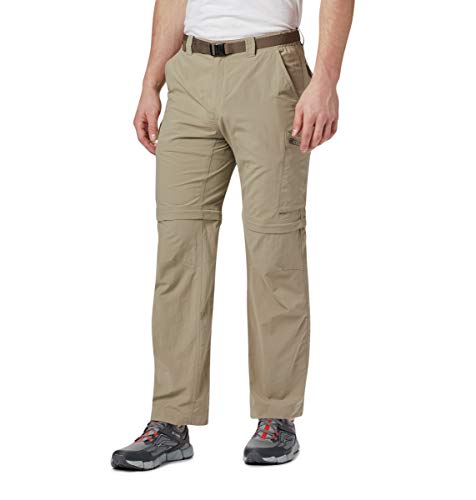
Sort the four names that change the purchase
The most useful starting split is between the original Silver Ridge Convertible, Silver Ridge Cargo, Silver Ridge Utility and Silver Ridge Utility Convertible. Each name identifies a different shopping direction. Convertible means a pants-to-shorts format; Cargo in a full-length listing does not automatically mean the lower legs detach. Utility is a model distinction that must remain attached to the description.
The catalog also contains a Silver Ridge II Convertible Tall listing. That specific title should not be folded into a current Utility specification merely because the products appear in the same search. A tall alpha-size listing asks a different fit question from a regular waist-and-inseam option. The complete title is part of the evidence.
When replacing a garment, first read the name and any style number inside the existing pair. Then decide whether you want a direct replacement or are willing to change construction. Those are different tasks. A new pant may be a good choice while still failing to reproduce the detail that made the older one a favorite.
Keep a short list of the non-negotiable details: full leg or zip-off, usable inseam, preferred waist adjustment and one important pocket. That list prevents a discount or familiar color from drawing you toward a similarly named garment that answers a different need. The suffix is not decorative text; it helps keep the purchase aligned with the intended format.
Use the current Utility evidence precisely
Columbia’s current men’s Silver Ridge Utility Pants page, style 2012951, lists 100% recycled polyester and describes two-way comfort stretch, a partial elastic waist, a removable belt and a gusset. It identifies a zip security pocket along with hook-and-loop storage. Those details explain a specific current design, not the entire Silver Ridge history.
The men’s Utility Convertible reference, style 2012961, likewise lists recycled polyester and documents a nine-inch shorts conversion, articulated knees and a gusset. If that conversion length matters to you, verify the exact selected listing against this style. It should not be copied to a women’s Utility, an original Convertible or a Silver Ridge II without separate evidence.
A fabric can be described as having comfort stretch without listing elastane. The composition and the construction description are different kinds of information. Do not “correct” the stated polyester fabric by inventing a stretch-fiber percentage. Equally, do not transfer a nylon specification from an older Silver Ridge review into the current Utility description.
For the older exact listings, a complete matching primary specification was not established here. Their titles identify the models and variants, but missing details remain missing until the selected product description or garment label confirms them. That limitation is preferable to a neat comparison table that puts the wrong fabric or short length in one column.
Decide whether conversion still earns its place
If the old pair was convertible, ask how often the legs actually came off. A feature used on most trips can be worth preserving. A feature never used may be unnecessary complexity in a replacement, especially if the thigh seam was something you merely tolerated rather than liked.
Try the intended convertible while sitting and while taking a large step. The ring around the thigh must work in both positions. A comfortable waistband does not establish a comfortable conversion seam, and sizing up to relieve the seam may leave too much fabric at the seat. The geometry of the selected pant matters more than the general popularity of zip-off clothing.
Think about the detached legs as well. Will there be a place to store them, and can you identify and reattach them without confusion? The convenience of pants-to-shorts depends partly on that routine. If you prefer a simpler full-length garment, compare Silver Ridge Utility Pants or the exact Cargo listing instead of assuming another Convertible is the only legitimate replacement.
The current Utility Convertible’s documented nine-inch shorts reference is useful for comparing coverage, but your selected size and waist position still affect where the hem falls. Do not select only from the number. Decide whether the resulting shorts format is something you would choose independently, rather than accepting it solely because it comes attached to trousers.
Recreate the old pair’s useful details, not its reputation
A favorite pant often succeeds because of a small detail: a pocket that fits a particular phone, a waistband that sits below the pack or a leg opening that falls cleanly over a boot. Identify that detail before comparing model names. Otherwise a replacement can look correct while removing the feature that mattered most.
For current Utility, the removable belt and partial elastic waist give a specific adjustment arrangement to inspect. Wear the pack with the belt fastened as usual, then sit. Check where the buckle or webbing rests relative to the hipbelt. More adjustment is not automatically better if its hardware sits exactly where another piece of equipment presses.
Put the old pair’s usual pocket contents into the proposed replacement locations. A security zipper and a hook-and-loop flap are not interchangeable for every object or access preference. If the new pocket is lower, higher or differently angled, check it while moving rather than judging from its ability to hold the item while standing.
Finally, compare the actual hem position. A printed inseam helps, but rise and leg shape can change how the garment settles. Original, Cargo and Utility listings may use different size notation. Keep the chosen waist and length attached to the complete model name so that another color search does not erase the distinction you have just worked to establish.
Separate a model change from a price change
An older Silver Ridge listing can be priced above or below a current Utility option. Neither result proves that the older garment is superior, inferior, discontinued everywhere or equivalent to the new one. Marketplace pricing reflects the selected offer and variant; it is not a technical specification.
The panel includes an ATG Synthetic Utility option as the separate budget route, with the two Columbia directions retained as the main comparison. That prevents the word budget from being attached to a legacy model simply because one color happens to be discounted. If your actual requirement is an ordinary full-length trail pant, the lower-cost alternative may be enough to broaden the decision usefully.
Before paying more to preserve an older model, name the feature that justifies it. Perhaps the exact existing cut is unusually suitable, or a particular pocket layout matters. If the only reason is that the old pair was familiar, compare the current Utility carefully enough to see whether it meets the same need. Familiarity is useful evidence of preference, not proof of a universal design advantage.
If a deal changes the format, the comparison changes too. A fixed-leg Cargo listing and a Utility Convertible are not the same purchase at different prices. A different inseam is likewise not a saving if it requires an alteration that removes a feature you wanted. Keep the intended garment constant while evaluating the actual cost.
A replacement checklist that prevents specification drift
Before ordering, write the complete active listing title, chosen waist and inseam, and whether the lower legs detach. Compare the listed care instructions with the label on the old garment only as a reminder that versions can differ. The new garment’s instructions govern its care even when the older routine worked well for years.
When the new pair arrives, confirm that its label matches the expected model before removing packaging needed for a normal return. Inspect the waist, the important pocket and the full-length or shorts configuration in that order. These are the details you identified as necessary; testing them first makes the decision more efficient than inspecting every feature equally.
Do not infer waterproof performance from the Utility name or a water-management technology mentioned in a description. The current references support their own stated features, not a blanket rain-shell claim. If the replacement is for a wetter itinerary than the old pair served, consider that as a separate clothing requirement rather than asking the familiar name to guarantee a new use case.
Keep the model record after finding a successful fit. It makes the next replacement easier and helps you distinguish a real design change from ordinary variation in the selected size or cut. The strongest outcome is a clearly identified pant that reproduces the features you need, whether its full name includes Utility or not.
Questions about columbia silver ridge vs silver ridge utility: decode the version before buying
Does Utility mean the same pant with a newer label?
Not automatically. Current Utility styles have their own documented construction, and older Silver Ridge titles need a separate match. Preserve the suffix when comparing specifications.
Is the current men’s Utility Convertible’s nine-inch short length universal?
No. That figure belongs to the referenced men’s Utility Convertible style. Do not transfer it to the women’s model, original Convertible or Silver Ridge II without evidence.
Should a nylon description from an older Silver Ridge review be used for Utility?
No. The current men’s Utility references list recycled polyester. Match the actual generation rather than combining old and new descriptions.
How do I decide whether to replace a convertible with fixed-leg pants?
Consider how often you remove the legs and whether the seam remains comfortable. If conversion adds little to your routine, a clearly identified full-length model may be a better fit for the real need.
Final Verdict
Silver Ridge versus Utility is best treated as a model-identification and replacement decision. Choose the correct format first, keep current Utility specifications tied to the referenced style and verify older listings independently. Reproduce the waistband, pocket and length details that made the previous pair useful rather than assuming the familiar family name guarantees them. The result may be another original Silver Ridge, a current Utility or a simpler budget alternative. What matters is that the selected garment is deliberate and its description belongs to the version actually being purchased.
Sources and further reading