
prAna Women's Koen Pants
The adjustable knit-waist starting point for readers balancing seated travel and ordinary walking.
Consider: Use the original Koen chart; drawcords do not correct every fit problem.
Check on Amazonmodel comparisons
The waistband is where the Halle–Koen choice often becomes personal. Some walkers want a defined waist and a familiar fly; others prefer the feel and adjustment of a stretch-knit waistband. Neither preference says anything about hiking ability. It says how the trousers need to work during a long seated journey, a climb or an ordinary day outside. The important first step is identifying which Halle version is on the screen.
Three places to start
As an Amazon Associate I earn from qualifying purchases. Purchases take place on Amazon.
The adjustable knit-waist starting point for readers balancing seated travel and ordinary walking.
Consider: Use the original Koen chart; drawcords do not correct every fit problem.
Check on Amazon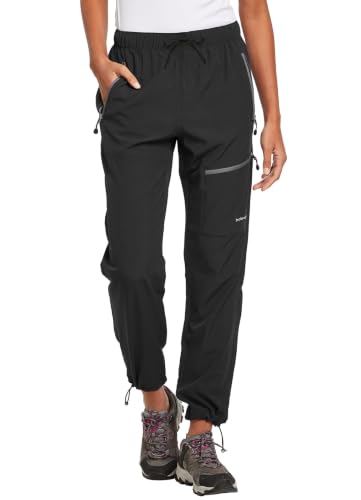
A separate lower-price outdoor-pant comparison when the exact prAna features are not essential.
Consider: No transfer of Koen’s fabric, pockets or inseam range.
Check on Amazon
A higher-priced Halle alternative for readers comparing its closure, rise and leg shape with Koen.
Consider: The selected plain Halle listing does not by itself identify a current Low Rise Straight or Bootcut version. Confirm the cut before applying those manufacturer measurements.
Check on AmazonEditorial selections from the products considered for this guide; not hands-on test awards. Budget and premium describe positioning, not a guaranteed current price.
A rise measurement describes where a trouser is designed to sit, but the sensation also depends on torso shape and the selected size. prAna’s original Koen reference lists a 9.5-inch rise and a stretch-knit waistband. Current Halle Low Rise Straight and Bootcut references use a lower-rise structured arrangement with an internal drawcord.
Those current Halle specifications are useful for understanding the available design direction, but they must not be transferred automatically to a plain Halle listing or an older Halle II. The catalog includes several named generations. Confirm the actual product before deciding that the waistband will sit at a particular height.
During a fitting, mark mentally where the waist rests before sitting. After leaning forward and standing again, notice whether it returns to that position without adjustment. A waistband that feels pleasant for one minute may become distracting if it shifts repeatedly. The choice is about that behavior on your body, not a universal rule that knit or structured waists are more comfortable.
The original Koen manufacturer page identifies an adjustable drawcord at the waist and adjustable hems. Its fabric listing is 81% nylon, 10% polyester and 9% elastane. prAna identifies a stretch fabric; confirm any more specific directional-stretch claim for the selected version rather than using it as a guaranteed mobility advantage.
The knit waistband may appeal to a wearer who wants a softer adjustment area for sitting and casual movement. That does not mean it should be cinched aggressively to make an oversized pant fit. If the seat and thigh are too large, drawcord tension can gather the waist while leaving excess fabric elsewhere.
Try the waistband first with empty pockets. Add the expected load afterward and check whether the drawcord needs a substantial readjustment. That sequence helps identify whether the pocket weight or the basic cut is responsible for movement. It is a more useful assessment than assuming that an adjustable waistband removes the need to choose the correct size.
The current Halle Low Rise Straight reference lists short, regular and tall inseams of 28, 30 and 34 inches. The current Low Rise Bootcut reference instead lists 30, 32 and 36 inches. Those are different length systems even though both garments share the Halle name and a related current fabric description.
This is why a buyer should not choose “regular Halle” without also reading the cut. The catalog’s plain Halle, Halle Straight, Halle Straight II and Stretch Zion Halle titles need their own version confirmation. An older review describing one regular inseam can be accurate for that garment and still be wrong for the listing now selected.
Compare the finished hem with the intended footwear rather than choosing solely from height. A bootcut opening can settle around a shoe differently from a straighter leg. If you prefer a short-looking ankle position, that is a deliberate silhouette choice; it should not come from accidentally ordering a different Halle cut with an unexpected inseam.
The original Koen page describes two concealed zipper pockets and a hidden waistband pocket. Current Halle references describe front drop-in pockets and rear snap-flap pockets. For an exact purchase, verify those details on the selected Halle generation before relying on them; the broad family name is not enough.
Think about what must be secured. A key or card can need a small closed location without requiring a large cargo compartment. A phone needs enough space and a position that remains comfortable when the hip bends. Concealed storage can preserve a simple silhouette while still feeling awkward if the item sits across a movement crease.
Use the pack or bag you actually carry during the comparison. If the bag provides secure storage for most objects, pocket count may be less important than ease of access to one item. If the trousers carry everything during travel, repeat the seated check with that full load. The layout that works for a short stroll may not be the same one you prefer for several hours in a vehicle.
Koen’s adjustable hems provide a way to manage the opening and position around the ankle. That can be useful when moving between footwear or when a wearer deliberately wants a more gathered lower leg. It should not be treated as a way to make any available inseam equivalent to the correct one.
Too much extra length can bunch above the adjustment, altering how the fabric behaves at the calf and knee. Too little length cannot be added by loosening a cord. Start with the appropriate stated length and use the hem feature for fine control rather than asking it to solve a major sizing mismatch.
The original Koen reference lists short, regular and tall inseams of 28, 30 and 32 inches. That differs from both current Halle examples described above. A buyer who needs a longer full-length option may therefore reach a different answer than someone who prioritizes a gathered ankle. Compare the exact lengths before judging either design purely by the waistband.
For the travel day, sit in the position you expect to use most: a car seat, a train seat or an ordinary chair. Check the waistband with the chosen shirt and pocket contents. Koen’s knit waist may be an attractive starting point for this scenario, but the assessment still depends on how the selected size fits.
For the walking hour, add the shoes and pack, then take a series of longer steps. Notice whether the waist shifts under the hipbelt and whether either pocket interferes. A structured Halle cut that feels good in this setup can be preferable even if a soft waistband initially seemed more appealing. Comfort is a result of the whole fit, not one construction word.
If one pant succeeds during travel and the other succeeds during walking, decide which task matters more or whether you actually need one pair to do both. The aim is to choose deliberately. There is no requirement that the model with the softer waist or the more familiar fly become everyone’s all-purpose winner.
The Baleaf quick-dry hiking pant in the panel is a separate lower-cost candidate. Its observed listing price places it below the selected Koen and Halle examples. It is included for readers whose main requirement is an accessible outdoor pant with an adjustable-feeling waist format, not as proof that it duplicates either prAna model.
Inspect its own title, chart and closure details. Do not import Koen’s fabric percentage, hidden pocket or inseam range into the Baleaf description. Likewise, a listing that uses lightweight or quick-dry wording does not provide a laboratory drying-time comparison against Halle or Koen.
The useful question is which prAna distinction you would miss. If an exact rise, leg cut or pocket arrangement is central to the fit, that can justify moving the named model forward. If those differences are not important, a lower-priced candidate may be a reasonable first comparison. Price should follow the fit requirement rather than defining it before you understand the garment.
Once a pant works, keep a note of the full model name, style where available, cut, inseam and size. Halle’s multiple generations make this especially valuable. A second color selected from a different listing can look similar while belonging to a different cut or version.
For Koen, retain the original model reference when comparing later products with related naming. An adjustment feature documented on one page should not become a blanket promise about every future Koen product. The same care is needed when reading laundering instructions: use the purchased garment’s label rather than a generic nylon-pant routine.
This version record is practical, not administrative clutter. It helps a successful fit stay reproducible and makes a disappointing fit easier to diagnose. If the new pair feels different, you can check whether the garment changed before concluding that the entire brand’s sizing has become unreliable. Exact identification protects the usefulness of the original comparison.
No. Current Straight and Bootcut references use different regular lengths, and older versions require their own checks. Read the complete cut name and selected inseam.
No. Drawcord adjustment can fine-tune the waist but cannot necessarily correct excess seat fabric, a restrictive thigh or the wrong rise.
Use the exact version's material description, then compare the same seated and high-step movements in a suitable size. A fiber percentage or directional-stretch label cannot tell you whether the waistband, rise and leg shape fit your body.
Compare seated waistband comfort first, then repeat a moving-fit and pocket check with the pack. Koen is a useful knit-waist starting point, but a well-fitting exact Halle may suit you better.
Halle versus Koen is a useful fit decision when the exact versions remain visible. Begin with Koen if its documented knit waistband, drawcord and adjustable hems address your routine. Begin with the appropriate Halle cut if you prefer its confirmed structured waist and leg shape. Then let seated comfort, loaded pockets and real inseam needs settle the comparison. The budget Baleaf option gives another route without pretending to copy prAna’s specifications. A successful choice depends on the full garment and selected size, not on the family name alone.